Concrete Driveway Repair: What Homeowners Should Fix and When to Replace
Concrete driveways are built to last, but over time, cracks, surface wear, and settling can start to appear. When that happens, most homeowners ask the same question: should this be repaired, or is it time to replace it?
Understanding the difference can save time, money, and frustration. Some problems are easy to fix and can extend the life of your driveway for years. Others point to deeper structural issues that repairs alone will not solve.
This guide explains the most common driveway problems, what can be repaired, what should be replaced, and how to make the right decision based on long-term value.
For homeowners dealing with concrete driveway repair in Bellingham WA, moisture and soil conditions are also important factors, which we will cover throughout this guide.
Most Common Concrete Driveway Problems
Driveway issues usually develop gradually. Identifying the type of problem helps determine the right solution.
Cracking
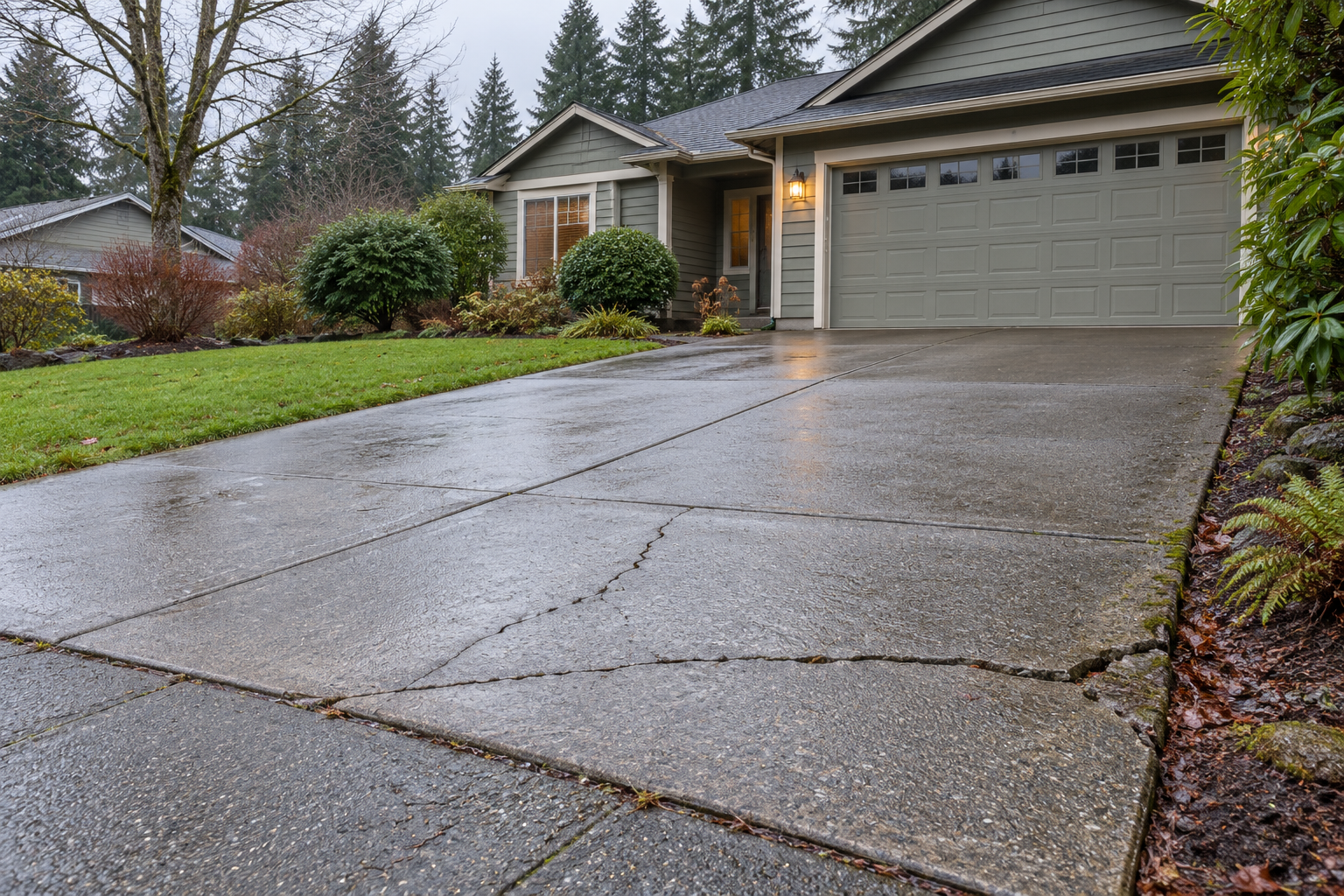
Cracks are the most common issue in concrete driveways.
- Hairline cracks are normal and often cosmetic
- Shrinkage cracks form as concrete cures
- Larger cracks can indicate movement beneath the slab
Small cracks are typically repairable. Larger cracks that spread across sections may point to base issues.
Uneven or Sunken Sections
If part of the driveway has dropped or shifted, the base underneath may have moved.
This often happens due to:
- Soil erosion
- Poor compaction during installation
- Water draining under the slab
Uneven driveways can create safety concerns and drainage problems.
Surface Damage
Surface wear can include flaking, scaling, or minor chipping.
This usually happens from:
- Weather exposure
- Moisture penetration
- Age of the concrete
While this type of damage can affect appearance, it is often repairable if the structure underneath is still solid.
Drainage Issues
Water pooling on the driveway is a sign that something is not draining properly.
Over time, standing water can lead to:
- Increased cracking
- Surface deterioration
- Base weakening
Drainage issues should always be addressed during repairs.
What Can Be Repaired
Not every driveway problem requires a full replacement. Many issues can be repaired if caught early.
Repairable Conditions
- Small or isolated cracks
- Minor surface wear
- Light scaling
- Slight uneven areas
In these cases, repairs can restore function and extend the life of the driveway.
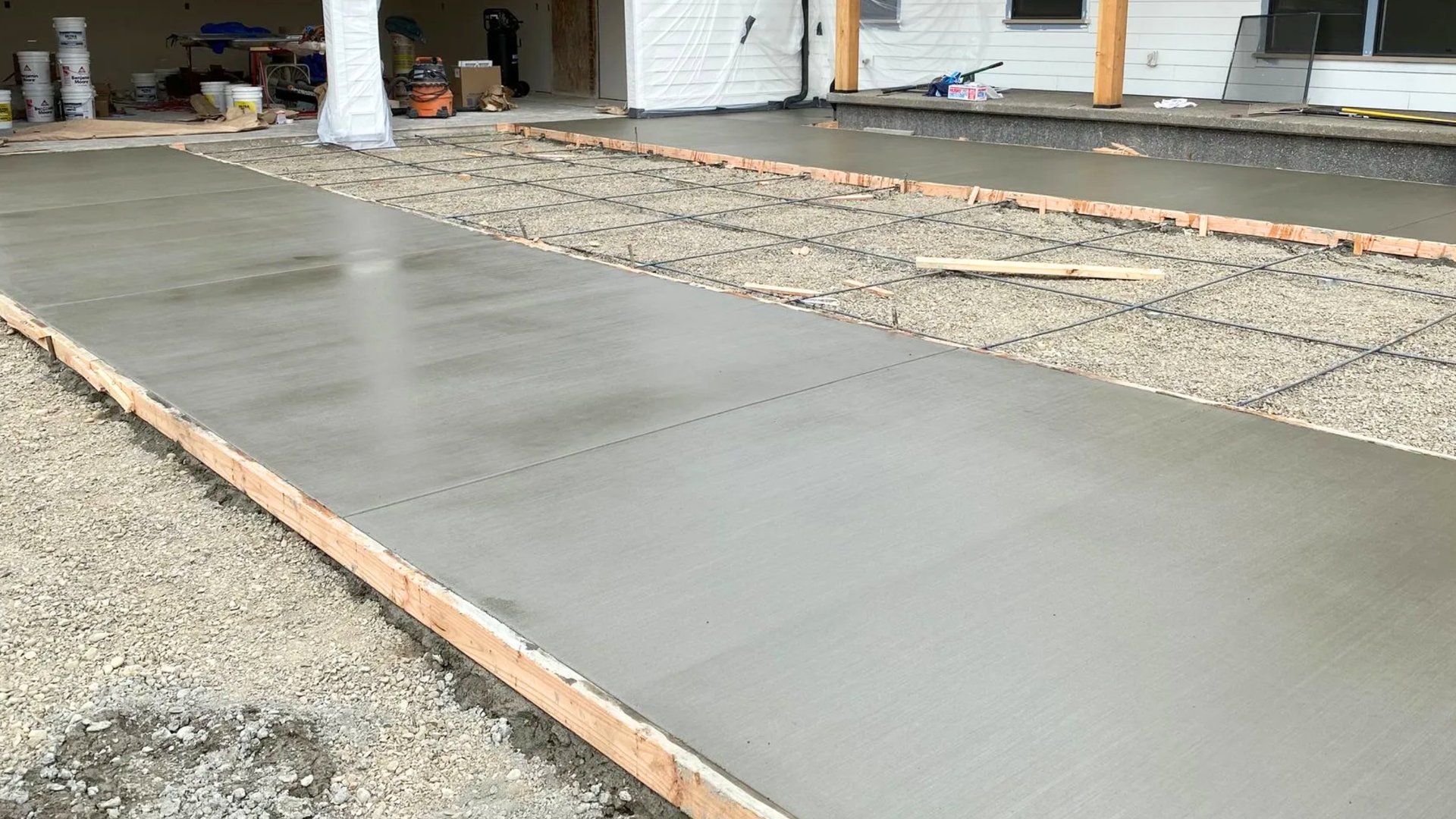
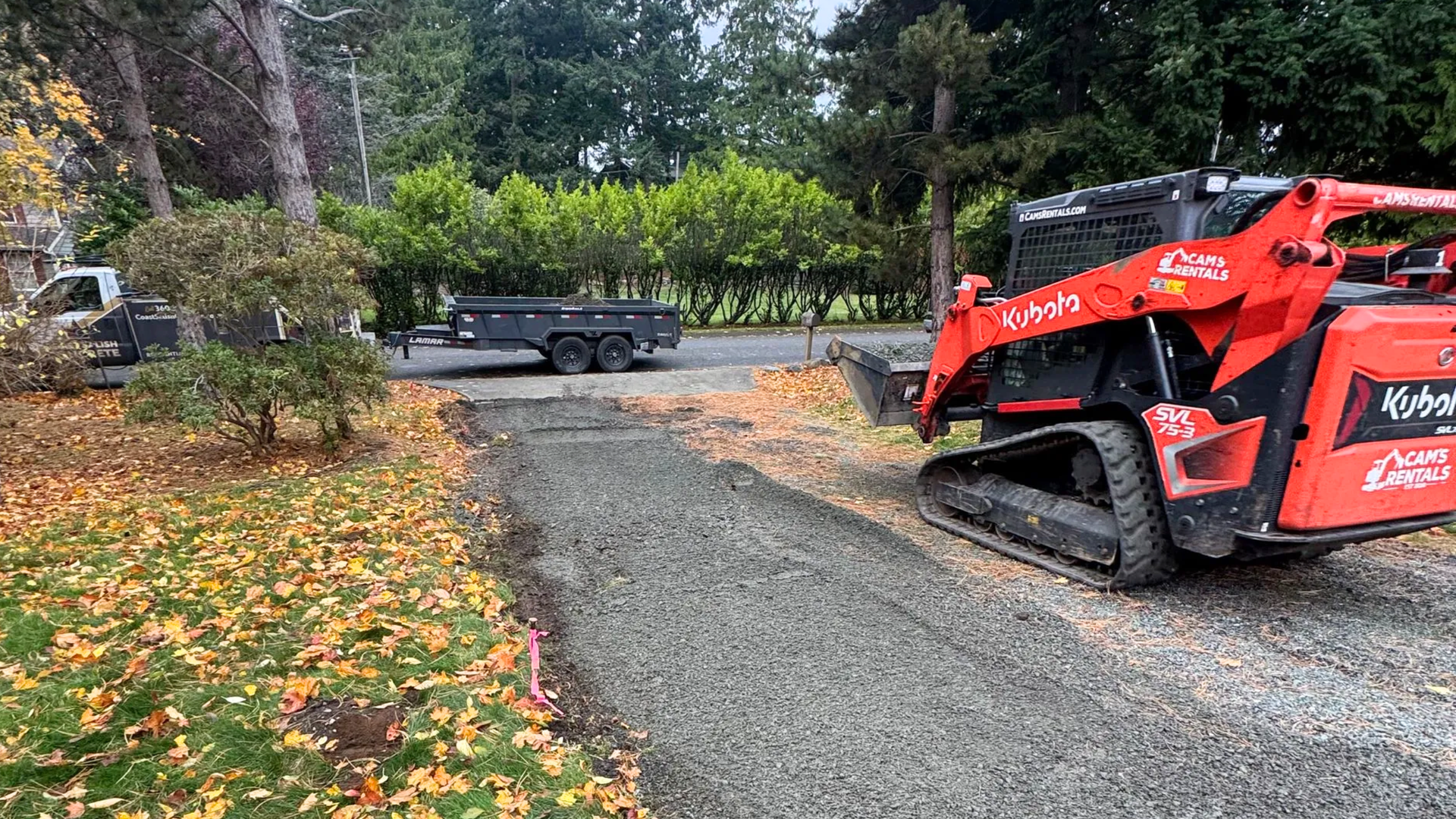
Understanding how driveways are originally built helps explain why some issues can be repaired while others cannot. For a full breakdown, see our guide on Concrete Driveways in Bellingham WA to understand how base preparation affects long-term performance.
When Replacement Is the Better Option
Some driveway problems go beyond surface-level damage.
Signs Replacement May Be Needed
- Widespread cracking across multiple sections
- Large areas that have sunk or shifted
- Repeated repairs over time
- Persistent drainage problems
- Structural failure of the base
When the foundation is compromised, surface repairs will not fix the root issue.
In these cases, concrete driveway replacement is usually the more reliable long-term solution.
Types of Concrete Driveway Repairs
Different repair methods are used depending on the condition of the driveway.
Crack Sealing
Cracks are filled with flexible material to prevent water from entering.
Best for:
- Small cracks
- Preventing further damage
Surface Patching
Damaged areas are repaired with patching material.
Best for:
- Minor surface wear
- Localized damage
Patching may not perfectly match the original color, but it improves function.
Resurfacing
A new layer is applied over the existing concrete.
Best for:
- Widespread surface wear
- Cosmetic improvement
This works only if the base is still stable.
Slab Leveling
Sunken sections are raised back into position.
Best for:
- Slight settling
- Uneven slabs with stable concrete
This method corrects alignment without full replacement.
How Much Does Concrete Driveway Repair Cost?
Repair costs vary depending on the type and severity of damage.
Typical Cost Range
| Repair Type | Estimated Cost |
|---|---|
| Crack sealing | $300 – $1,000 |
| Surface patching | $500 – $2,000 |
| Resurfacing | $3,000 – $7,000 |
| Slab leveling | $1,500 – $5,000 |
Smaller repairs are relatively affordable. Larger repairs can approach the cost of replacement.
For a full comparison of pricing factors, review our article on Concrete Driveway Cost to understand how repair costs compare to new installation.
How Long Do Repairs Last?
Repair lifespan depends on the condition of the original driveway.
Expected Lifespan
- Crack sealing: 3–5 years
- Surface patching: 3–7 years
- Resurfacing: 8–15 years
- Leveling: 5–10 years
If the base is stable, repairs can last many years. If the base is failing, repairs may only be temporary.
How Climate Affects Driveway Repairs
Environmental conditions play a major role in how concrete performs.
In areas like Bellingham WA, common challenges include:
- Frequent rainfall
- Moist soil conditions
- Temperature changes
These factors can lead to:
- Soil movement under the slab
- Water entering cracks
- Gradual surface wear
That is why repairs should always address drainage and moisture control, not just surface appearance.
How to Prevent Future Damage
Preventive maintenance helps extend the life of your driveway.
Key Maintenance Tips
- Clean debris regularly
- Seal the surface when needed
- Avoid excessive weight loads
- Maintain proper drainage
- Repair cracks early
Small issues are much easier and less expensive to fix than major damage.
Repair vs Replacement: How to Decide
Choosing between repair and replacement depends on long-term value.
Repair Makes Sense If:
- Damage is limited
- The driveway is still level
- The base is stable
- You want to extend its lifespan
Replacement Makes Sense If:
- Damage is widespread
- The driveway is uneven
- Repairs keep recurring
- Drainage problems are severe
Understanding how driveways are installed can help clarify this decision. Reviewing concrete driveway installation in Bellingham shows why proper base preparation is critical for durability.
Planning Your Driveway Repair Project
Before starting repairs, evaluate:
- The extent of damage
- Whether the driveway is level
- Drainage conditions
- Budget for repair vs replacement
A professional assessment can help determine the most effective approach.
Final Thoughts
Concrete driveway repair can be a practical way to extend the life of your driveway when damage is limited and the structure remains stable. Repairs such as crack sealing, patching, and resurfacing can improve both appearance and performance without the cost of full replacement.
However, when structural issues are present, replacement may be the better long-term solution. Addressing the root cause ensures the driveway performs reliably for years to come.
If you are dealing with driveway issues and want a clear recommendation, Coast Salish Concrete can help you evaluate your options. We provide repair and replacement services throughout Bellingham, Ferndale, Lynden, Blaine, Fairhaven, Sudden Valley, Custer, Everson, Sumas, Sedro-Woolley, Burlington, and nearby areas.
Contact Coast Salish Concrete to schedule an evaluation and determine the best solution for your driveway.