Concrete Walkways and Sidewalks in Bellingham: Cost, Design, and Permits
A good walkway does two jobs at once. It gets you from the driveway to the front door without tracking mud through the house, and it quietly tells anyone walking up that the place is cared for. In Bellingham, where the ground stays wet for a good chunk of the year and the soil underneath fights you, getting a walkway right takes more than pouring a strip of concrete and calling it done.
This guide covers what a concrete walkway or sidewalk actually costs here, how broom and stamped finishes compare, why the excavation step matters so much in our glacial till, which finish keeps you upright when the surface is wet, and the local code rules that catch people off guard, especially the difference between a private walkway and a public sidewalk.
What a Concrete Walkway Costs in Bellingham
Let's start with money, because that is usually the first question. The honest answer is that price depends on finish, size, shape, and what is under the ground before you pour. But there are real ranges worth knowing.
Price per Square Foot by Finish
Nationally, a standard broom-finish concrete walkway runs somewhere in the range of $6 to $12 per square foot installed. Stamped concrete, the kind textured to look like stone, brick, or slate, typically lands between $12 and $22 per square foot. Around here, expect to sit toward the upper part of those ranges. Pacific Northwest labor costs more than the national average, and, more importantly, our site preparation is more involved than in regions with sandy, fast-draining soil.
Here is a rough breakdown of common finishes and how they compare:
- Broom finish: the workhorse. Lowest cost, excellent slip resistance, low maintenance. The default choice for most residential walkways in a wet climate.
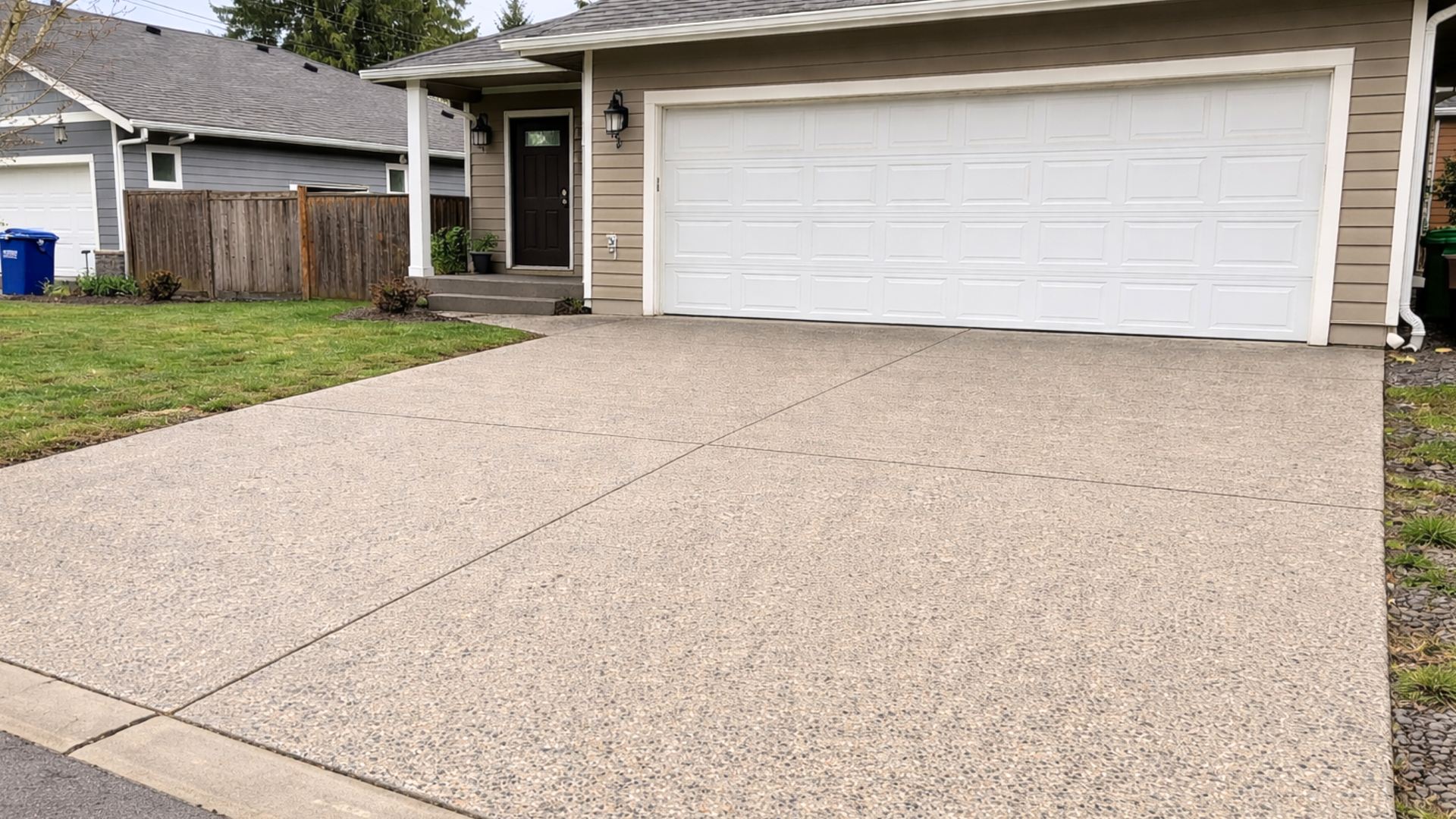
- Exposed aggregate: a step up in both looks and price, usually a few dollars more per square foot than broom. Naturally textured, so it grips well when wet.
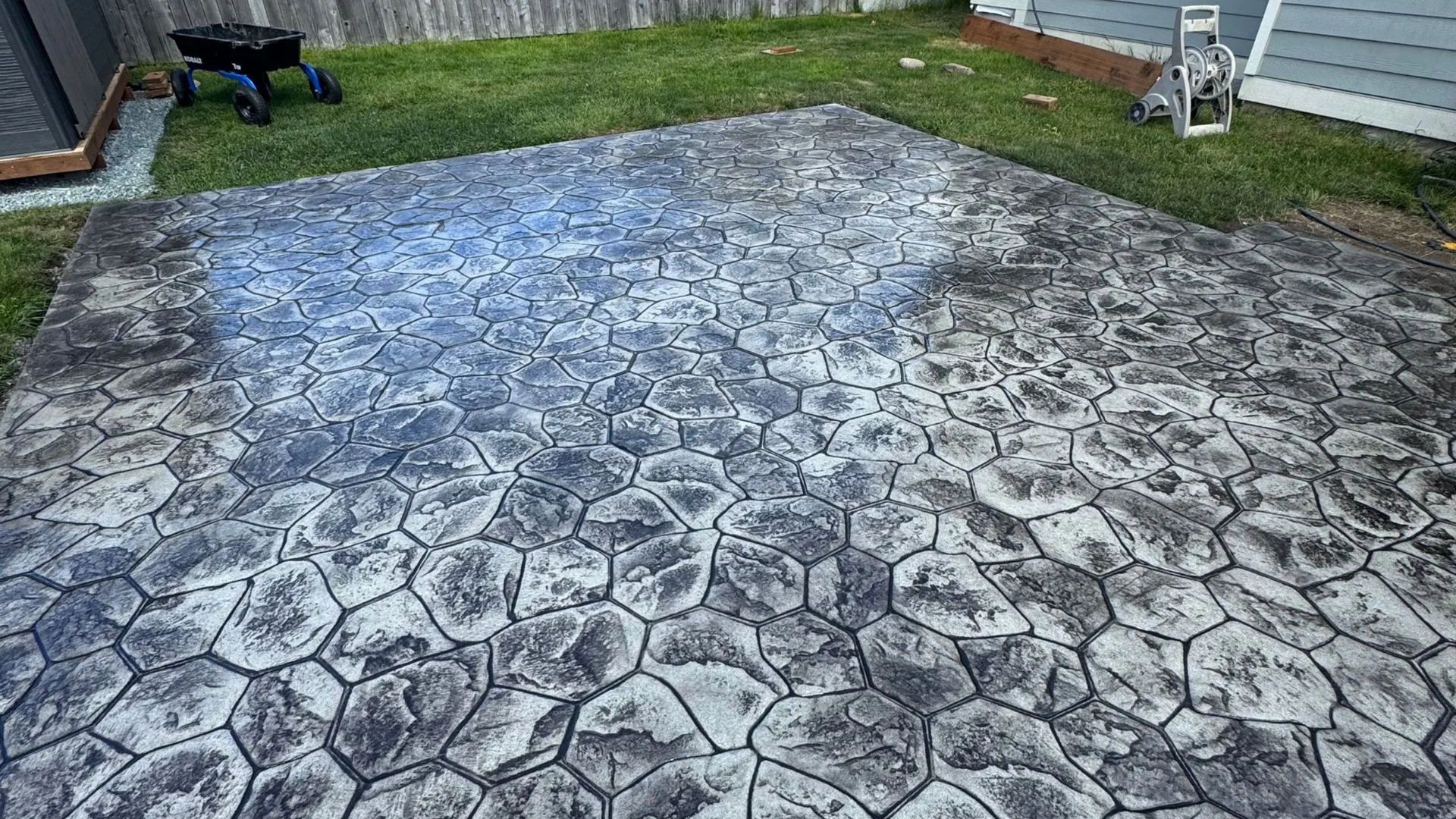
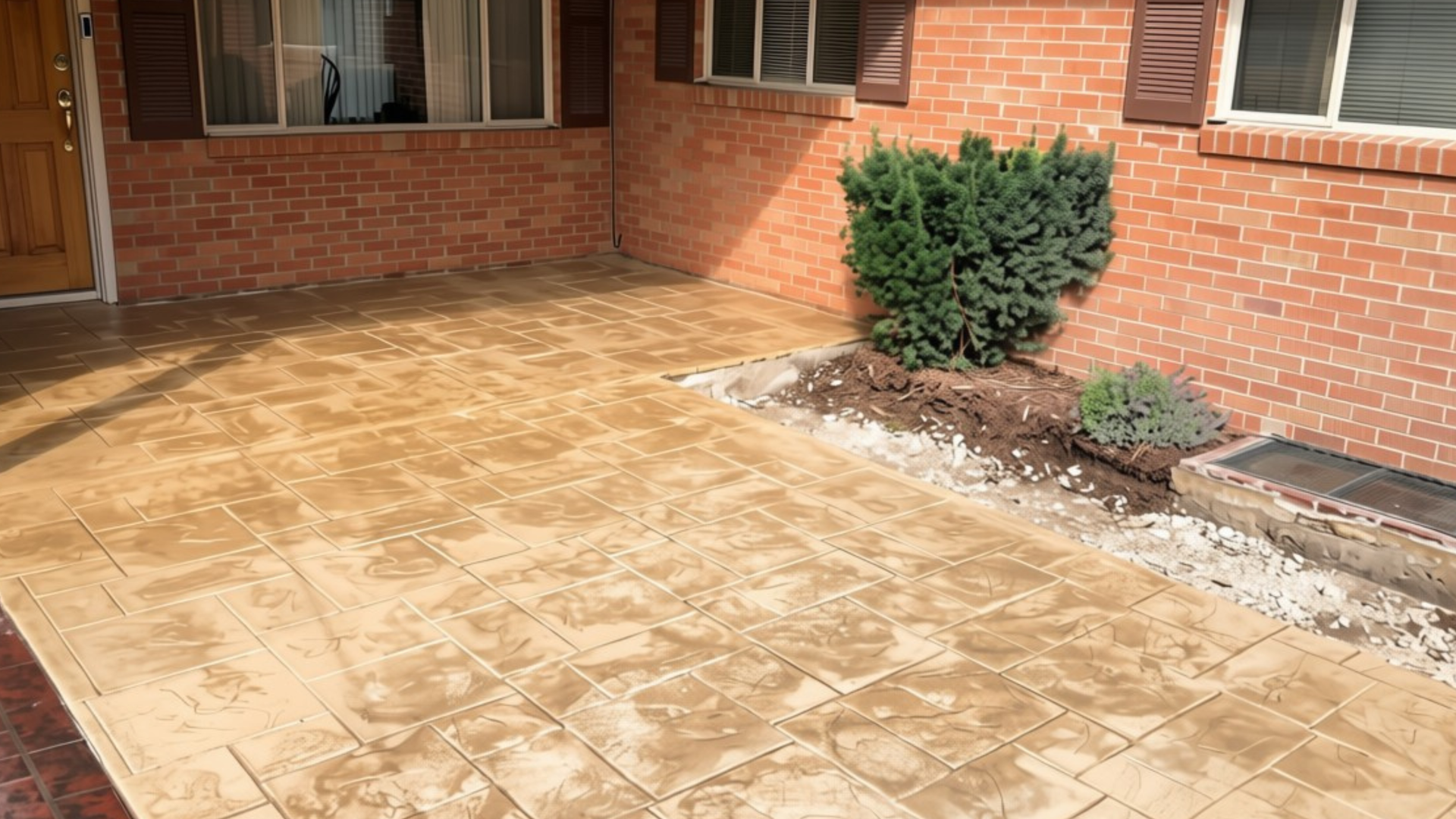
- Stamped concrete: the premium option, often two to three times the cost of a plain broom finish. Great curb appeal, but it needs resealing every few years and can be slicker unless a proper anti-slip additive is used.
- Colored or integral pigment: adds a few dollars per square foot on top of whatever base finish you choose.
| Finish | Typical Installed Cost (per sq ft) | Slip Resistance When Wet | Maintenance | Best For |
|---|---|---|---|---|
| Broom finish | $6 to $12 (PNW upper end) | Excellent | Low | Most residential walkways |
| Exposed aggregate | A few dollars above broom | Very good (naturally textured) | Moderate | Refined look with wet-weather grip |
| Stamped concrete | $12 to $22+ (2 to 3x broom) | Fair (needs anti-slip additive) | Higher (reseal every few years) | Front entries where appearance matters |
| Colored / integral pigment | Adds a few dollars per sq ft | Depends on base finish | Depends on base finish | Adding color to any finish |
What Drives the Number Up or Down
Two walkways of the same square footage can price out very differently. The variables that move the total:
- Size and thickness. Residential walkways are typically four inches thick. More square footage spreads fixed costs like crew mobilization, so larger projects often cost a little less per square foot.
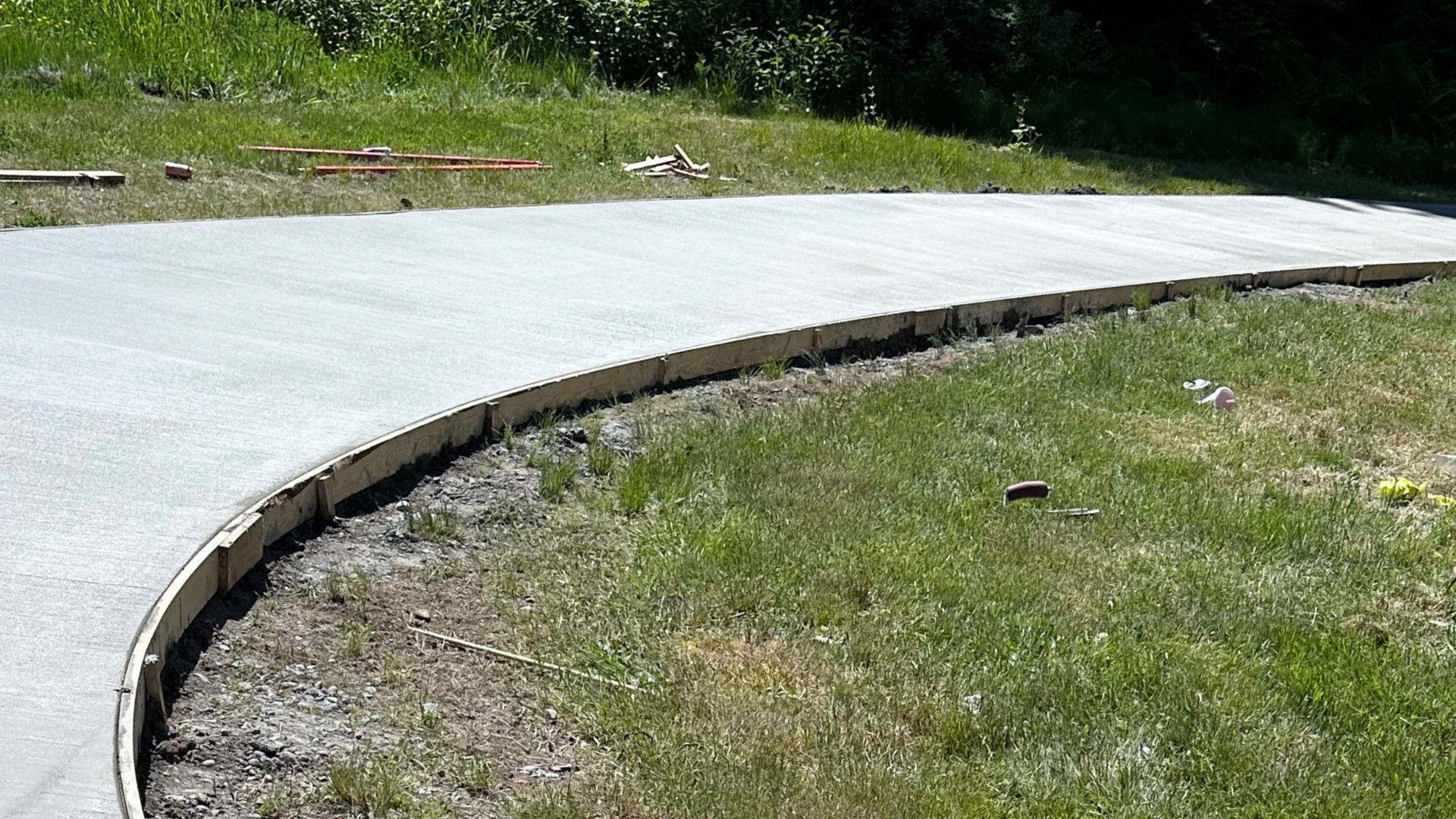
- Shape. Straight runs are cheap to form. Curves, steps, and custom edges take more labor and more formwork.
- Site preparation. This is the big one in Bellingham, and it is covered in its own section below. Removing an old walkway, excavating, and building a proper base can add meaningfully to the job.
- Finish and color. As above, decorative choices carry a premium.
- Access. A crew that can back a truck right up to the pour works faster than one hauling concrete through a narrow side yard.
One thing to keep in mind: the cheapest bid is rarely the best value on flatwork. Most walkway failures in our area trace back to skipped or rushed site prep, which is exactly where a low bid tends to cut corners. You do not see the shortcut until the surface starts heaving a couple of winters later.
For a fuller picture of pricing on related projects, our guide on concrete driveway cost in Bellingham breaks down the numbers on larger flatwork, and many of the same site factors apply.
Why Site Preparation Matters So Much Here
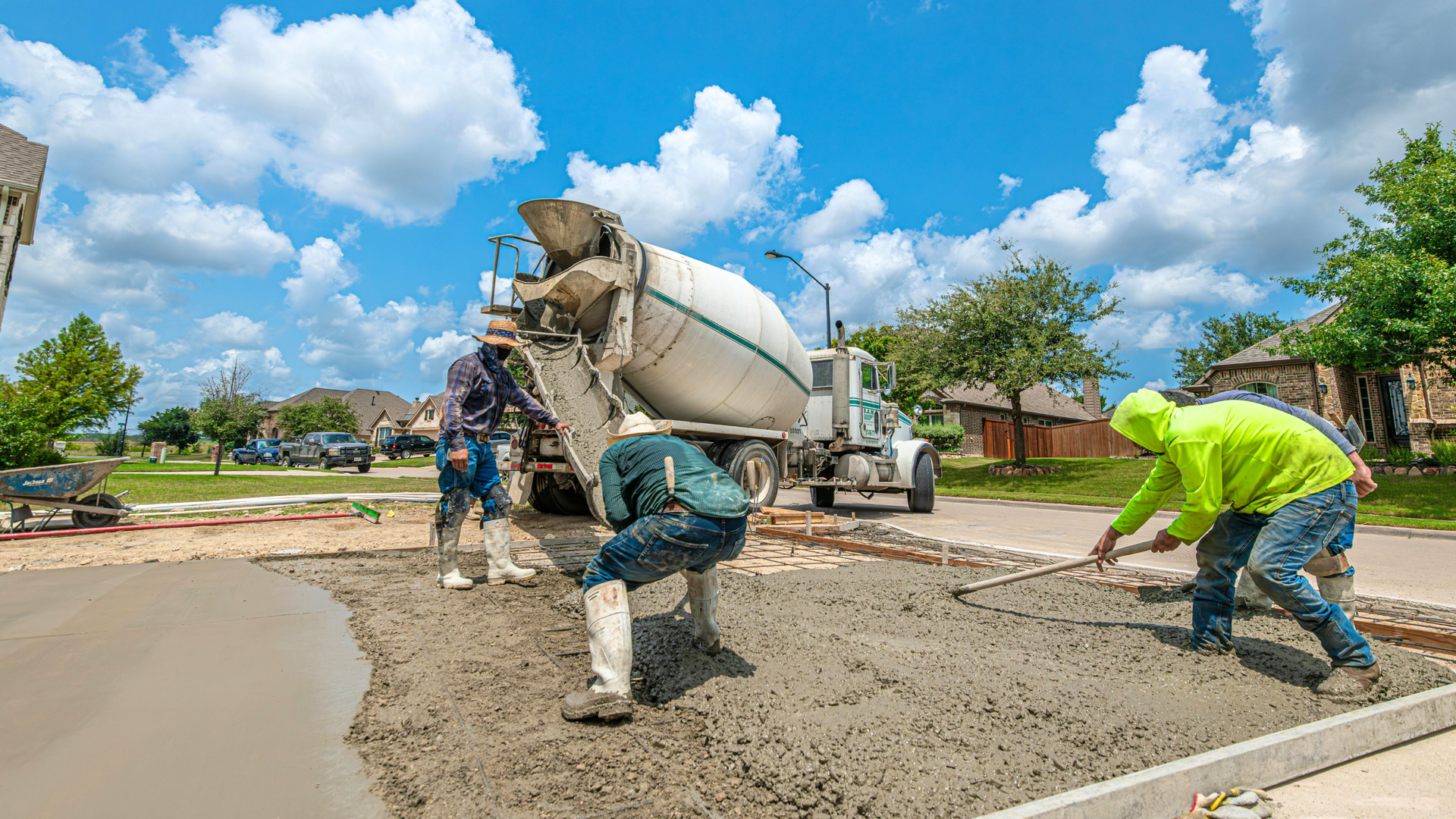
Bellingham sits largely on glacial till. If you have ever tried to dig in your yard and hit a dense, gray, almost concrete-like layer a foot or two down, that is it. Glacial till is heavy, poorly draining soil, and it behaves in ways that punish a lazy pour.
The Problem With Our Soil
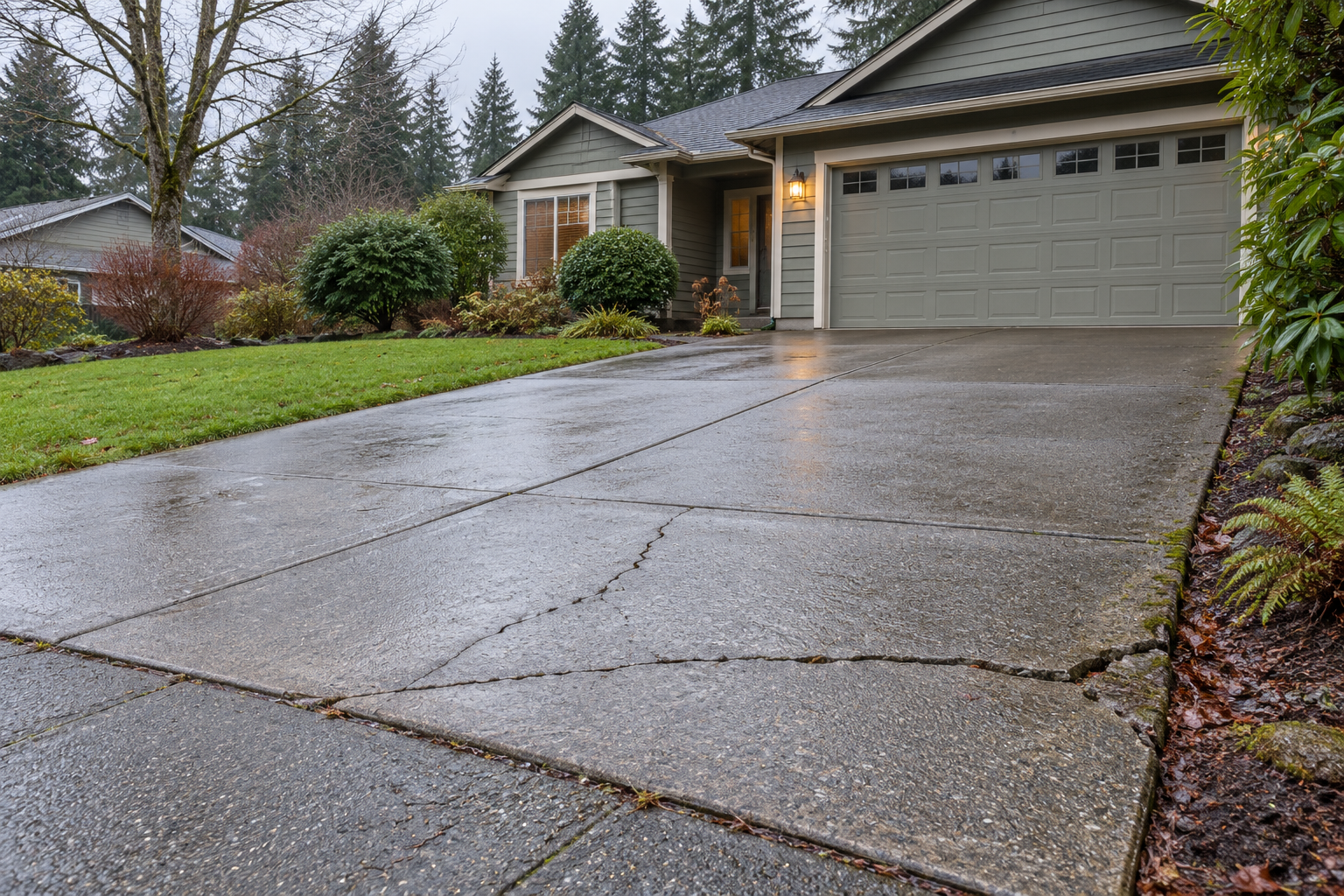
Glacial till holds water. In our wet months it stays saturated, and saturated soil does two things concrete hates. It loses bearing strength, so the slab has nothing solid to rest on, and it heaves when it freezes, lifting and cracking whatever sits above it. A walkway poured directly on unprepared till is a walkway that will crack, settle, and go uneven, usually within a few winters.
What Proper Excavation and Base Prep Looks Like
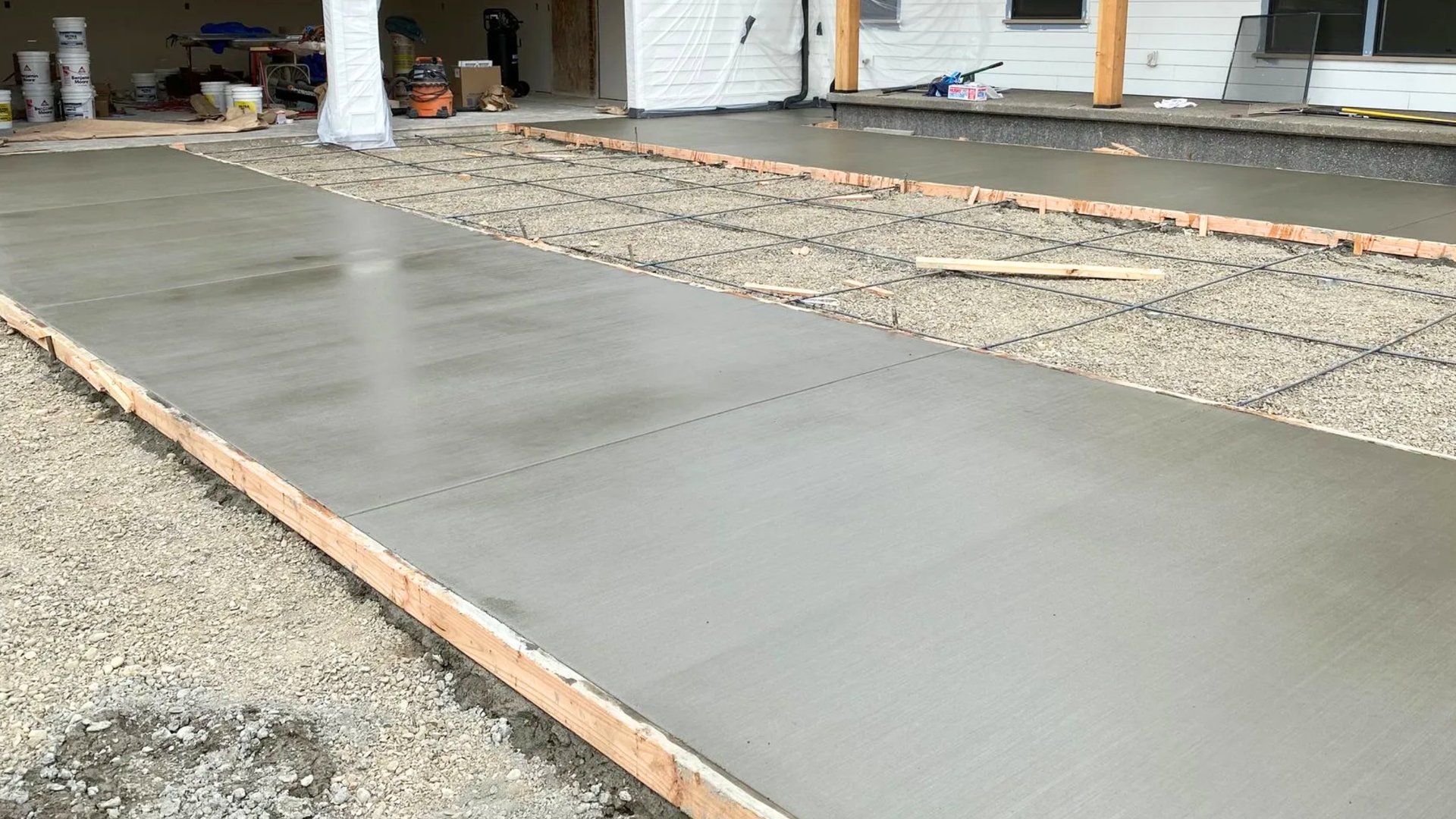
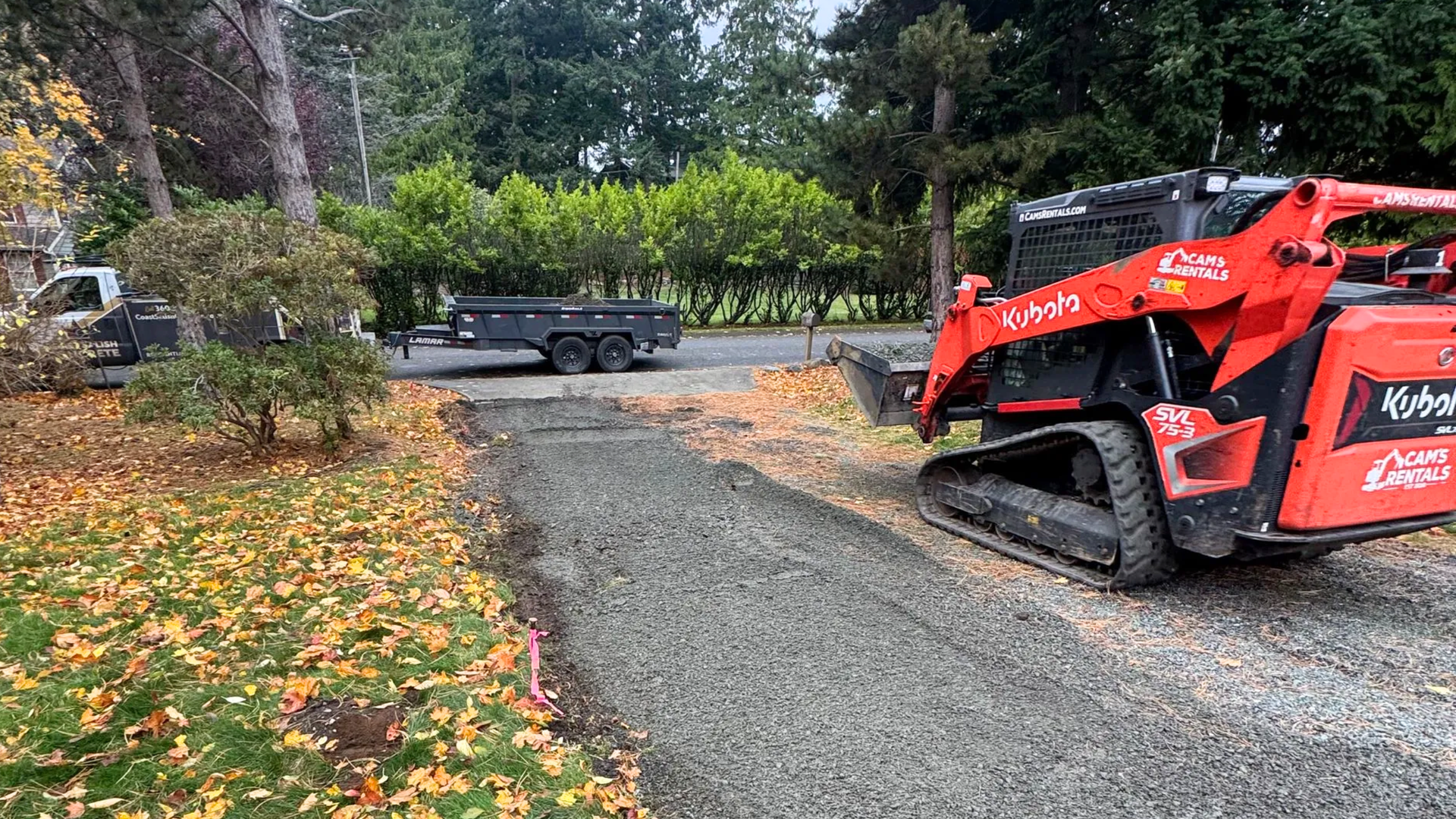
Doing it right means not trusting the native soil to do a job it cannot do. A quality install generally includes:
Excavating below the finished grade, deep enough to remove unstable topsoil and make room for a proper base.
Laying and compacting a gravel or crushed-rock sub-base that drains water away from the slab instead of trapping it.
Grading the base so water sheds off the finished walkway rather than pooling on it or running toward the house.
Adding reinforcement, wire mesh or rebar, on jobs where it makes sense for added crack resistance.
This is unglamorous work, and it is the part a homeowner never sees once the concrete is down. It is also the single biggest factor in whether the walkway lasts five years or thirty. If you are clearing space for a new path, our excavation and site preparation service handles this groundwork the way our soil actually requires.
Choosing the Right Finish for a Wet Climate
Curb appeal matters, but in Bellingham the first question about any outdoor surface should be: how does it behave when it is wet? Because it will be wet, often. Roughly half the days in winter see rain, and mist and damp linger well beyond that.
Broom Finish
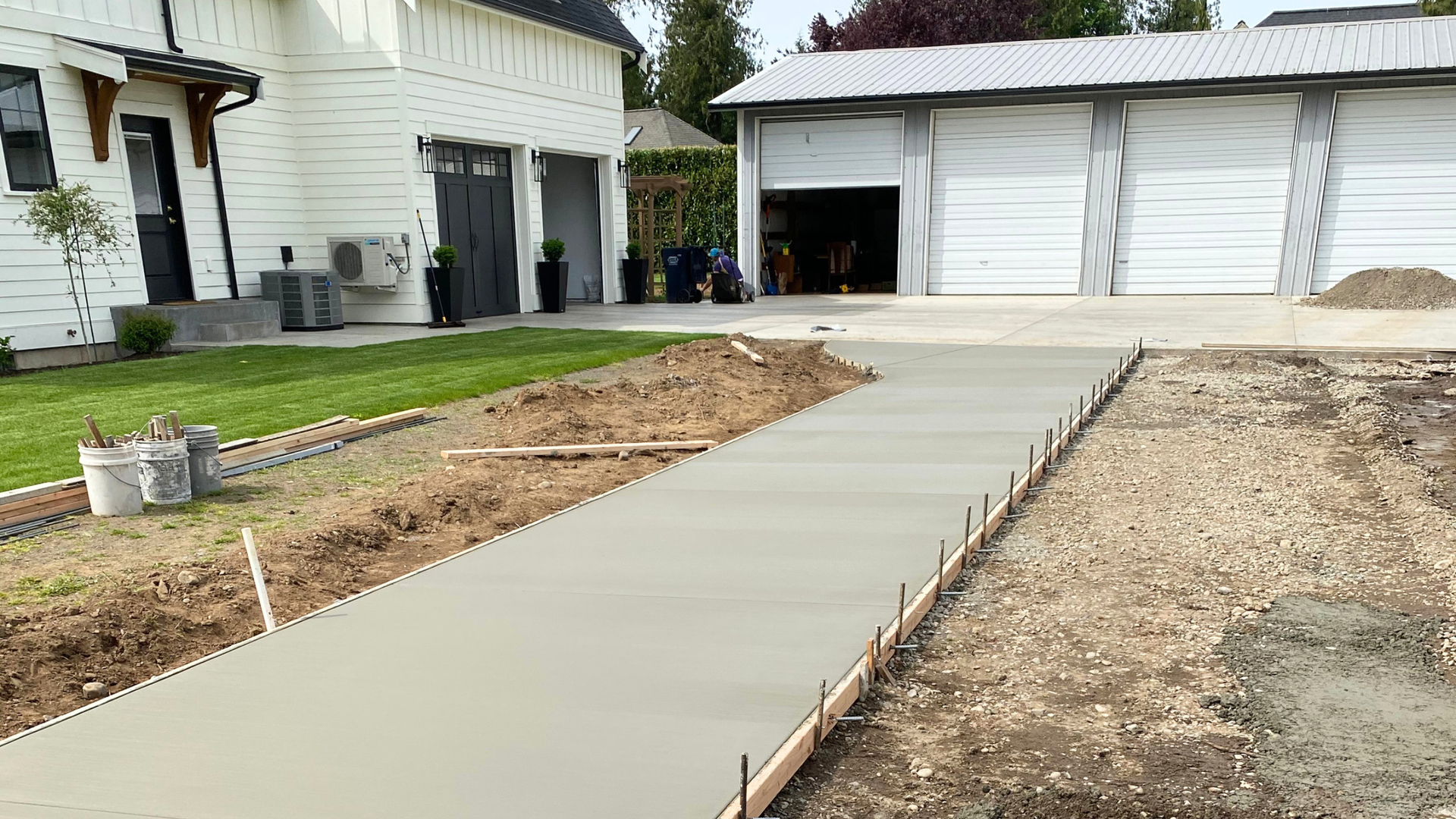
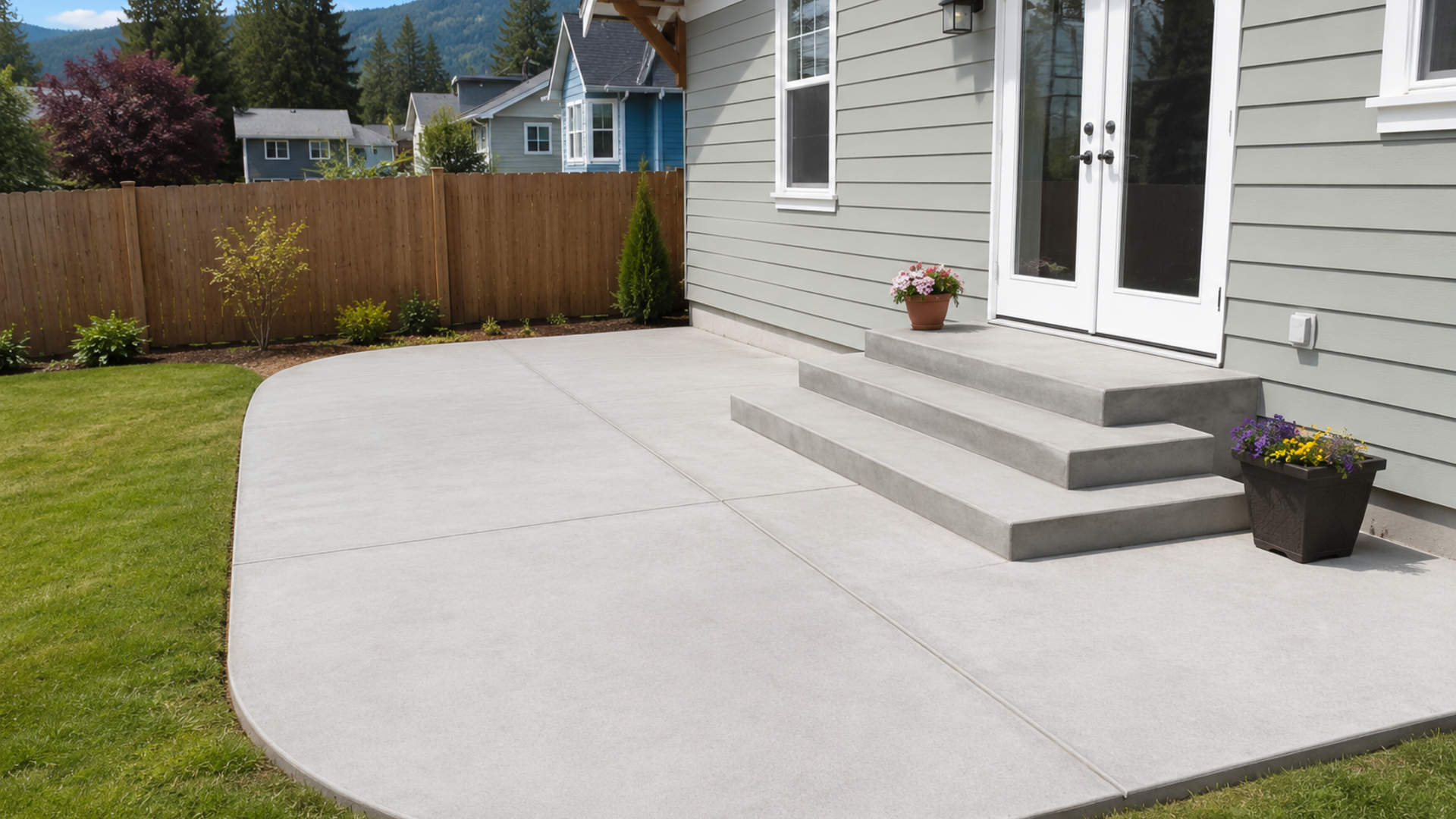
A broom finish is exactly what it sounds like. After the concrete is smoothed, the finisher drags a stiff broom across the surface to create fine, consistent grooves. Those grooves are what give your shoes something to grip. For a walkway that has to stay safe through a Northwest winter, this is hard to beat. It is affordable, it wears well, and the traction is built into the surface rather than applied on top. For most homeowners, a broom finish is the right answer.
Stamped Concrete
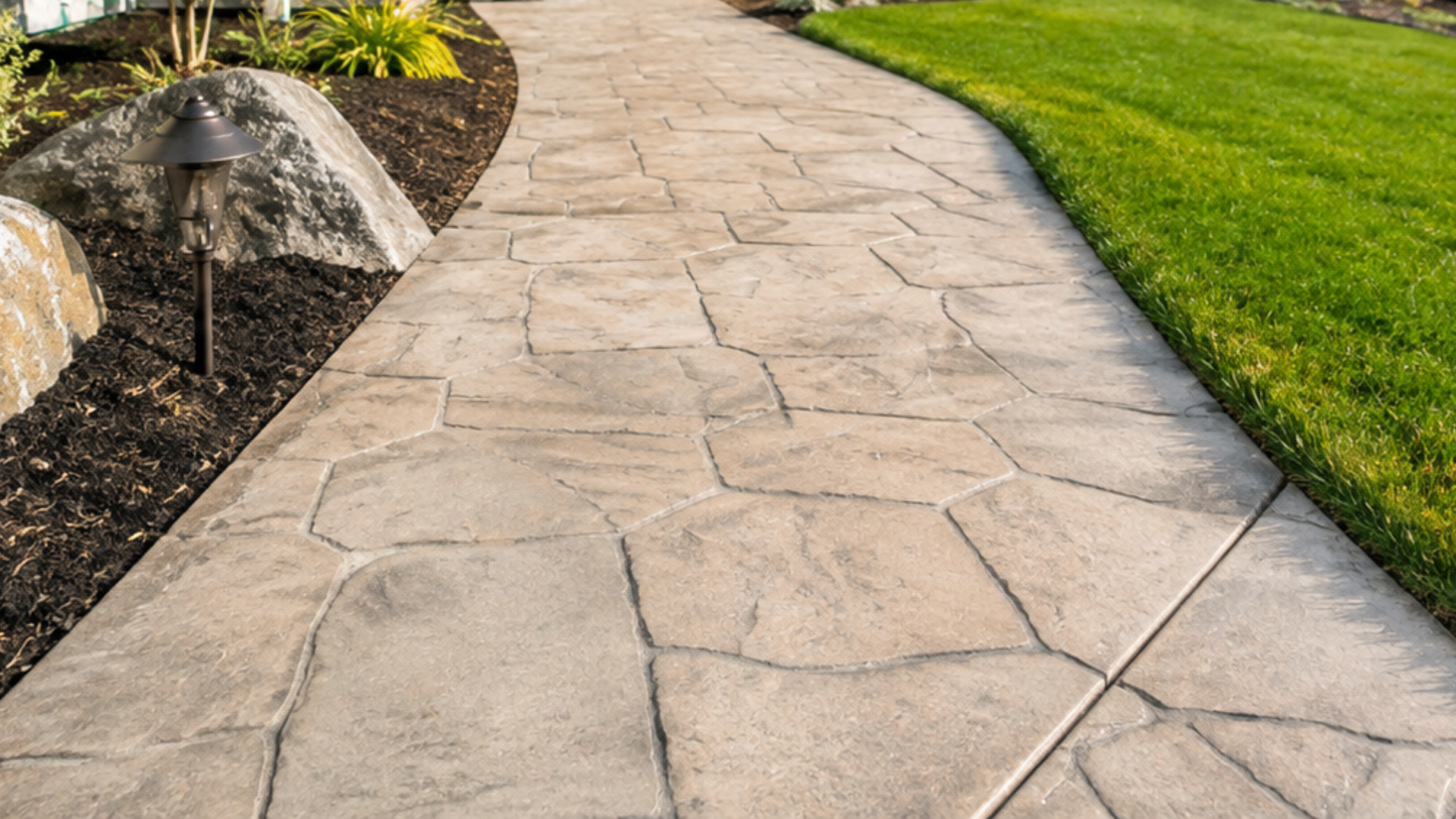
Stamped concrete looks fantastic. It can mimic natural stone or brick at a fraction of the cost of the real thing, and for a front entry where appearance carries weight, it is tempting. The caveat is traction. A smooth, sealed stamped surface can get slippery when wet, which is not what you want on the path people use every day in the rain. It can be done well in our climate, but only with the right anti-slip additive mixed into the sealer and a finish texture that does not go glass-smooth. If you want stamped, insist on a contractor who builds slip resistance into the plan from the start.
Exposed Aggregate
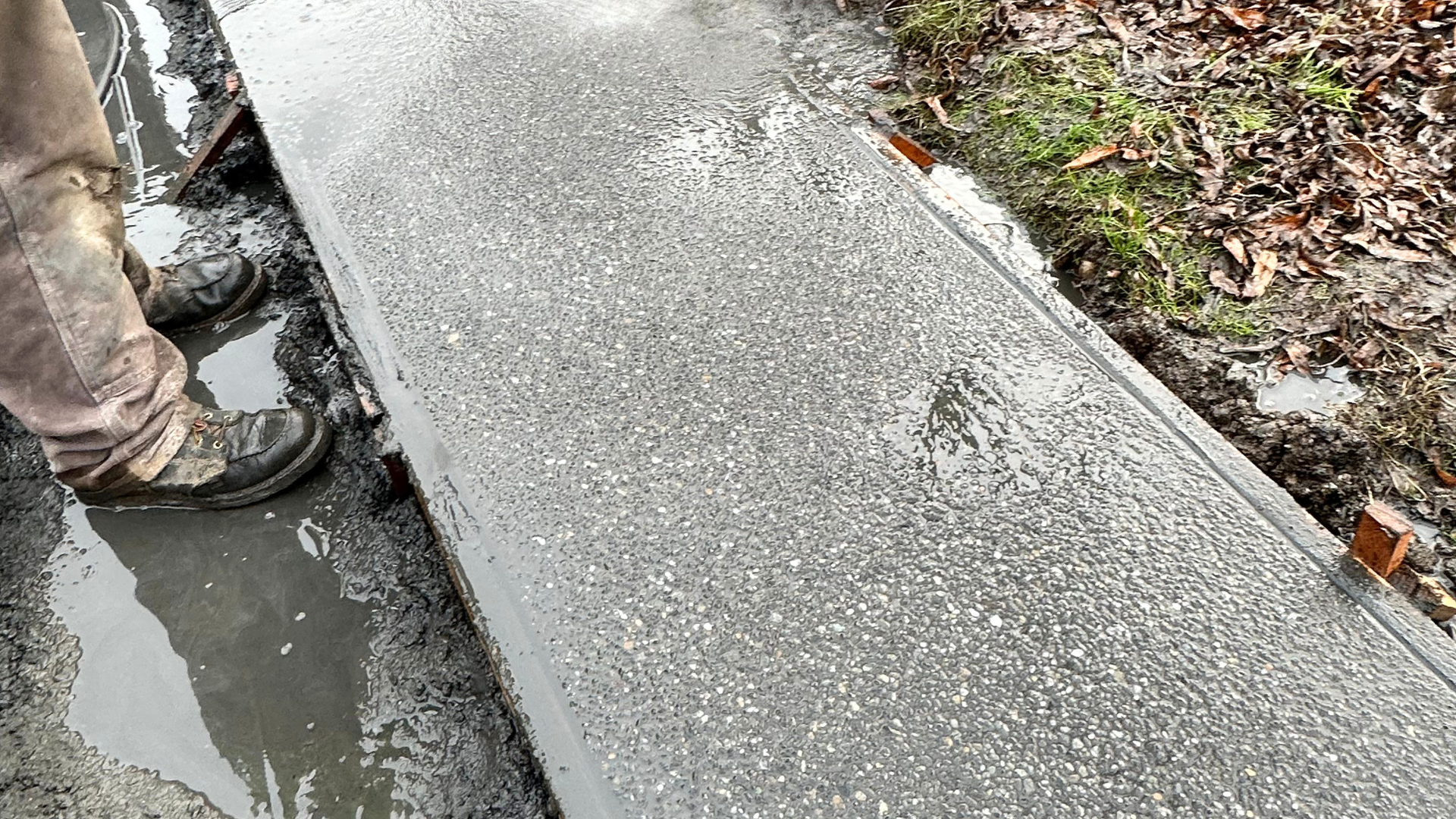
Exposed aggregate deserves a mention because it splits the difference nicely. Washing away the top layer of cement paste reveals the stone underneath, which looks more refined than plain broom while staying naturally grippy when wet. For an entry walkway where you want something nicer than broom but safer than smooth stamped, it is a smart compromise.
If decorative concrete is what you are after, our stamped and colored concrete work covers the design options in more detail, including how we handle slip resistance for our climate.
Do You Need a Permit? Private Walkways vs Public Sidewalks
This is where a lot of Bellingham homeowners get tripped up, because "walkway" and "sidewalk" are not the same thing in the eyes of the city, and the rules that apply depend entirely on where the concrete goes.
A Private Walkway on Your Own Property
A path from your driveway to your porch, a walkway through the garden, a route to the shed. These sit on your land, and as long as they are at grade, meaning flat and on the ground rather than elevated more than 30 inches or built over a basement, they are generally exempt from a building permit under the Bellingham Municipal Code.
That said, permit-exempt is not rule-exempt. Even a private walkway still has to respect a few things:
- Setbacks and easements. You cannot build over a utility easement or into a required setback.
- Stormwater limits. If your project adds or replaces more than 300 square feet of impervious surface, a stormwater permit can be triggered separately, even for exempt flatwork.
- Critical areas and the Lake Whatcom watershed. Properties near steep slopes, wetlands, or in the watershed (Sudden Valley and Geneva, for example) face extra requirements and a seasonal restriction on ground disturbance.
A Public Sidewalk in the Right-of-Way
This is the important distinction. The sidewalk running along the street in front of your house usually sits in the city's right-of-way, not on your private property. And the rules there are stricter.
Under the Bellingham Municipal Code, no work may be done in a city right-of-way without a written permit from the Board of Public Works. So replacing or installing a sidewalk in the right-of-way requires a right-of-way permit, and the work has to meet the city's Public Works standards for width, thickness, grade, and ADA accessibility. This is not a job to do on a handshake.
There is a second wrinkle worth knowing. In Bellingham, the abutting property owner is generally responsible for maintaining the public sidewalk next to their property, even though it belongs to the city right-of-way. The city can issue a notice of repair requiring you to fix a damaged sidewalk within a set timeframe, often 60 to 90 days. Ignore it, and the city can do the work and bill you, plus fees. If you have received a repair notice, that changes your timeline, and it is worth talking to a contractor right away rather than waiting.
For a complete rundown of when concrete work needs a permit across all project types, see our guide on concrete permits in Bellingham.
How Long a Concrete Walkway Lasts, and How to Keep It
A properly installed concrete walkway should last 25 to 30 years, often longer. The keys to reaching the top of that range are the base underneath and a little routine care.
- Seal it. Sealing every few years protects the surface against moisture intrusion, which matters a lot in a climate this wet. Stamped and decorative finishes need resealing more often than plain broom.
- Keep joints clear. Control joints are the deliberate grooves cut into the slab that let it crack in straight, controlled lines instead of randomly. Keep them clear of debris and moss.
- Deal with moss. Our damp climate loves to grow moss and algae on concrete, which is both unsightly and slippery. A periodic cleaning keeps the surface safe and looking right.
- Watch drainage. If water starts pooling on or beside the walkway, address it early. Standing water is the enemy of concrete in a freeze-thaw climate.
Frequently Asked Questions
How much does a concrete walkway cost in Bellingham?
A standard broom-finish concrete walkway generally runs in the range of $6 to $12 per square foot installed nationally, with Pacific Northwest projects tending toward the higher end because of labor costs and more involved site preparation. Stamped or decorative finishes typically run $12 to $22 per square foot or more. The best way to get an accurate figure is a site-specific estimate, since our glacial till soil often means more excavation and base work than a national average assumes.
Is a broom finish or stamped concrete better for a walkway?
For a walkway in Bellingham's wet climate, a broom finish is usually the better practical choice. The brushed texture provides reliable slip resistance built right into the surface, it costs less, and it needs less maintenance. Stamped concrete looks more upscale and works well for front entries, but it can be slippery when wet unless an anti-slip additive is used in the sealer. Exposed aggregate is a good middle option, offering a refined look with natural traction.
Do I need a permit to pour a walkway in Bellingham?
A private walkway on your own property, poured at grade, is generally exempt from a building permit. However, work on a public sidewalk in the city right-of-way requires a right-of-way permit from the Board of Public Works and must meet Public Works standards. Projects that add more than 300 square feet of impervious surface, or that sit in a critical area or the Lake Whatcom watershed, can trigger additional requirements. When in doubt, confirm with the city before you pour.
Am I responsible for the sidewalk in front of my house?
In Bellingham, yes, generally. Even though the public sidewalk sits in the city's right-of-way, the abutting property owner is typically responsible for maintaining it. The city can issue a notice of repair for a damaged sidewalk, usually giving you 60 to 90 days to address it, and can bill you if the work is not done. Responsibility policies vary in unincorporated Whatcom County and smaller cities like Ferndale and Lynden.
Why does my old concrete walkway keep cracking and lifting?
The most common cause in our area is inadequate site preparation over glacial till soil. When a walkway is poured on unstable or poorly drained ground, the saturated soil loses bearing strength and heaves during freeze-thaw cycles, cracking and lifting the slab. A proper install excavates the unstable soil, compacts a draining gravel base, and grades for runoff. Fixing the base is the durable solution; patching the surface alone rarely lasts.
How long does a concrete walkway last in Bellingham?
With proper installation and basic maintenance, a concrete walkway typically lasts 25 to 30 years or more. The base preparation matters most for longevity in our soil and climate. Sealing the surface every few years, keeping control joints and drainage clear, and removing moss all help the walkway reach the upper end of that lifespan.
Ready to Add a Walkway That Holds Up Here?
A concrete walkway is one of the higher-value improvements you can make to a Bellingham property, but only when it is built for the conditions it has to survive. That means real excavation over our glacial till, a finish chosen for traction in the wet, and the right permits pulled when the work touches the public right-of-way. Skip those, and you are buying a repair bill on a delay.
Coast Salish Concrete builds walkways and sidewalks the way our soil and climate demand, from proper subgrade preparation to anti-slip finishes suited to a Northwest winter, and we handle the permit and right-of-way questions as part of the job. As a trusted Bellingham concrete contractor serving Ferndale, Lynden, Blaine, Fairhaven, Sudden Valley, and the surrounding communities, we back our work with a 3-year workmanship warranty.
If you are planning a new walkway, replacing a cracked one, or you have received a city sidewalk repair notice, contact Coast Salish Concrete for a free estimate and a straight answer on what your project really needs.