Can You Pour Concrete in Winter in WA? Cold-Weather Facts for Whatcom County Homeowners
Yes, you can pour concrete in winter in Washington.
The more useful question is whether the concrete you pour in January will still be sound in ten years, and that depends almost entirely on how well your contractor manages two specific thresholds: temperature and moisture.
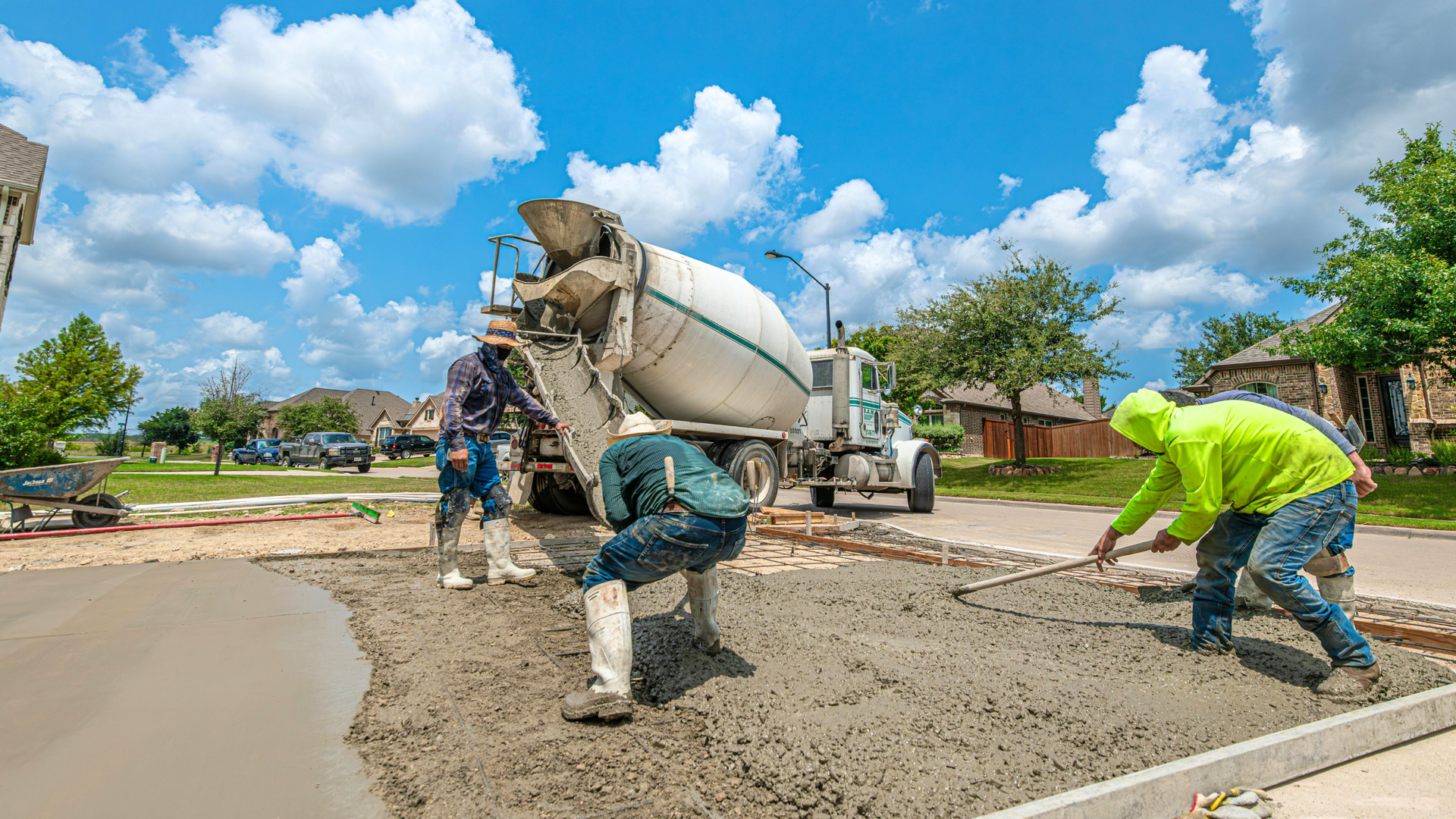
Most winter concrete guides were written for the Midwest or the Northeast, where winter means deep, dry cold. Whatcom County is a different problem. Our winters are damp, cold, and driven by marine air rolling in off Bellingham Bay. December lows average around 35°F, sitting right at the edge of the freeze line rather than well below it. January is the most humid month of the year at 84 percent average relative humidity, with rain falling roughly 14 days out of 31. That combination, hovering near freezing while staying persistently wet, creates a specific set of risks that dry-cold guidance does not address.
This guide covers what actually happens to concrete poured in a Whatcom County winter, the temperature and moisture thresholds that determine whether a slab reaches full strength, the precautions a qualified contractor takes, and how to decide whether your project should proceed now or wait for spring.
The Two Thresholds That Decide Whether Winter Concrete Lasts
Concrete does not dry out. It cures through hydration, a chemical reaction between water and cement that builds strength over time. Winter attacks that reaction from two directions at once, and understanding both is the key to judging whether a winter pour is safe.
Threshold One: The Freezing Point Before 500 PSI
This is the threshold that determines whether your concrete suffers permanent structural damage. Fresh concrete needs to reach roughly 500 psi of compressive strength before it can safely survive a freeze. Below that strength, the mix water inside the slab can freeze and expand, disrupting the cement paste structure from within. The damage is not cosmetic and it cannot be repaired later. Concrete that freezes before reaching 500 psi can permanently lose up to 50 percent of its designed strength.
The American Concrete Institute defines cold weather concreting as conditions where the average daily air temperature falls below 40°F, or is expected to during the protection period. In Bellingham, average December and January highs sit in the low 40s with lows near freezing, which means most of our winter falls squarely into ACI 306 territory. Under normal summer conditions a residential slab reaches 500 psi in a day or two. In cold weather, hydration slows dramatically, stretching that window out and extending the period during which the slab remains vulnerable.
Threshold Two: The Moisture Load Unique to Our Marine Winters
This is the threshold most national guidance ignores entirely, and it is the one that matters most in Whatcom County. Fresh concrete surfaces are porous until they gain strength and are properly sealed. Under our winter conditions, with humidity at 84 percent, near-constant cloud cover, and rain falling nearly half the days in a month, an unprotected slab behaves much like a sponge.
Excess surface moisture creates several problems. Rain landing on fresh concrete before it sets can dilute the surface paste, weakening the top layer and leaving a soft, dusty, or scaling finish. Water that soaks into a curing slab raises the internal water-to-cement ratio in the surface zone, reducing final strength exactly where wear resistance matters most. And saturated concrete that then experiences a freeze has more internal water available to expand, compounding the first threshold.
The two thresholds interact. A dry 30°F night is a manageable, predictable problem. A 35°F night following a day of rain, with the slab saturated and the ground already waterlogged, is a considerably harder one. Whatcom County delivers the second scenario far more often than the first, which is why local winter experience matters more here than a generic cold-weather checklist.
Bellingham Winter Conditions at a Glance
| Month | Avg High | Avg Low | Rain Days | Avg Humidity |
|---|---|---|---|---|
| November | About 48F | Upper 30s | High | High |
| December | About 42F | About 35F | About 15 days | About 83 percent |
| January | About 44F | About 36F | About 14 days | About 84 percent |
| February | Mid 40s | Mid 30s | High | High |
| March | Upper 40s | Upper 30s | About 17 days | High |
Two things stand out. First, our average lows hover just above freezing rather than well below it, which means overnight dips past the freeze line are common but not constant, and they are hard to predict without watching the forecast closely. Second, March is actually the rainiest month of the year by number of rain days, which is why early spring is not automatically the safe alternative to winter. Moisture management matters well past February.
What a Qualified Concrete Contractor Does Differently in Winter
Winter pours are not inherently unsafe. They are unsafe when handled the same way a July pour would be. These are the practices that separate a durable winter slab from a compromised one.
Mix Adjustments
The mix itself changes. Accelerating admixtures speed up hydration so the slab reaches that critical 500 psi threshold faster, shortening the window of vulnerability. Non-chloride accelerators are used for any reinforced concrete to avoid corrosion risk. Air entrainment, which creates microscopic air voids that give freezing water somewhere to expand, is essential for any exterior flatwork in our climate, and doubly so for winter work. A lower water-to-cement ratio and adjusted cement content also help generate early strength and heat.
Temperature Protection
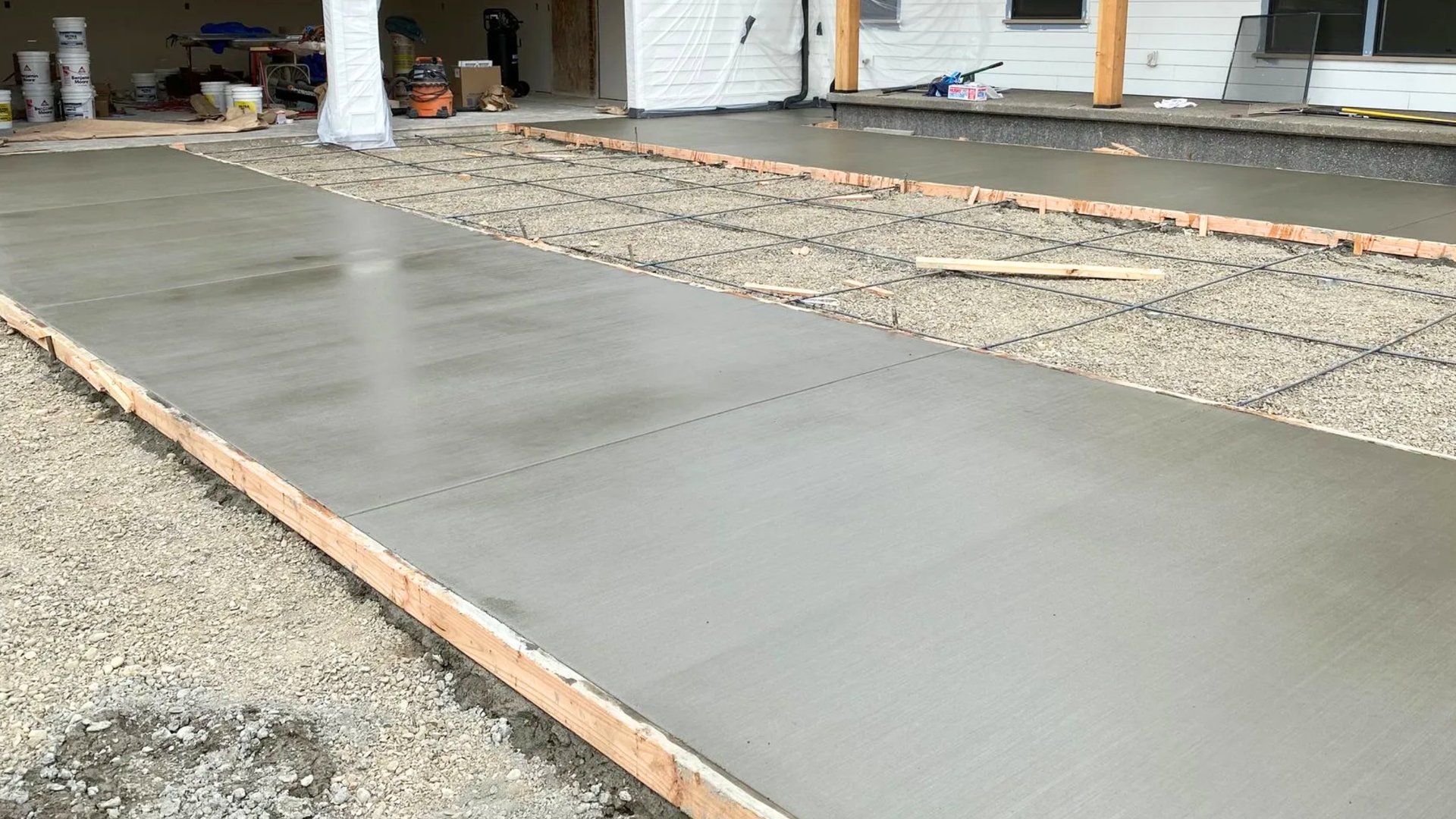
Insulated curing blankets are the standard tool, trapping the heat that hydration naturally generates. For larger or more exposed pours, heated enclosures and ground heaters extend protection further. Formwork and any reinforcement should be above freezing before concrete contacts them, since a frozen surface pulls heat out of the mix immediately. The protection period continues until the slab verifiably reaches strength, not until a fixed number of days has passed.
Moisture Management
This is where local expertise shows. A crew that understands our winters watches the forecast for a genuine dry window rather than an arbitrary date, keeps the slab covered against rain during the vulnerable early hours, and manages site drainage so runoff does not pool against fresh concrete. Poly sheeting, properly secured, protects against rain without trapping problems underneath.
Site and Base Preparation
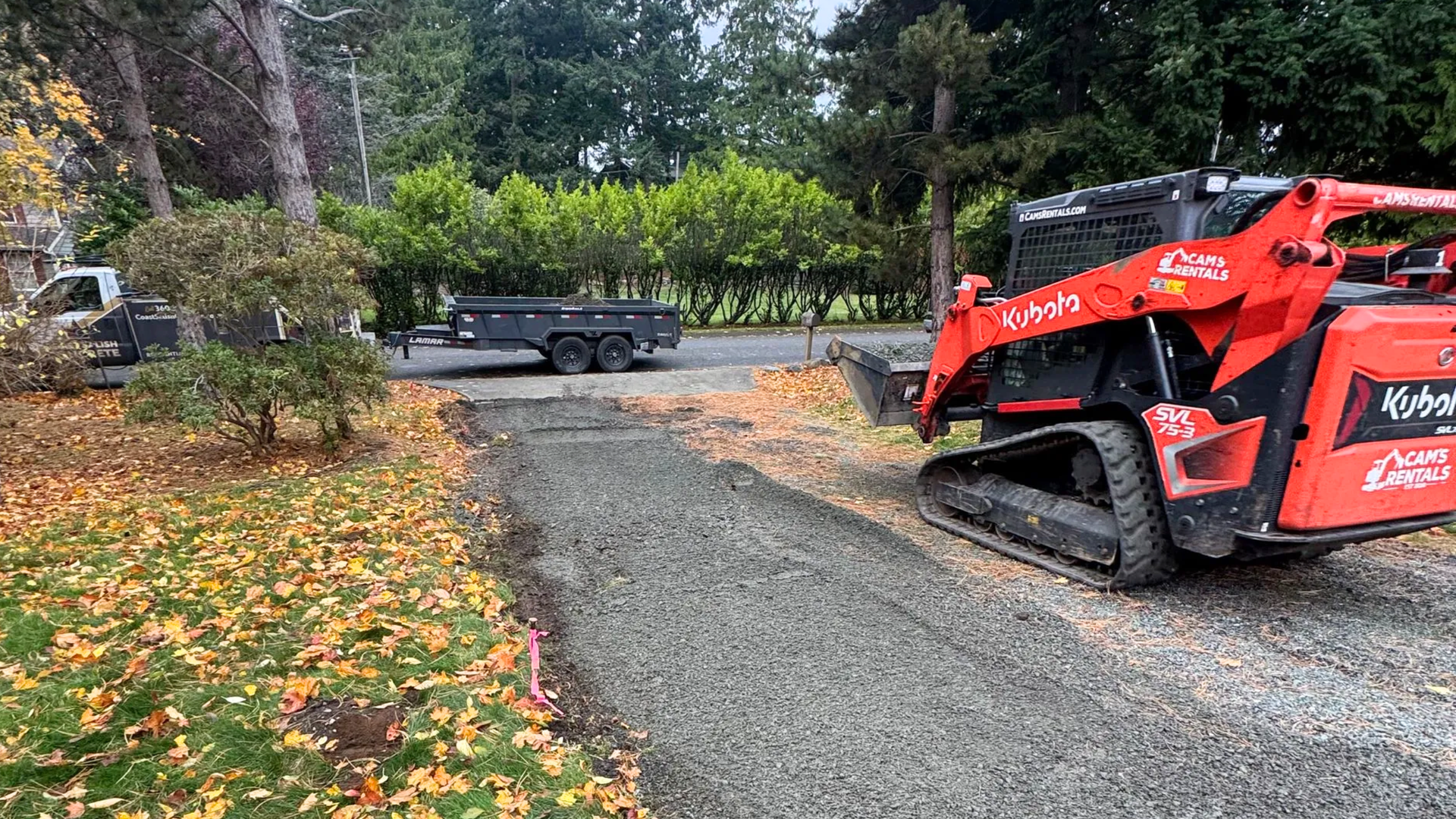
Whatcom County sits largely on glacial till, a dense, poorly draining soil that holds water and heaves when saturated. In winter that ground is often waterlogged, and a slab is only as stable as the base beneath it. Excavating and compacting a proper sub-base in saturated conditions is genuinely difficult, and skipping it is the most common cause of concrete that cracks a year or two after installation. If the ground cannot be prepared properly, no amount of mix adjustment compensates.
Temperature Monitoring
In-place temperature monitoring verifies that the concrete actually reached adequate strength before protection was removed. This is the difference between assuming a slab is safe and knowing it.

Will My Winter-Poured Concrete Last?
This is the real question behind most winter concrete searches, and the honest answer is: it depends on whether the precautions above were actually followed.
Concrete poured in winter by a crew that adjusts the mix, protects against both freezing and rain, prepares a proper base, and monitors strength before removing protection can perform just as well over decades as a summer pour. Concrete poured in winter without those measures is at real risk of permanent strength loss, surface scaling, dusting, early cracking, and base settlement.
The catch is that the difference is largely invisible on day one. A slab that froze before reaching 500 psi looks fine when the forms come off. The strength loss shows up years later as premature cracking, spalling, or a surface that deteriorates faster than it should. That is why choosing your contractor matters more for a winter pour than for any other time of year.
There is also a cost consideration. Blankets, enclosures, accelerating admixtures, extended monitoring, and the added labor of working around weather windows all add expense. A winter pour typically costs more than the same project in summer, and takes longer, because the protection period stretches out and cure times extend before you can use the surface.
When a Winter Pour Makes Sense, and When to Wait
Winter work is justified in some situations. Interior slabs in an enclosed, heated space, such as a garage floor, shop, or basement, sidestep most of the weather problem entirely. Foundations tied to a construction schedule that cannot slip may need to proceed with proper cold-weather protocols. Genuine urgency, like a failed surface creating a safety or access problem, can also warrant it.
Waiting for spring or summer is usually the better call for discretionary exterior work: a new patio, a driveway replacement you have been considering, a walkway upgrade. You will typically pay less, get a stronger result with less risk, and have far better site conditions for base preparation. Our guide on the best time of year to pour concrete in Whatcom County breaks down how each season compares if you are weighing the timing.
One local factor can force the decision. If your property sits within the Lake Whatcom watershed, which includes areas such as Sudden Valley and Geneva, land-disturbing activity including excavation and grading is restricted from October 1 through May 31 to protect the lake as a drinking water source. Because most concrete projects require excavation, winter work on watershed properties is generally not permitted at all. That effectively makes summer the only window, and it makes planning ahead essential rather than optional.
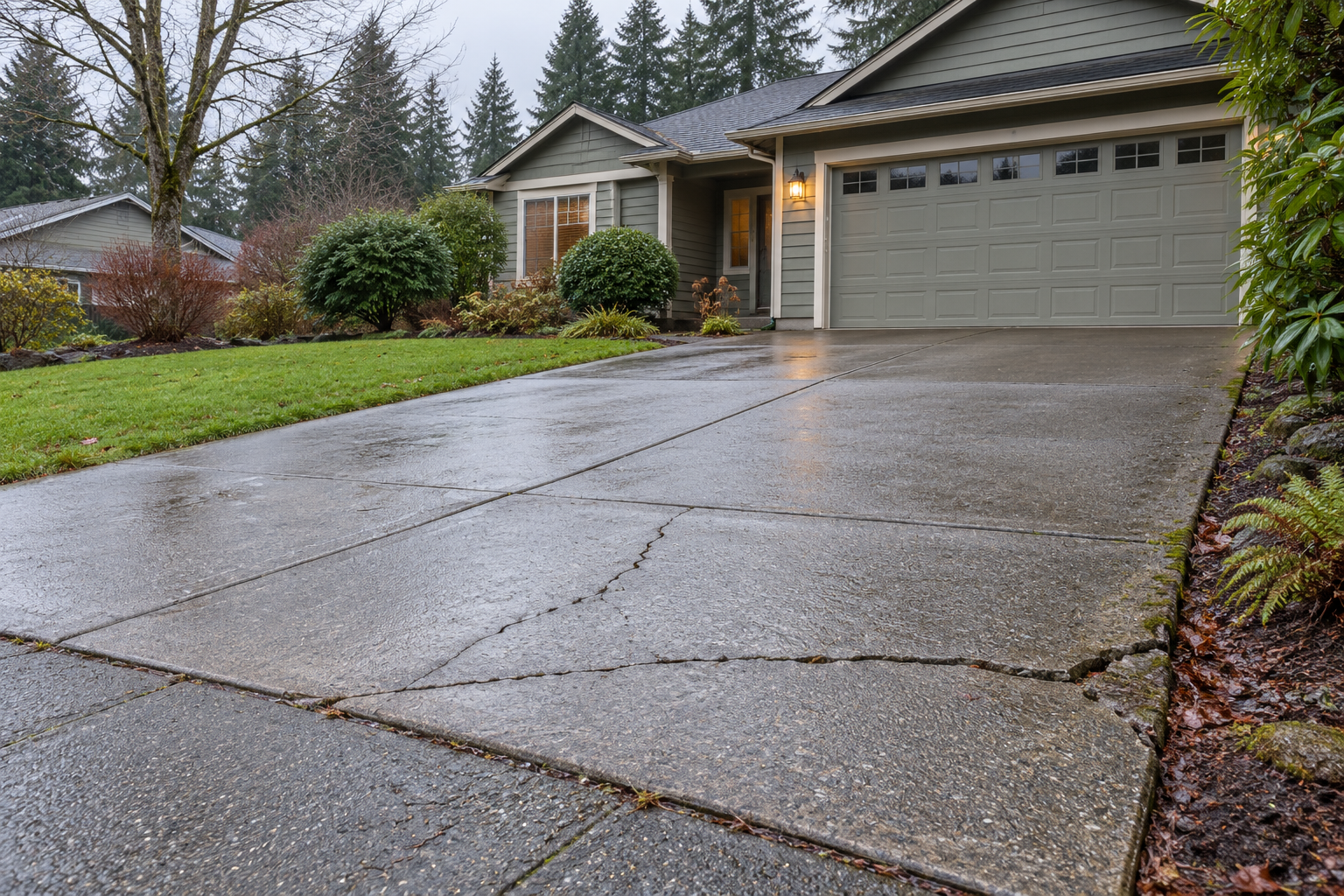
If you are trying to decide whether an existing surface needs work now or can hold until spring, our guide on concrete driveway repair and when to replace can help you judge the urgency.
Frequently Asked Questions
Can you pour concrete in winter in Washington?
Yes, concrete can be poured in winter in Washington, but it requires specific cold-weather practices to produce a lasting result. In Whatcom County the challenge is not just cold but moisture, since our winters combine near-freezing temperatures with high humidity and frequent rain. A qualified contractor uses accelerating admixtures, air entrainment, insulated blankets or heated enclosures, rain protection, and in-place temperature monitoring. Without those measures, winter concrete is at real risk of permanent strength loss.
What temperature is too cold to pour concrete?
The American Concrete Institute defines cold weather concreting as conditions where the average daily air temperature falls below 40°F, or is expected to during the protection period. That describes most of a Whatcom County winter, where December and January lows average near 35°F. Concrete is not automatically ruined below 40°F, but below that point it requires active protection so the slab reaches roughly 500 psi of strength before any freeze. Below that strength, freezing can cause permanent damage.
Will rain ruin freshly poured concrete?
Rain falling on concrete before it sets can dilute the surface paste and leave a weak, dusty, or scaling finish. It can also raise the water-to-cement ratio in the surface zone, reducing strength exactly where wear resistance matters most. This is a significant concern in Bellingham, where January averages 84 percent humidity and rain falls roughly 14 days a month. Proper covering and timing the pour to a genuine dry window are essential during our wet season.
How long does concrete take to cure in cold weather?
Cold slows hydration considerably. In summer, a residential slab reaches the critical 500 psi threshold within a day or two. In winter, that stretches out, and the protection period must continue until the concrete verifiably reaches strength rather than for a set number of days. Plan on longer waits before use as well, generally at least seven days before driving passenger vehicles on a new surface and a full 28 days before heavy trucks or RVs, with cold conditions extending both.
Does concrete poured in winter last as long as summer concrete?
It can, if the work is done correctly. A winter slab that was properly mixed, protected from freezing and rain, poured on a well-prepared base, and monitored for strength can perform as well over decades as a summer pour. A winter slab that froze before reaching adequate strength, or that absorbed rain while curing, may lose durability permanently even though it looks fine initially. The quality of the contractor matters more in winter than in any other season.
Is it cheaper to pour concrete in winter?
Usually not. While contractor schedules are less crowded in winter, the added cost of insulated blankets, heated enclosures, accelerating admixtures, extended monitoring, and weather-related labor generally makes a winter pour more expensive than the same project in summer. Timelines also run longer. Homeowners looking to save on discretionary projects typically do better booking early for a spring or summer slot.
Planning a Winter Concrete Project in Whatcom County?
Winter concrete work is possible here, but it leaves no room for shortcuts. Between temperatures that hover at the freeze line, humidity in the mid 80s, and rain falling nearly half the days of the month, our marine winters demand mix adjustments, active protection, careful timing, and a properly prepared base. Done right, the result lasts for decades. Done casually, the damage may not appear for years, and by then it cannot be undone.
Coast Salish Concrete brings the local knowledge these conditions require, from cold-weather mix design and rain protection to sub-base preparation engineered for Whatcom County's glacial till soils. As a trusted Bellingham concrete contractor serving Ferndale, Lynden, Blaine, Fairhaven, Sudden Valley, and surrounding communities, we back our installations with a 3-year workmanship warranty.
If you are weighing a winter pour against waiting for spring, we will give you a straight answer about which makes sense for your project. Contact Coast Salish Concrete for a free estimate and an honest assessment of your timeline.