Concrete Foundations in Bellingham: Types, Cost, and What to Expect
Every building in Bellingham rests on a decision most homeowners never think about until something goes wrong. The concrete foundation is the part of the house you cannot see, cannot easily fix, and cannot afford to get wrong. And here in Whatcom County, the ground it sits on makes that decision harder than it is almost anywhere else in the country.
The reason is the soil. Bellingham sits on glacial till, a dense, nearly waterproof layer that traps water instead of letting it drain. Add close to 37 inches of rain a year and the occasional atmospheric river that dumps a month of water in a few days, and you have the single toughest foundation environment in the region. This guide covers the main foundation types, what each one costs, how our local conditions should shape your choice, and what actually determines whether a concrete foundation lasts a century or fails in a decade.
The Foundation Types You Will Actually Consider
There are four residential foundation systems in common use nationally. Not all of them make equal sense in our climate, but it helps to understand each one before narrowing down.
Slab-on-Grade
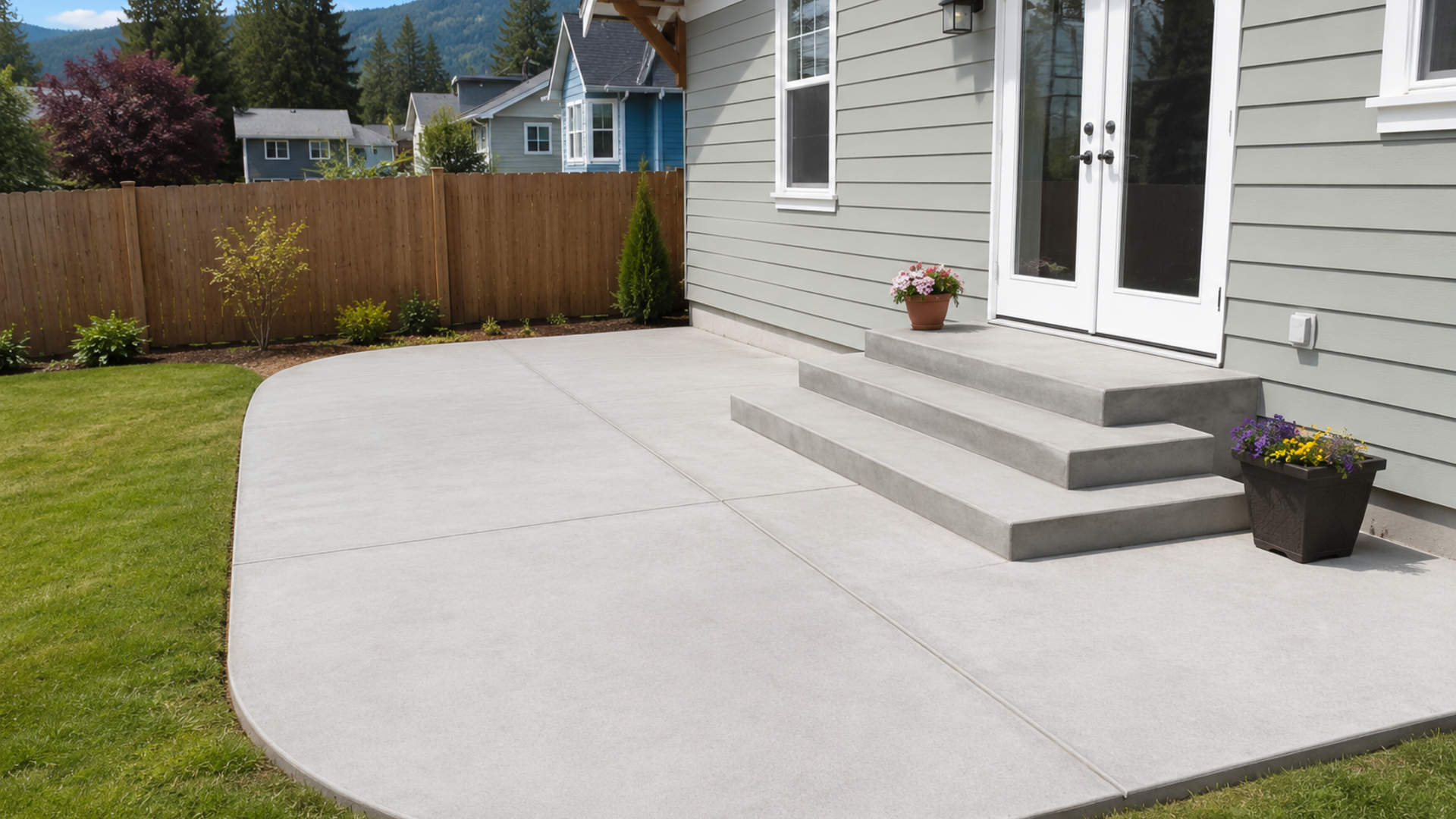
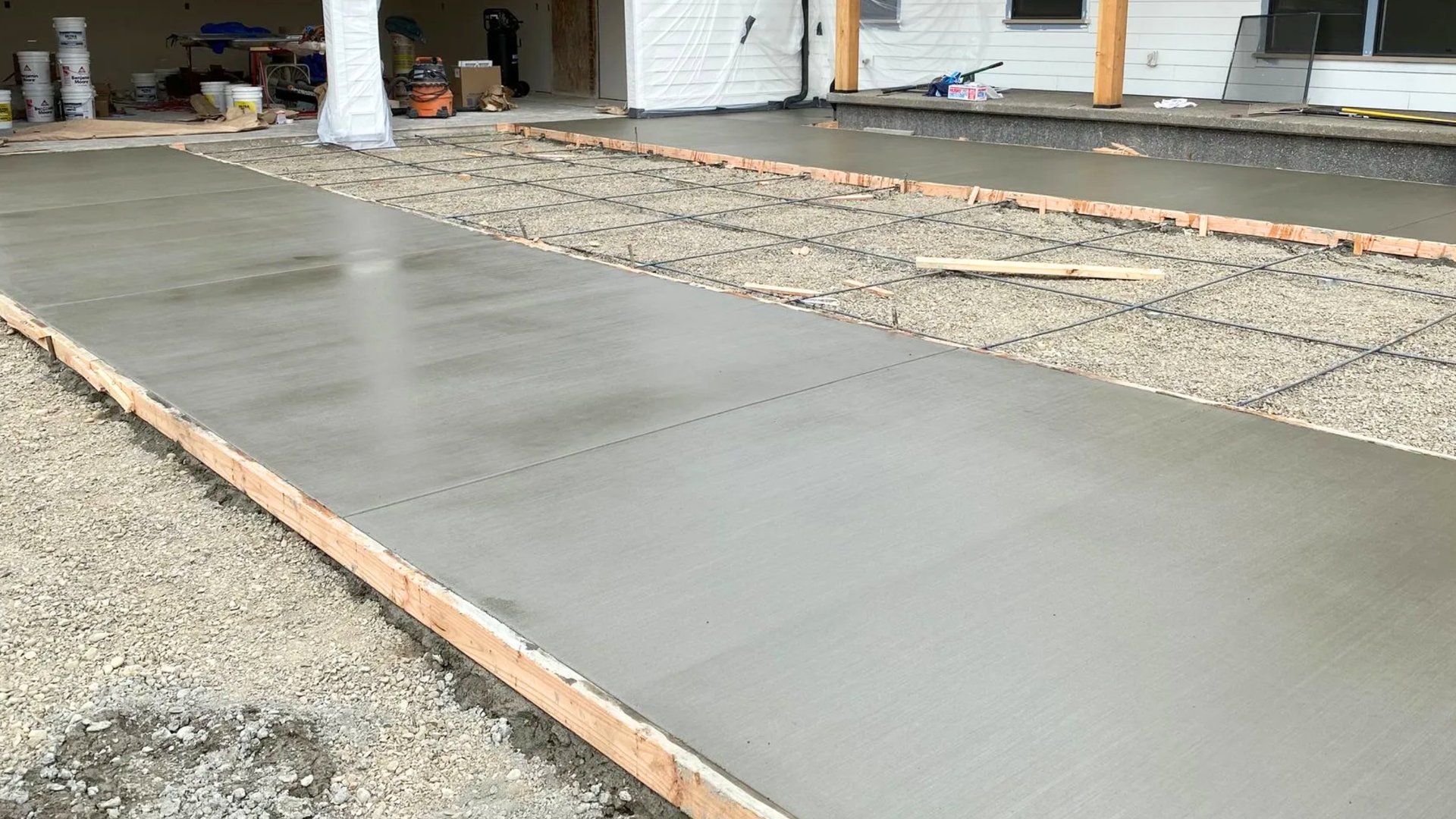
A slab-on-grade, or monolithic slab, is a single layer of concrete, usually four to six inches thick, poured directly onto prepared ground. The footing and floor are poured together in one operation, which keeps labor and material costs down.
- Best for: flat, stable lots; garages, shops, additions, and accessory dwelling units.
- Strengths: lowest cost, minimal maintenance, no crawl space to flood, no wood framing underneath to rot.
- Watch-outs: utilities are embedded in the slab, so plumbing or wiring repairs mean cutting concrete. Needs a well-drained, properly prepared base to avoid cracking on our soil.
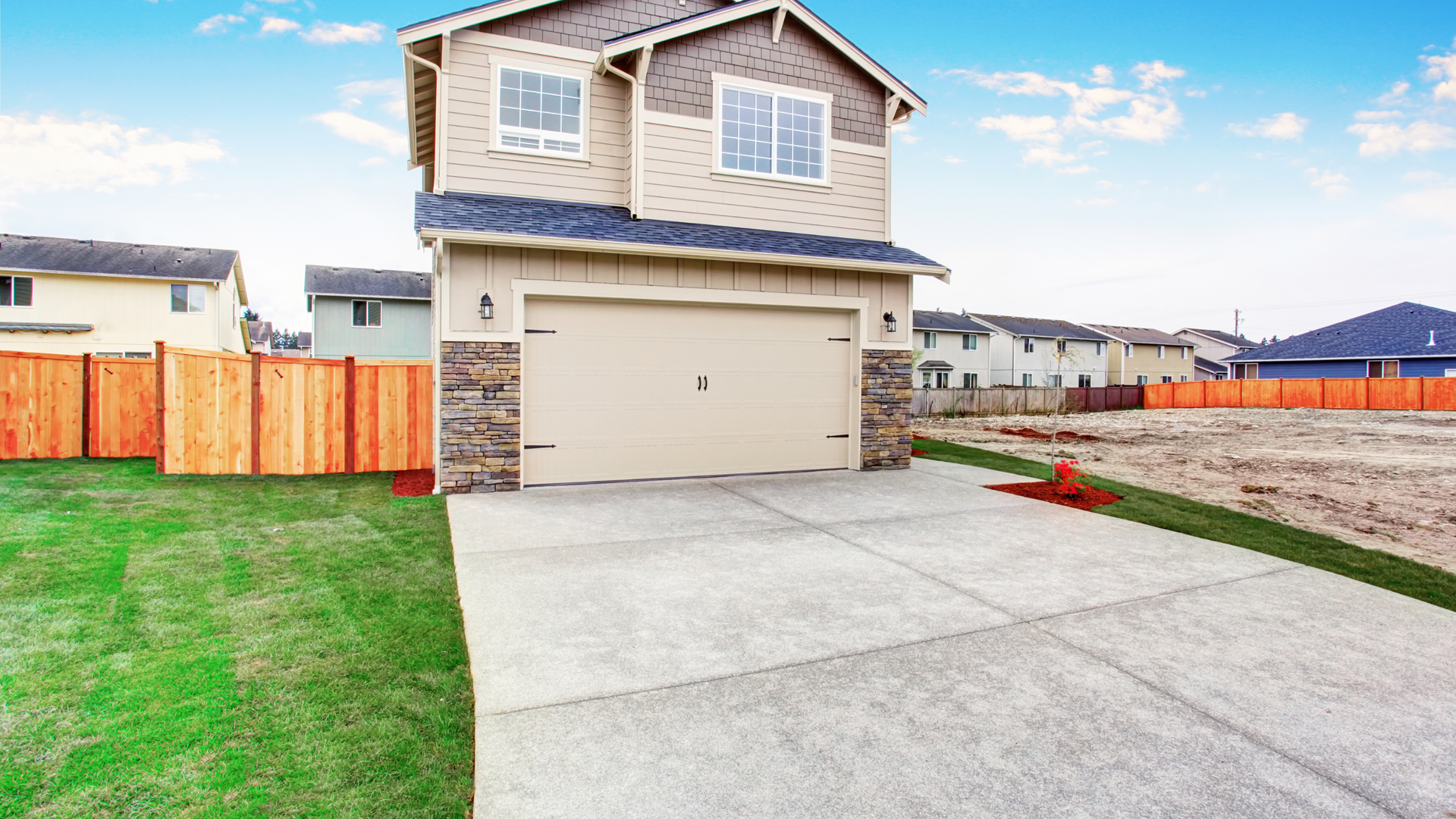
For garages, shops, and outbuildings, a slab is very often the right call in Bellingham. It has no below-grade cavity for water to collect in.
Crawl Space
A crawl space raises the structure on short perimeter walls, leaving an accessible gap between the ground and the floor. It is one of the more common residential foundations in the Pacific Northwest.
- Best for: sloped or uneven lots; homes where access to plumbing, wiring, and ductwork matters.
- Strengths: utilities stay reachable without breaking concrete; elevation lifts the living space above grade.
- Watch-outs: moisture. This is the big one here. An unencapsulated crawl space in Whatcom County is a candidate for standing water, mold, and wood rot. Encapsulation and drainage are not optional extras in our climate.
Crawl spaces work well here, but only when built with our water table in mind. Skip the drainage and vapor control and you are building a problem.
Full Basement
A full basement extends the foundation deep enough to create a full level of usable space below the house. It is the most expensive system by a wide margin, and the most demanding to build well in our conditions.
- Best for: maximizing living or storage space on a suitable lot with the budget to do it right.
- Strengths: adds significant square footage at a lower per-foot cost than an above-grade addition.
- Watch-outs: our perched water table makes waterproofing and drainage absolutely critical. A basement done cheaply in Bellingham is a basement that floods.
Basements are less common here than in the cold-winter states, and the reason is instructive. In places like Minnesota, footings have to go several feet down to clear a deep frost line anyway, so adding basement walls costs relatively little extra. Our frost line is shallow, so there is no structural reason to dig deep, and every foot of depth in our soil is a foot closer to groundwater trouble.
Pier and Beam
Pier and beam raises the structure on concrete piers with beams spanning between them. It is less common in standard residential builds but has its uses.
- Best for: steep or difficult lots, certain accessory structures, and situations where minimizing ground contact is an advantage.
- Strengths: works on terrain that defeats other systems; leaves the ground largely undisturbed.
- Watch-outs: less usable enclosed space; still needs proper drainage around the piers.
What a Concrete Foundation Costs
Cost depends heavily on type, size, site conditions, and how much excavation and drainage work your lot demands. The ranges below are national figures for 2026. In Bellingham, plan on the higher end, because our soil almost always means more drainage and site work than an average lot.
| Foundation Type | Typical Cost per Sq Ft (2026 national) | Best For | Key Watch-Out in Bellingham |
|---|---|---|---|
| Slab-on-grade | $5 to $14 | Flat lots, garages, shops, ADUs | Needs well-drained prepared base |
| Crawl space | $8 to $18 | Sloped lots, utility access | Requires encapsulation and drainage |
| Pier and beam | $8 to $15 | Steep or difficult lots | Still needs pier drainage |
| Full basement | $20 to $50 (unfinished) | Maximizing usable space | Highest water and hydrostatic risk |
A few things worth understanding about these numbers:
- The figures are for the foundation footprint, not finished living space. A two-story home has roughly twice the living area of its foundation.
- Excavation, permits, and waterproofing are frequently excluded from a headline quote. Always ask what is and is not included.
- Drainage is a real line item here. A perimeter French drain runs several thousand dollars on a typical residential job, and on our soil it is closer to a requirement than an upgrade.
- Reinforcement matters. Residential foundations should use 3,000 to 4,000 psi concrete with rebar sized to the load, per ACI 318 guidelines. Cutting corners on steel is a false economy.
The cheapest foundation bid is almost never the best value, because the savings usually come out of drainage and site prep, the exact things that keep a foundation standing in Whatcom County. For a sense of how site conditions drive cost on other flatwork, our guide on concrete driveway cost in Bellingham walks through similar factors.
Why Bellingham's Soil Changes Everything
This is the section that matters most, and it is the one national foundation guides simply do not cover. Our ground behaves differently, and a foundation designed for a dry lot in Arizona will not survive here.
The Perched Water Table Problem
Glacial till is nearly impervious. When it rains, water soaks down through the topsoil and landscaping until it reaches the till layer, and then it stops. It cannot drain through, so it pools at that interface and builds up, creating what engineers call a perched water table, a layer of trapped groundwater that can sit far higher than the regional water table.
For a foundation, that trapped water is a constant source of pressure. It pushes against foundation walls and up beneath slabs as hydrostatic pressure, and in low-lying areas that pressure can reach hundreds of pounds per square foot. Water under pressure finds every crack, every joint, every weak point. This is why so many Bellingham foundation problems are really water problems in disguise.
Atmospheric Rivers and Peak Load
On top of the steady wet season, Whatcom County periodically gets hit by atmospheric river events, intense multi-day storms that overwhelm even good drainage. Homeowners in low-lying neighborhoods have seen crawl spaces take on a foot or more of water in a single storm. A foundation here has to be built not just for average rain but for those peak events.
Drainage Is the Real Foundation
Because of all this, the most important part of a Bellingham foundation is often not the concrete at all. It is the water management around it. A well-built foundation on our soil typically includes some combination of:
- Perimeter French drains: perforated pipe in a gravel-filled trench along the footing, collecting water and routing it away.
- Curtain drains: on hillside lots, an intercepting drain uphill of the foundation to catch subsurface water before it arrives.
- Sump systems: a pit and pump to remove collected water from basements and low crawl spaces, ideally with battery backup for the storm-season power outages that arrive right when you need the pump most.
- Proper grading and downspout routing: getting surface water away from the foundation before it ever soaks in.
Get the drainage right and the concrete does its job for generations. Get it wrong and the best concrete in the world will still fail.
Frost, Footings, and Local Code
Washington's frost line is shallow compared to the cold-winter states, generally in the range of 12 to 24 inches. The Washington State Residential Code requires exterior footings to sit at least 12 inches below undisturbed ground, and deep enough to clear the local frost line. That shallow frost depth is a big part of why deep basements are less common here: there is no frost-related reason to dig down, and doing so only invites more water contact.
Any foundation, whether for a new home, an addition, a garage, or an accessory dwelling unit, is structural work that requires a permit. The plans for anything beyond the simplest structure will often need to be stamped by a licensed engineer, especially given our soil. Our foundation services run through the permit and engineering process as a matter of course, and for a full breakdown of when concrete work needs a permit, see our guide on concrete permits in Bellingham.
What Determines Whether a Foundation Lasts
Concrete itself is remarkably durable. A properly built foundation can last 50 to 100 years or more, and the concrete does not simply wear out. When foundations fail, the cause is almost never the material. It is one of these:
- Soil movement. Unstable or poorly compacted ground shifts under the load.
- Water damage. Hydrostatic pressure and poor drainage, the number one culprit in our area.
- Poor original construction. Skipped site prep, inadequate reinforcement, or drainage left out to hit a price.
Notice that two of the three are about water and site work, not concrete. That is the whole point. In Bellingham, choosing a foundation is really about choosing how you will manage water, and choosing a contractor who treats that as the core of the job rather than an afterthought.
Frequently Asked Questions
What is the best foundation type for a home in Bellingham?
There is no single best type; it depends on your lot, budget, and goals. Slab-on-grade is excellent and economical for garages, shops, and accessory structures on flat, stable ground, with no cavity to flood. Crawl spaces are common and work well when built with proper encapsulation and drainage for our climate. Full basements add space but carry the highest water risk here and demand serious waterproofing. The right answer starts with a site assessment of your soil and drainage, not a default choice.
How much does a concrete foundation cost in Bellingham?
Nationally in 2026, slab-on-grade runs roughly $5 to $14 per square foot, crawl spaces $8 to $18, pier and beam $8 to $15, and full basements $20 to $50 per square foot unfinished. Bellingham projects tend toward the higher end because our glacial till soil almost always requires more excavation and drainage work. A headline quote may exclude excavation, permits, and waterproofing, so always confirm what is included before comparing bids.
Why do foundations have so many problems in Whatcom County?
The main reason is the soil. Glacial till is nearly impervious, so rainwater collects on top of it and forms a perched water table that presses against foundations with significant hydrostatic pressure. Combined with about 37 inches of annual rain and periodic atmospheric river storms, this puts constant water load on foundations. Most foundation problems here are fundamentally drainage problems, which is why water management is the most important part of the build.
Do I need a permit for a foundation in Bellingham?
Yes. Any foundation for a home, addition, garage, or accessory dwelling unit is structural work and requires a building permit. Plans often need to be stamped by a licensed engineer, particularly because of local soil conditions. Properties in critical areas or the Lake Whatcom watershed face additional review. A contractor who regularly builds in Bellingham will handle the permitting and engineering as part of the project.
Why are basements less common in Bellingham than in colder states?
Two reasons. First, our frost line is shallow, generally 12 to 24 inches, so there is no structural need to dig deep footings the way cold-climate states must. That removes the cost advantage that makes basements economical elsewhere. Second, our high perched water table means every foot of depth increases the risk and cost of keeping the space dry. Slabs and well-built crawl spaces often make more sense here.
How long does a concrete foundation last?
A properly built foundation typically lasts 50 to 100 years or longer, and the concrete itself does not degrade under normal conditions. Failures come from soil movement, water damage, or poor original construction rather than the material wearing out. In Bellingham, longevity depends heavily on the drainage and site preparation done at the start, which is why those steps deserve the most attention and budget.
Building or Replacing a Foundation in Bellingham? Start on Solid Ground
A foundation is the one part of your home you truly cannot afford to have done casually. In Whatcom County that means treating water as the central challenge it is, matching the foundation type to your specific lot and soil, and building in the drainage our glacial till demands from the very first step. Do that, and the foundation quietly does its job for the life of the house. Cut corners, and the repair bill will find you.
Coast Salish Concrete builds foundations engineered for the conditions Bellingham actually presents, from soil and drainage assessment through permitting, reinforcement, and water management done to local standards. As a trusted Bellingham concrete contractor serving Ferndale, Lynden, Blaine, Fairhaven, Sudden Valley, and the surrounding communities, we back our work with a 3-year workmanship warranty.
If you are planning new construction, an addition, or a foundation repair,
contact Coast Salish Concrete for a free estimate and an honest assessment of what your site really needs.