When to Seal Concrete Patios and Walkways in Bellingham, WA
The best time to seal concrete in Bellingham, WA is during a dry, mild stretch from late spring through early fall, after new concrete has cured for at least 28 days. That timing gives the slab the warmth and dry air to absorb the sealer properly, which rarely happens during our long wet season. For an existing patio or walkway, the same weather rules apply: dry surface, dry forecast, and workable temperatures.
Sealing matters more here than in drier regions. Our heavy rain, humidity, and freeze-thaw winters push water into concrete over and over, and a good sealer slows that down. This guide covers when to seal, how often to reseal, the conditions it needs, and one honest limit worth understanding first.
When to Seal New Concrete
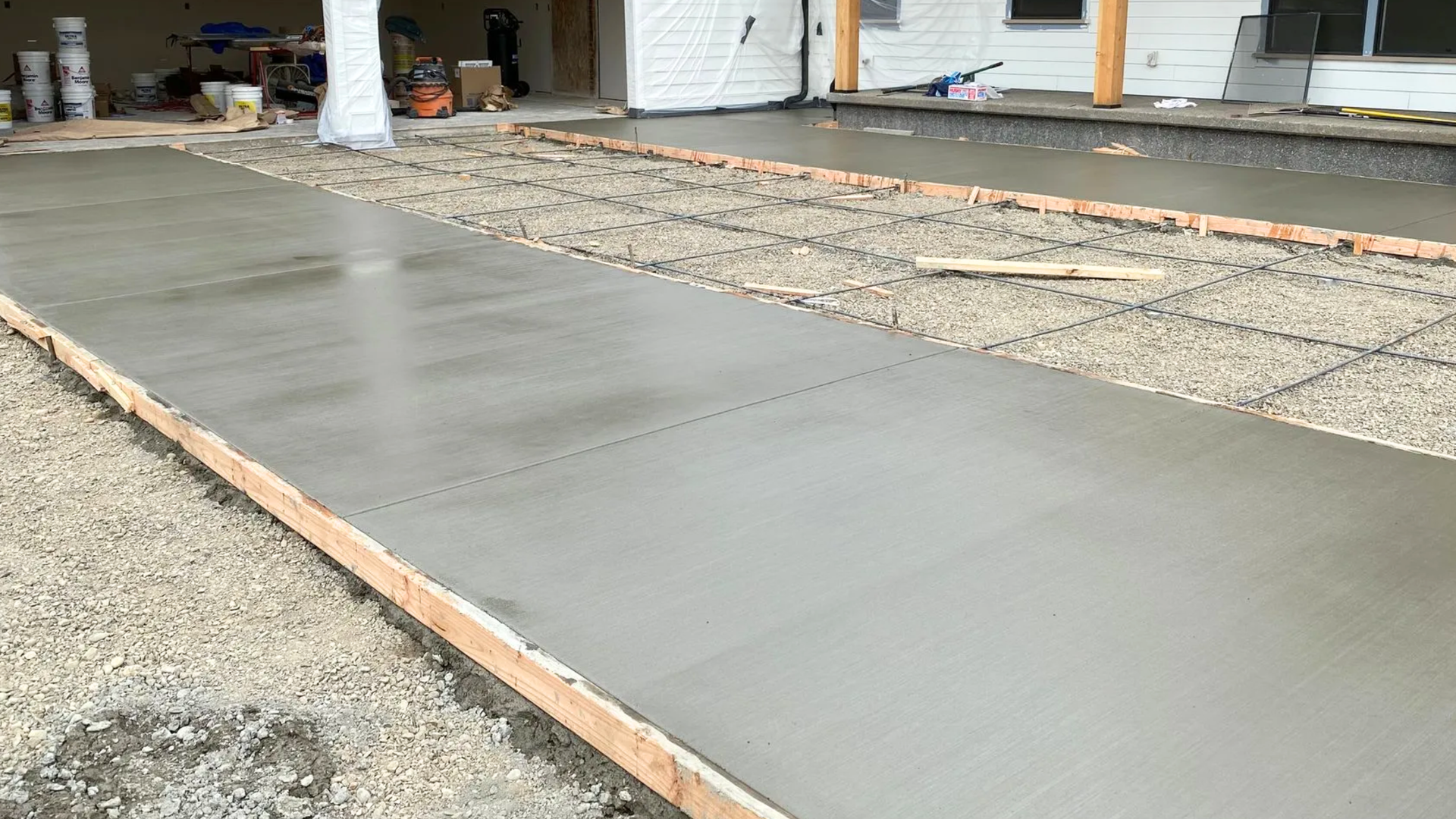
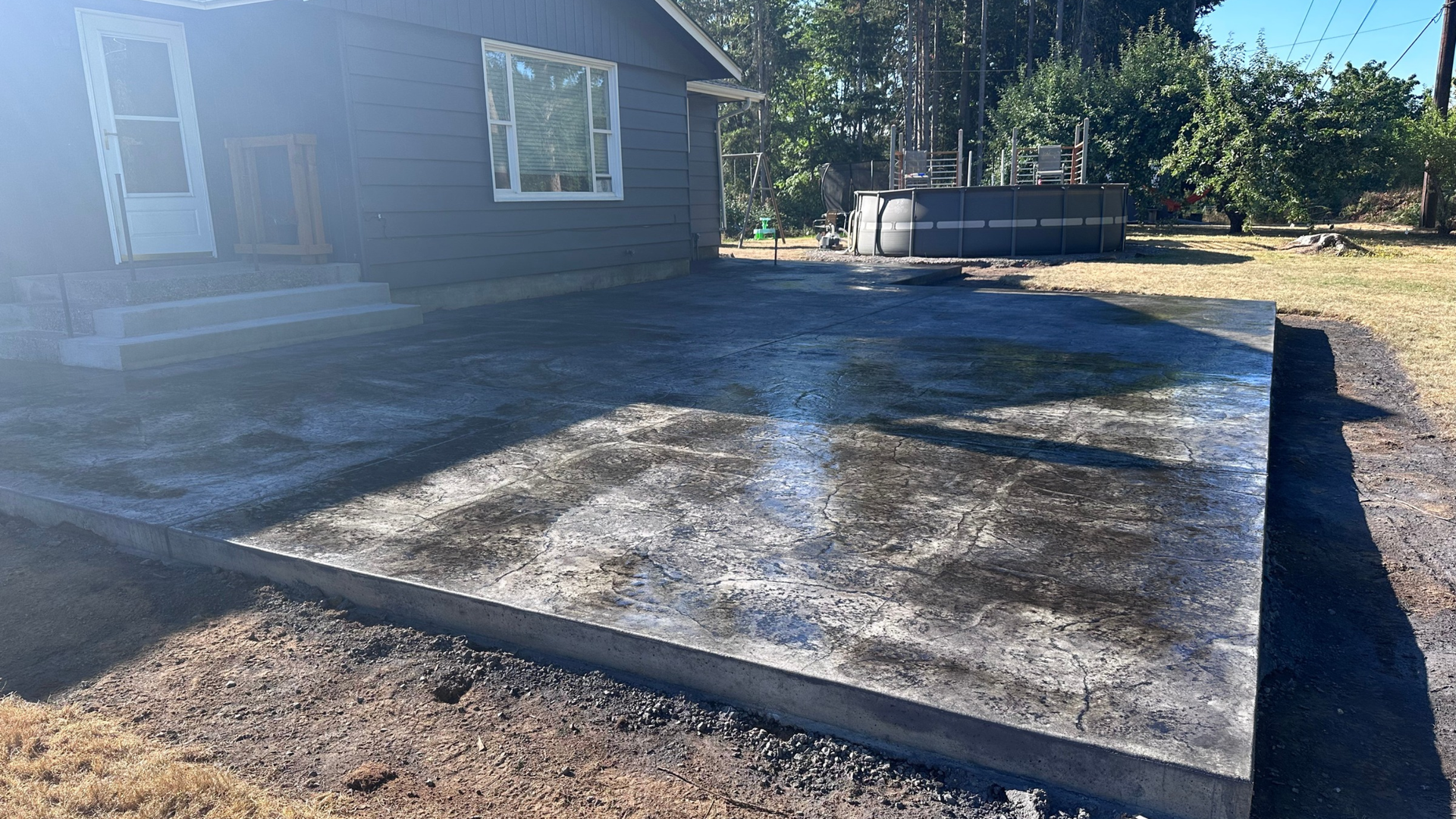
Fresh concrete is not ready for sealer right away. The slab is still releasing moisture as it hardens, and trapping that under a sealer causes haze, blistering, or peeling.
Wait at Least 28 Days
Industry guidance is to wait at least 28 days after the pour before the first sealer. That window lets the concrete finish the bulk of its curing and lets internal moisture escape. Sealing too soon is a common reason a finish turns cloudy or flakes off within a year.
There is one exception. Cure-and-seal products are made to go on during curing, and some contractors use them on new pours. Those are a distinct product, not the same as sealing a cured slab, so follow the product's own timeline rather than the 28-day rule.
Plan the Pour Around the Seal
Both pouring and sealing need dry, mild weather, so timing them together matters here. A slab poured in early summer can cure through the warm months and be ready to seal before the autumn rains return, and our guide on the best time of year to pour concrete in Whatcom County covers lining up the pour with the local season.
The Weather Conditions Sealer Needs
Sealer is picky about conditions, and getting them wrong wastes the product and the day. The surface and the air both have to cooperate.
- Temperature roughly 50 to 90 degrees Fahrenheit during application and drying
- A fully dry surface, usually at least 24 hours with no rain, and longer after a wet spell
- No rain forecast for at least 24 hours after you finish
- Out of direct midday sun, since a hot slab can flash off the sealer before it soaks in
That combination points squarely at the summer months here. Sealing in a damp window risks a cloudy, tacky film that never fully sets. Concrete that only looks dry on top is a frequent cause of a milky finish, so give the slab real drying time after cleaning or rain.
How Often to Reseal in Our Climate
Sealer wears down, and our weather wears it faster than a dry inland climate. Resealing on a sensible schedule keeps the protection working.
- Broom-finished patios and walkways: about every three years
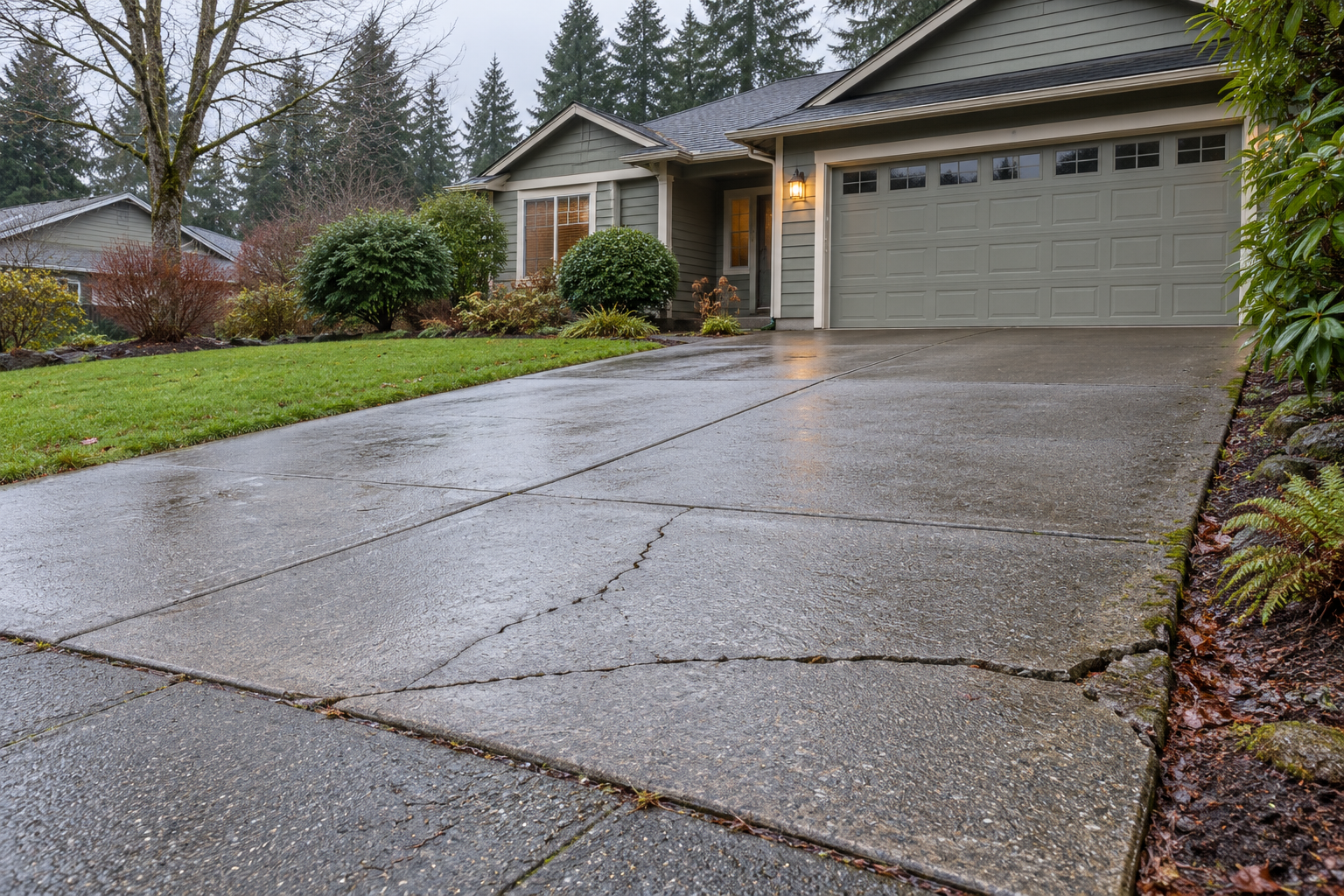
- Broom-finished driveways: every two to three years
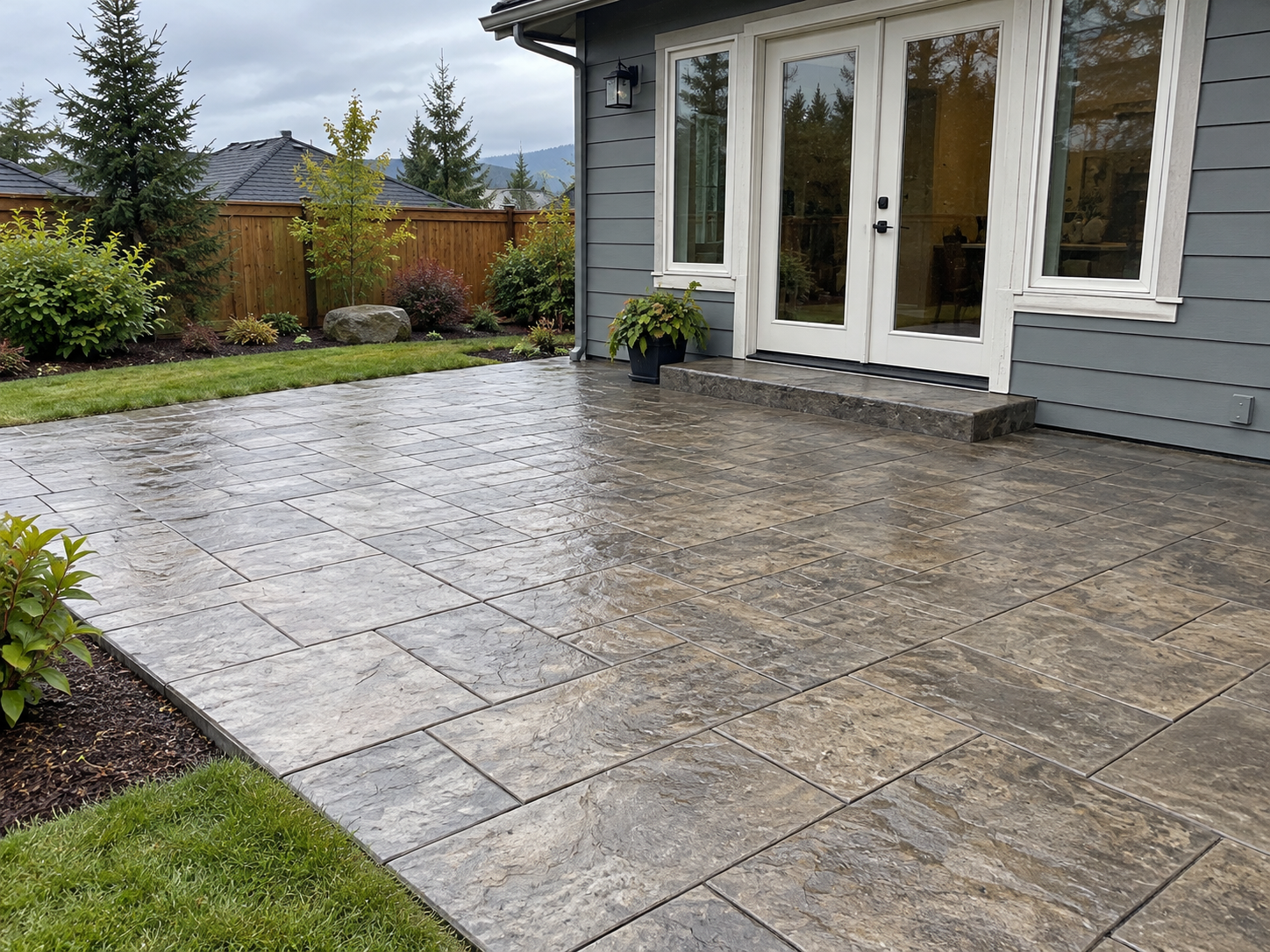
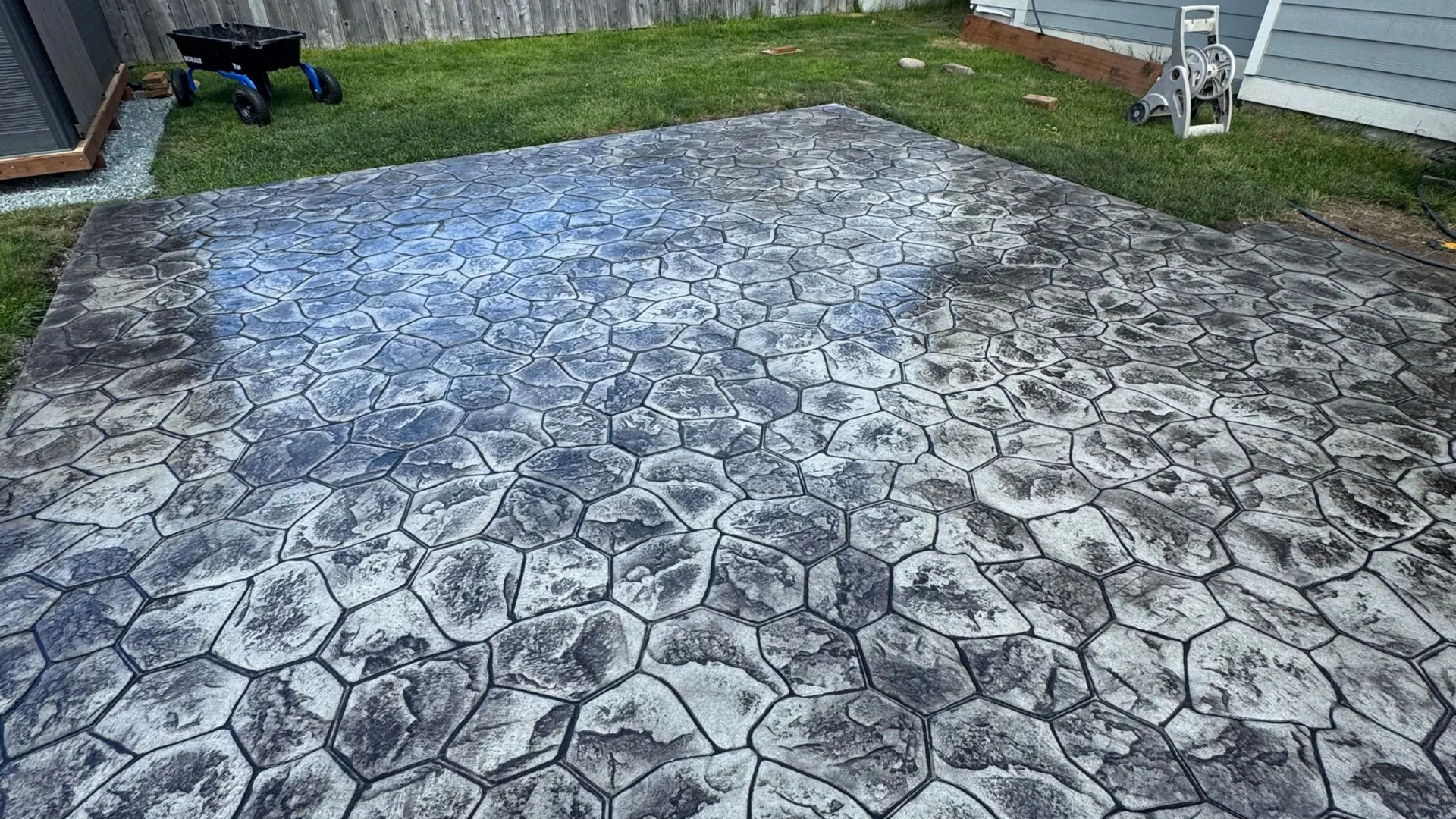
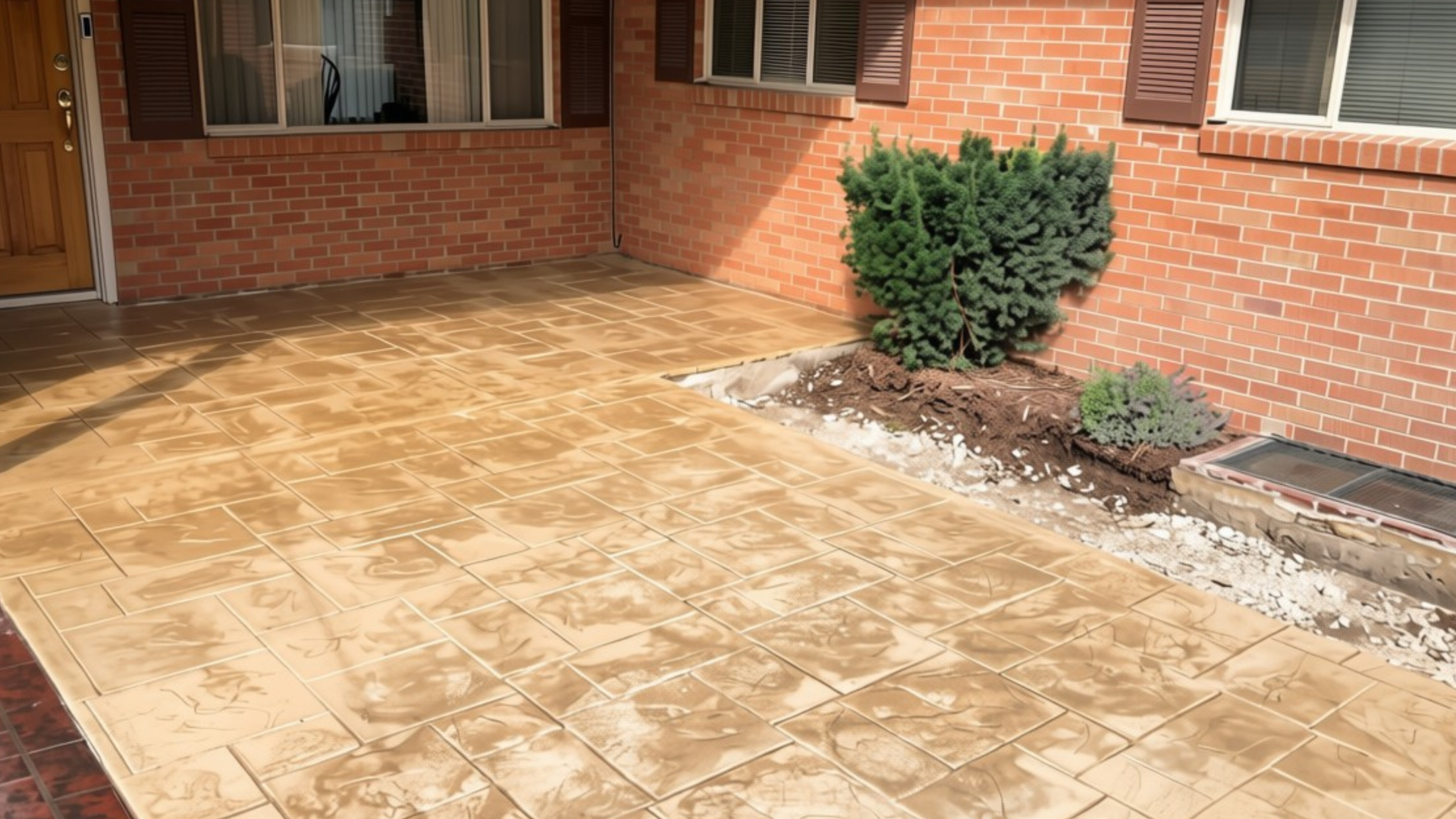
- Stamped or colored concrete: about every two years, since color needs more protection
The calendar is a starting point, not a rule, since traffic, sun, and standing water wear areas at different rates. A simple check tells you more than the date: sprinkle water on the surface, and if it soaks in and darkens the concrete instead of beading, the sealer has worn thin. Resealing also protects decorative finishes, worth weighing if you are deciding between a concrete or paver patio in the first place.
The Honest Limit: Sealing Resists Water, It Does Not Waterproof
This is the part many homeowners get wrong, and it is worth stating plainly. A concrete sealer reduces how much water the slab absorbs, but it does not make the concrete waterproof.
Sealers work by blocking or lining the pores, slowing absorption and helping the slab shed rain. That protection is real and valuable in a rainy climate, but water still reaches concrete through cracks, joints, and slab edges. If you have a drainage problem or standing water, sealing the top will not fix it. Those issues need proper grading and drainage, not a heavier coat of sealer.
Setting that expectation up front saves disappointment. A sealed patio handles rain far better and stays cleaner, but it is a water-resistant surface, not a waterproof membrane. For the science on how sealers and concrete handle moisture, see the American Concrete Institute's concrete resources.
Application Tips for a Clean Finish
Even with the right timing, application decides how the finish looks and lasts. A few practices separate a smooth result from a blotchy one.
- Clean the surface fully and let it dry completely before starting
- Apply two thin coats, not one heavy coat, since excess sealer causes a cloudy, peeling film
- Work out of direct sun and follow the product's recoat timing
For a decorative finish or a patio that sees heavy use, professional application is often worth it. The margin for error is small, and a bad seal usually has to be stripped and redone.
Frequently Asked Questions
Can I seal concrete in the winter in Bellingham?
It is not advisable for most of the wet season. Sealer needs a dry surface, a dry forecast, and temperatures around 50 degrees or warmer, and our winters rarely offer that. Sealing a damp slab in cold weather usually produces a cloudy, poorly bonded finish. Waiting for a dry spring or summer window gives a far better result.
How do I know if my concrete needs resealing?
Use the water test. Sprinkle water on the surface and watch: if it beads up and sits on top, the sealer is still working. If it soaks in and darkens the concrete, the protection has worn off and it is time to reseal.
Does sealing stop my concrete from cracking?
No. Sealing reduces water absorption and protects the surface, but it does not prevent cracks from soil movement, settling, or freeze-thaw pressure. Those come from the base and conditions under the slab. Sealing is one layer of protection, not a structural fix.
Is sealing a patio worth it in a rainy climate?
Yes, for most homeowners here. A sealed surface sheds rain better, resists staining, and holds up longer against our freeze-thaw winters. The key is realistic expectations: strong water resistance and easier upkeep, not a waterproof guarantee.
Protect Your Patio or Walkway the Right Way
Sealing is one of the simplest ways to extend the life of concrete in our wet corner of Washington, as long as you time it for a dry, mild window and know what it can and cannot do. Wait out the full cure on new work, reseal on a sensible schedule, and treat drainage problems as a separate job.
Coast Salish Concrete installs and finishes patios, walkways, and driveways built for Northwest conditions, and we can advise on the right sealing approach for your surface. As a trusted Bellingham concrete contractor serving Ferndale, Lynden, Blaine, Fairhaven, Sudden Valley, and nearby communities, we back our work with a 3-year workmanship warranty. To talk through a new patio or walkway, see our concrete patio installation services or contact us for a free estimate.