Concrete Site Preparation: What to Expect in Bellingham, WA

November 2, 2026
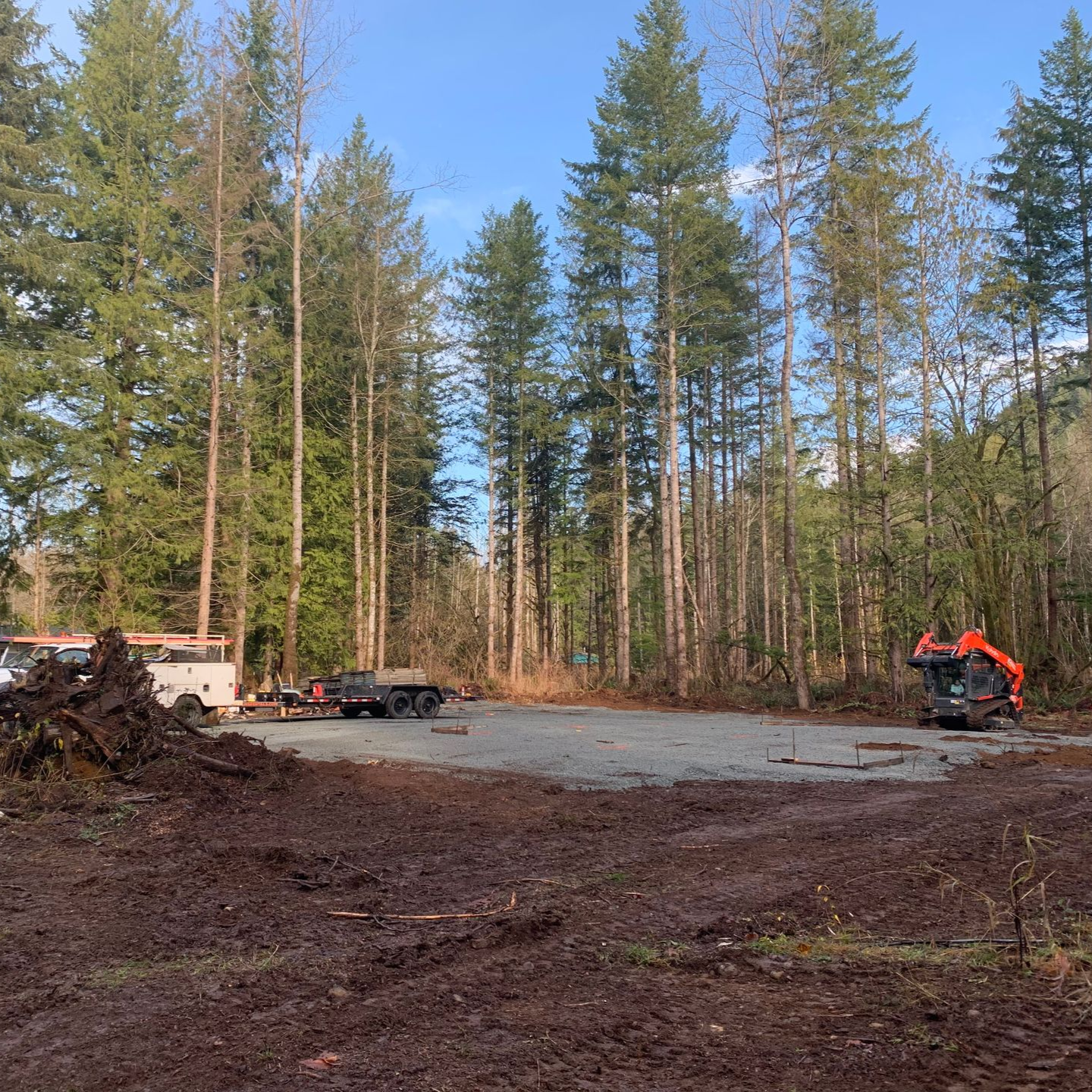
Cleared wooded lot with stumps piled and a slab footprint graded for a new build in Bellingham, WA

Most homeowners picture the pour when they plan a new driveway, patio or garage slab. The work that decides how long that concrete lasts happens days earlier, before a single truck arrives. In Bellingham, WA, concrete site preparation covers clearing, digging, grading and compacting the ground so the slab has a stable, well-drained base to sit on.


Skipping or rushing this stage is the most common reason new concrete settles, cracks or holds water within a few years. Our soil and rain make the margin for error small. A slab poured on soft or wet ground can look perfect on day one and start failing after its first wet winter.


This guide walks through each step of site prep in the order it happens. It covers what the crew checks before digging, how the base is built and how long it all takes. It also shows what you can do to keep your project on schedule.

Why site prep matters more in Whatcom County


Much of Whatcom County sits on dense glacial till under a layer of soft topsoil. Till is strong, but water drains through it slowly, so rain tends to collect right where a slab needs firm support. Pair that with months of steady rain and you have ground that can stay soft well into spring.


Good preparation deals with both problems at once. It removes material that will compress over time and builds a base that lets water move away instead of sitting under the concrete. Our guide to concrete foundations in Bellingham explains the drainage side in more depth, and our post on why concrete cracks in Washington shows what happens when the base gives way.


What happens before anyone digs


Every job starts with a site evaluation. We look at the layout, the slope, soil conditions, access for equipment and where water goes when it rains. That visit sets the depth of the dig, the base needed and whether drainage work belongs in the plan.


Underground utilities come next. Washington law (RCW 19.122.030) requires anyone excavating to notify the one-call locator service at least two full business days before digging. A call to Washington 811 gets public utility lines marked at no cost. Those locators do not mark private lines, such as a sprinkler system or a power line running to a detached shop, so point those out to your contractor before work begins.


Some projects also need approval before ground is broken. Whether you need one depends on the size of the project and whether it sits inside city limits or in the county. Our post on concrete permits in Bellingham explains how to tell.


Clearing and excavation


Clearing removes brush, small trees, roots, debris and anything else in the way of the work area. Roots and organic topsoil matter most, because they break down and compress over time and leave voids under the slab. Removing them now prevents low spots later.


Excavation then takes the ground down to the depth the project needs. A walkway needs less depth than a driveway that carries vehicles, and a garage or shop slab needs more again. Soft pockets or old fill found during the dig get removed and replaced with compacted material instead of being covered over. Our excavation and clearing services cover this work for slabs, driveways, additions and new builds.


Grading, base rock and compaction


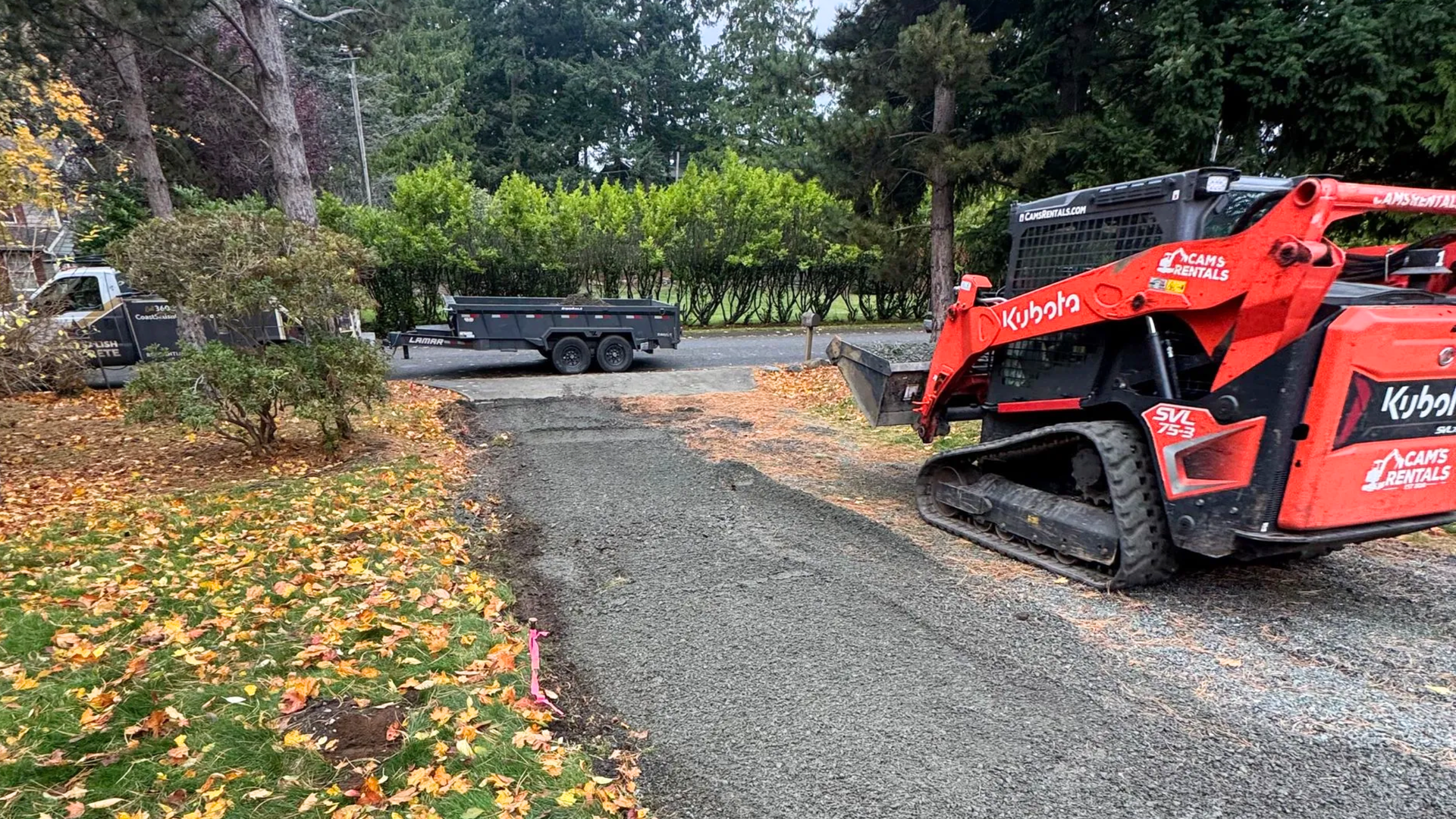
Once the dig is done, the crew grades the subgrade so the finished surface will shed water. On most flatwork that means a gentle slope away from the house, garage or other structures. Getting the grade right at this stage is far easier than trying to fix standing water after the pour.


A layer of crushed rock goes in next to form the base. Its depth depends on the load the slab will carry and the soil underneath. The table below shows what each stage protects against.


Stage What happens What it prevents
Subgrade grading Native soil shaped to the planned slope Water pooling under or against the slab
Base rock Crushed rock spread over the subgrade Soft spots and uneven support
Compaction in layers Each layer packed with a plate or roller compactor Settling and cracks in the first few years
Drainage where needed Drain rock, pipe or rerouted downspouts Saturated ground on wet or sloped lots


Compaction is the step most often rushed. Rock is packed in layers rather than in one thick pass, because a compactor only reaches so deep. A properly compacted base feels solid underfoot and does not shift when walked on.


Forms and the final check before the pour


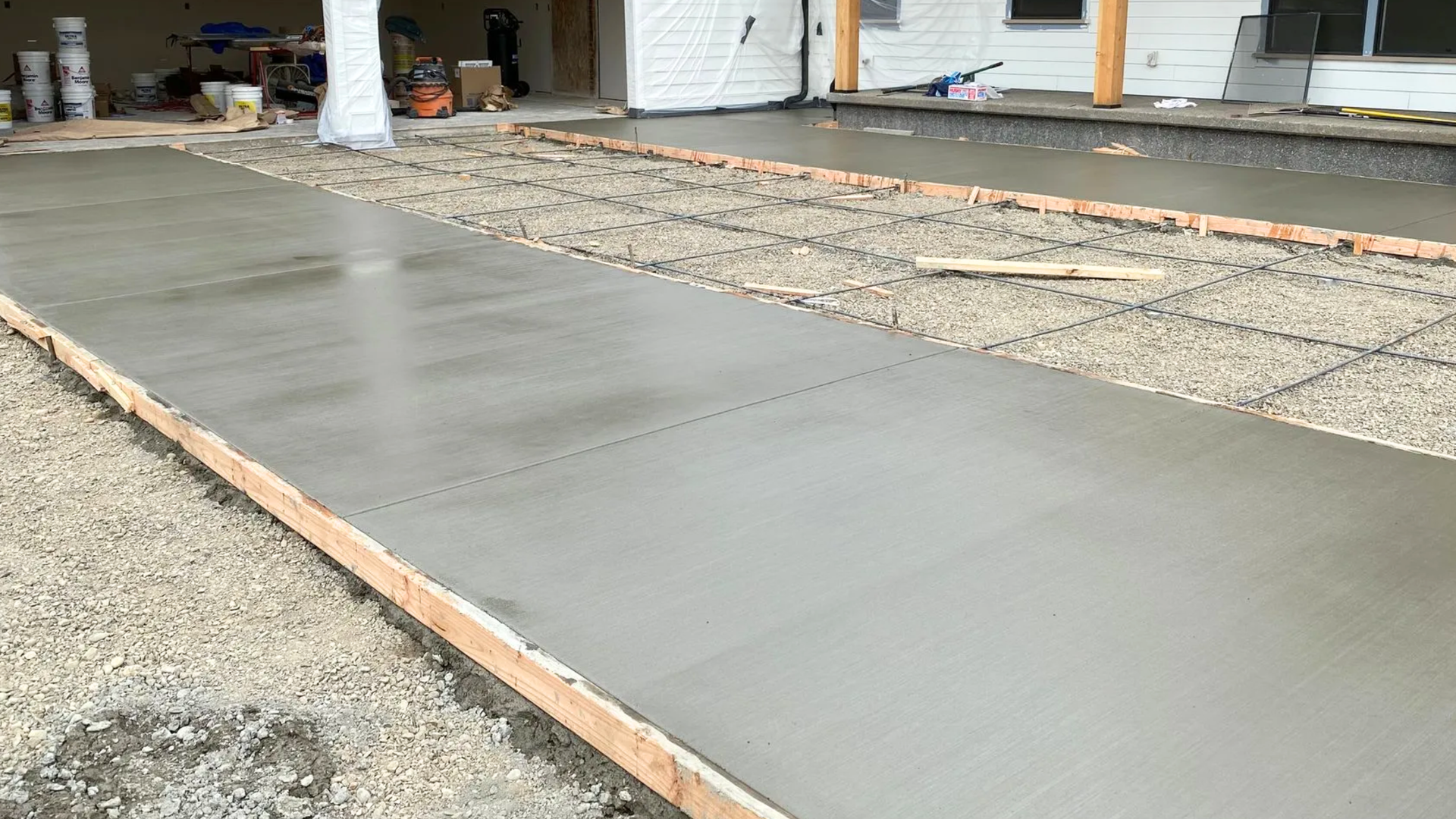
With the base in place, forms are set to the finished height and slope. Reinforcement goes in according to the project, and the crew confirms the area is level, drained and ready for concrete. Our step-by-step guide to concrete driveway installation in Bellingham picks up from here and covers the pour, finishing and curing.


Weather plays a role at this stage too. Prepared ground that sits through heavy rain may need to be drained and recompacted before the pour. That is one reason many homeowners aim for the drier months covered in our guide to the best time to pour concrete in Whatcom County.


How long site prep takes and how you can help


Most residential excavation takes one to two days, depending on site conditions, project size and access. Larger lots, tree removal or drainage work can add time. A garage slab or new home site usually takes longer than a patio or walkway.


You can keep things moving with a few simple steps. Move vehicles, outdoor furniture and planters out of the work area, and make sure equipment can reach the site. Mark private lines and anything you want protected, such as a favorite tree or a septic area.


Frequently asked questions

  • Can excavation happen during the rainy season?

    Yes, digging and clearing can often go ahead in wet months. The key is not compacting saturated soil, so a crew may pause for a dry stretch or replace soaked material with rock. Planning ahead gives you the most flexibility.

  • Do you prepare sites for garages and shops?

    Yes. We regularly excavate and grade sites for garages, shops and home additions, then compact the base for the slab. See our concrete slab services for the next phase of those projects.

  • What if my lot is sloped?

    Sloped lots usually need more grading and sometimes a retaining structure or extra drainage to keep water from running toward the slab. The site evaluation shows how much work the slope adds. Our foundation services cover builds on sloped Whatcom County lots.

Start your project on solid ground


Coast Salish Concrete is based in Deming and handles excavation, site preparation and concrete work as one job, so the ground is prepared with the finished slab in mind. We work throughout Bellingham, Ferndale, Lynden, Blaine, Fairhaven, Sudden Valley, Everson and the rest of our Whatcom and Skagit service area.


Call (360) 812-5543 or request an estimate to get started.
REQUEST A FREE ESTIMATE CALL US NOW
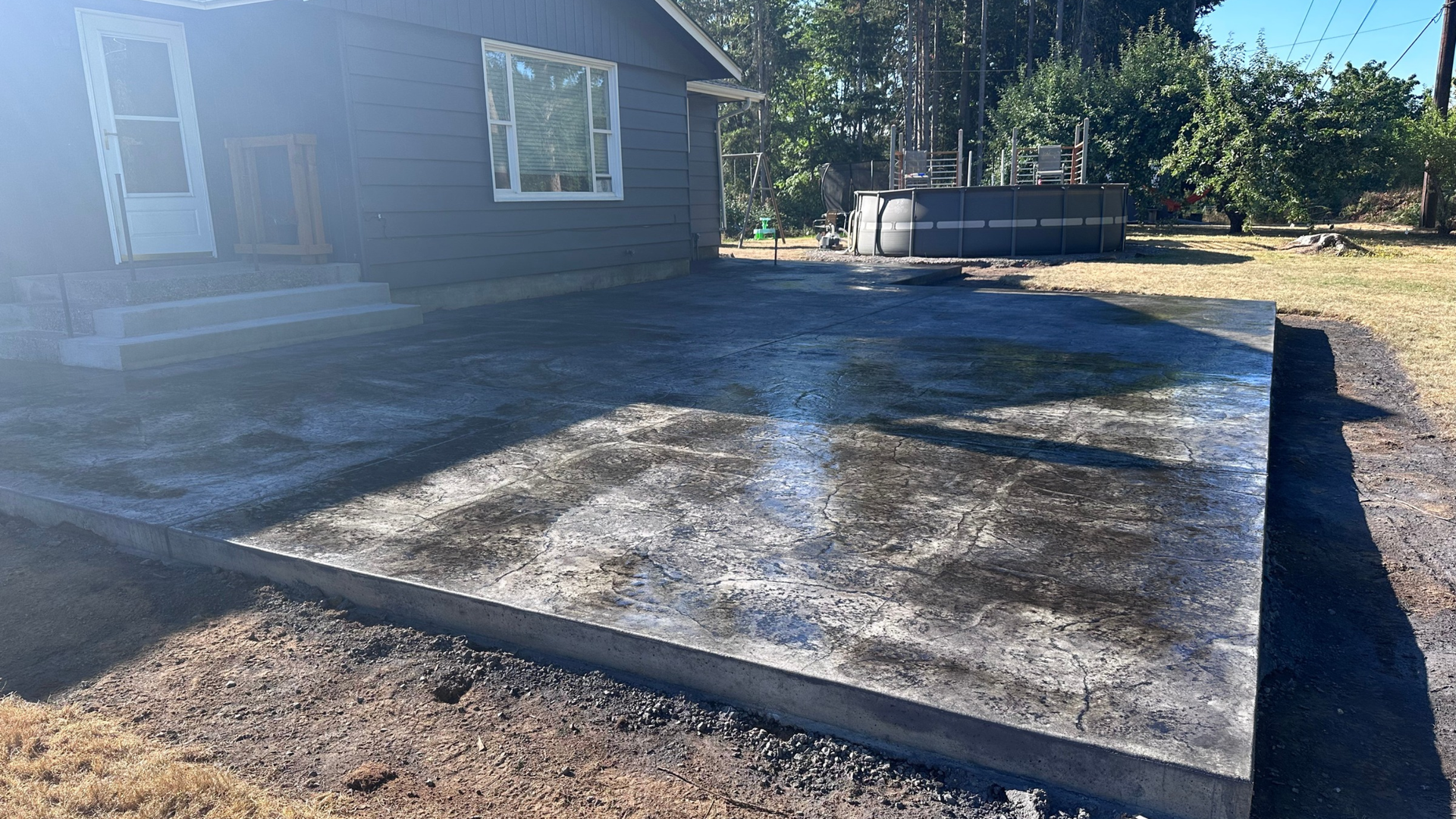
Freshly sealed concrete patio beading rainwater at a Bellingham WA home.
November 23, 2026
Seal concrete in Bellingham, WA the right way: the 28-day cure rule, the dry-season window, reseal timing, and why sealer resists water but does not waterproof.
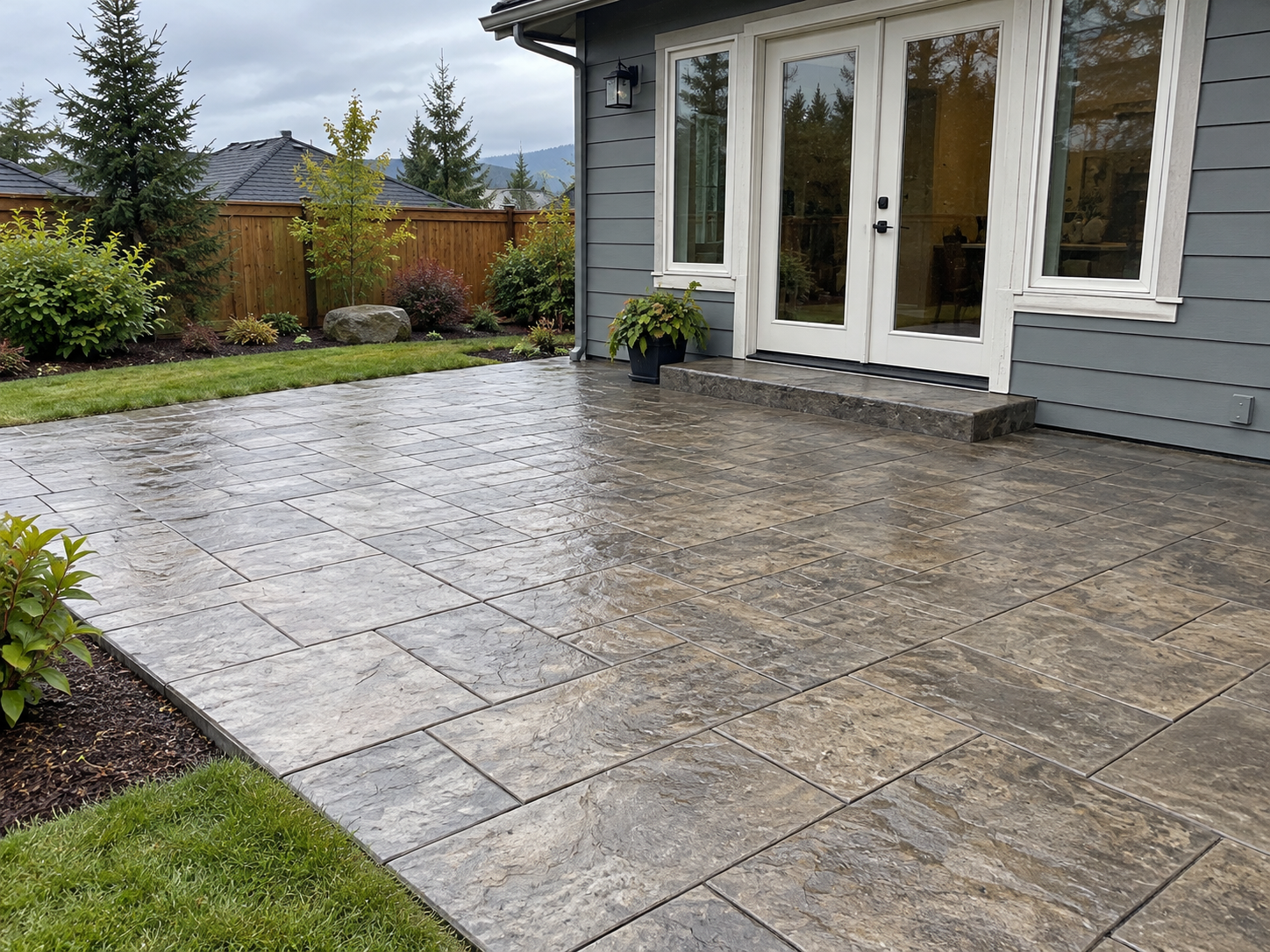
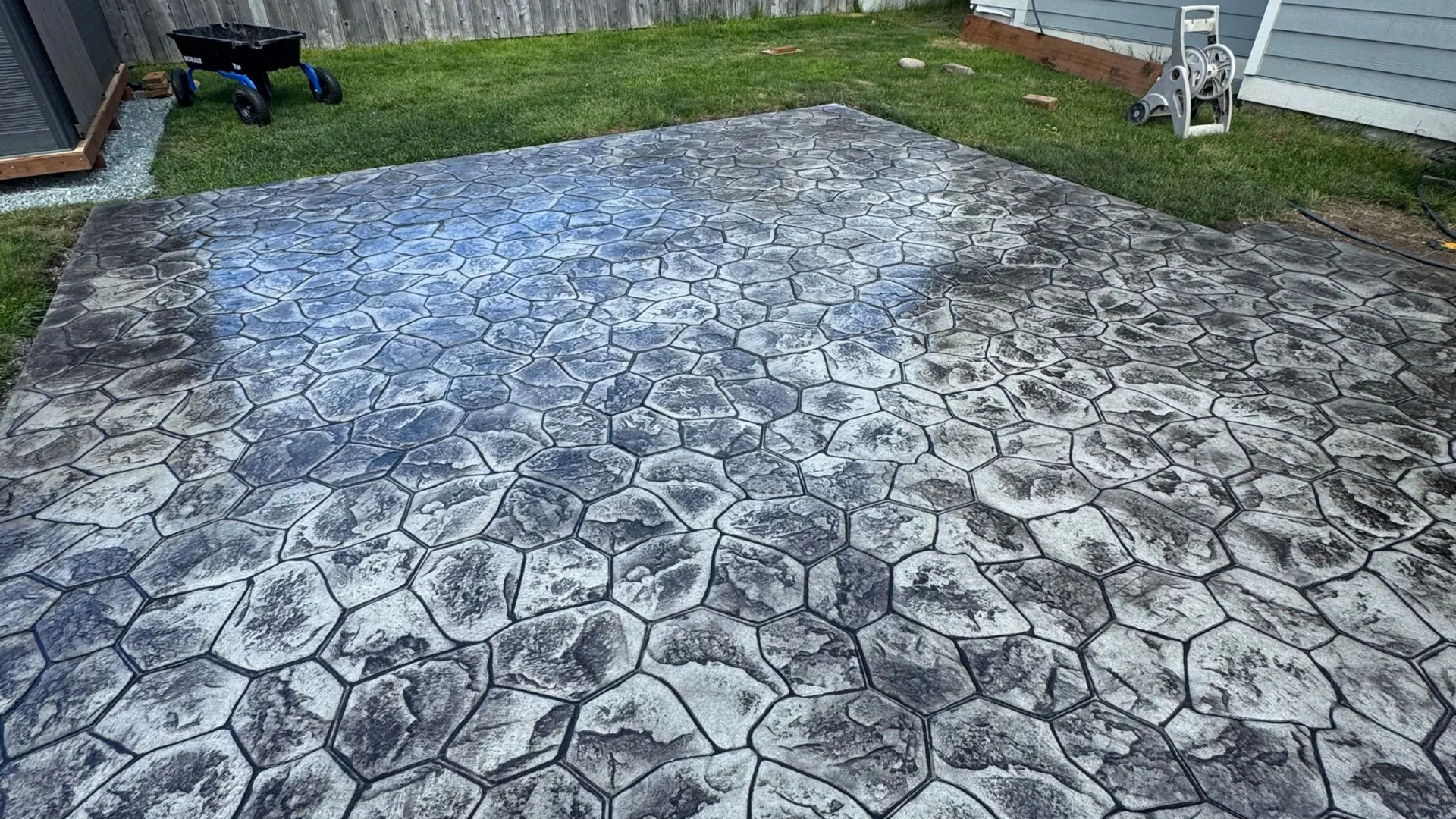
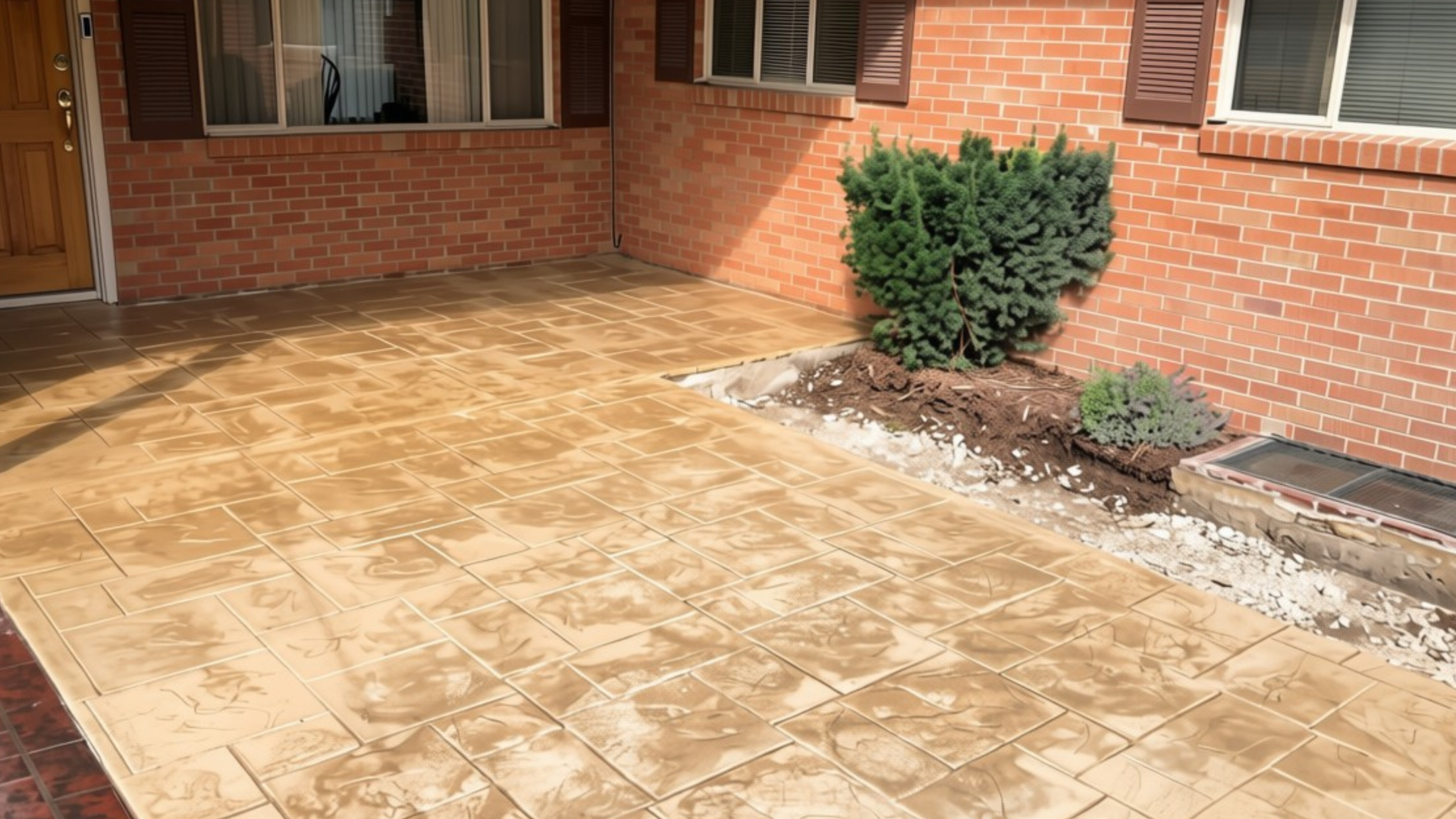
Ashlar slate stamped concrete patio at a Bellingham WA home with a textured, slip-resistant finish.
October 14, 2026
Stamped concrete patio in Bellingham WA: compare patterns, see 2026 cost tiers, and get slip-resistant finishes that stay safe in our wet, rainy climate.
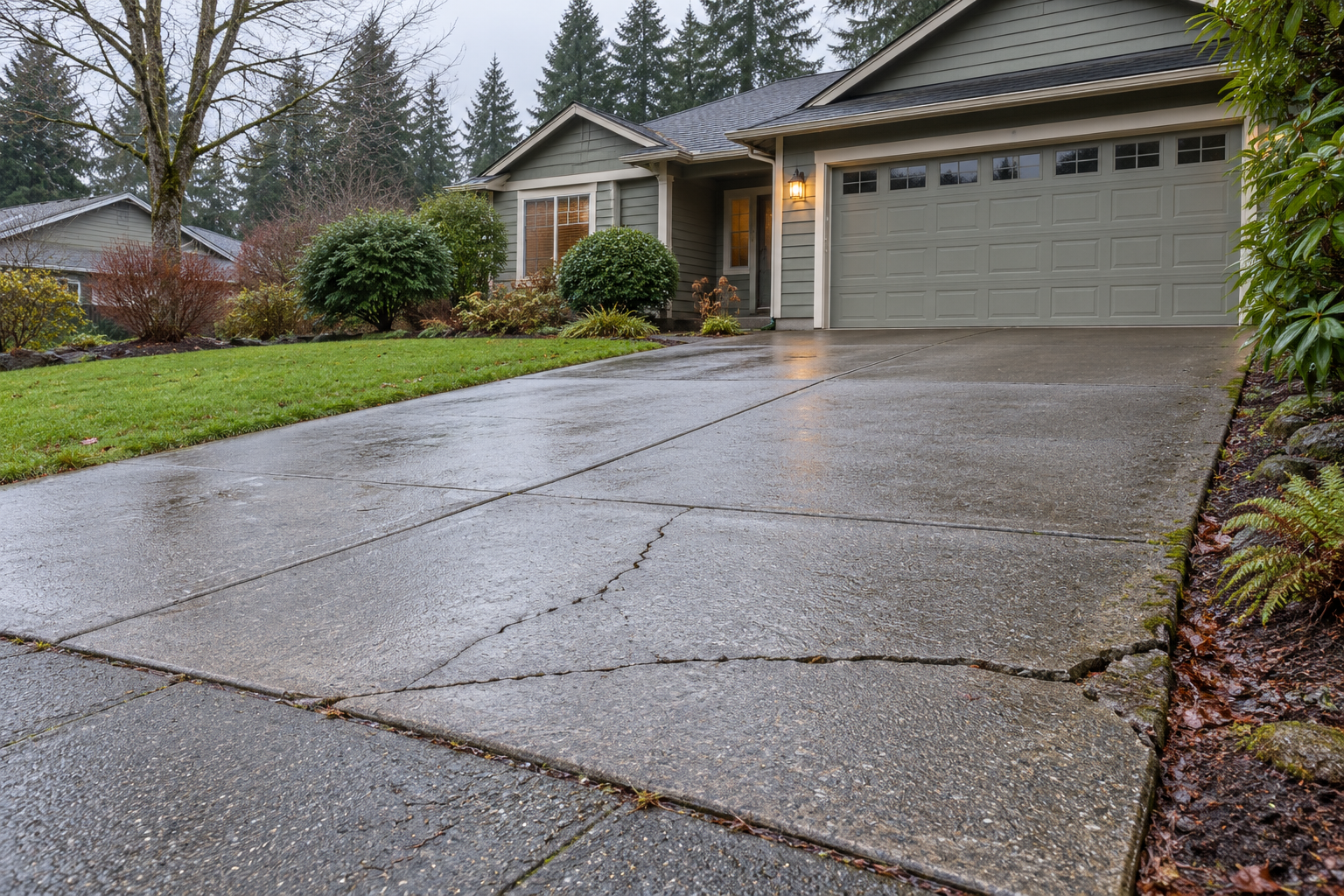
Cracked concrete driveway at a Bellingham WA home showing weather and soil-related surface cracking.
September 30, 2026
Why does concrete crack in WA? Learn the main causes, which cracks are serious, and how to prevent them in Bellingham WA wet, freeze-prone conditions.
Poured concrete foundation with footings under construction at a Bellingham WA home site.
September 17, 2026
Compare concrete foundation types and costs in Bellingham, WA. See how glacial till, drainage, and local code shape your choice and how long one lasts.
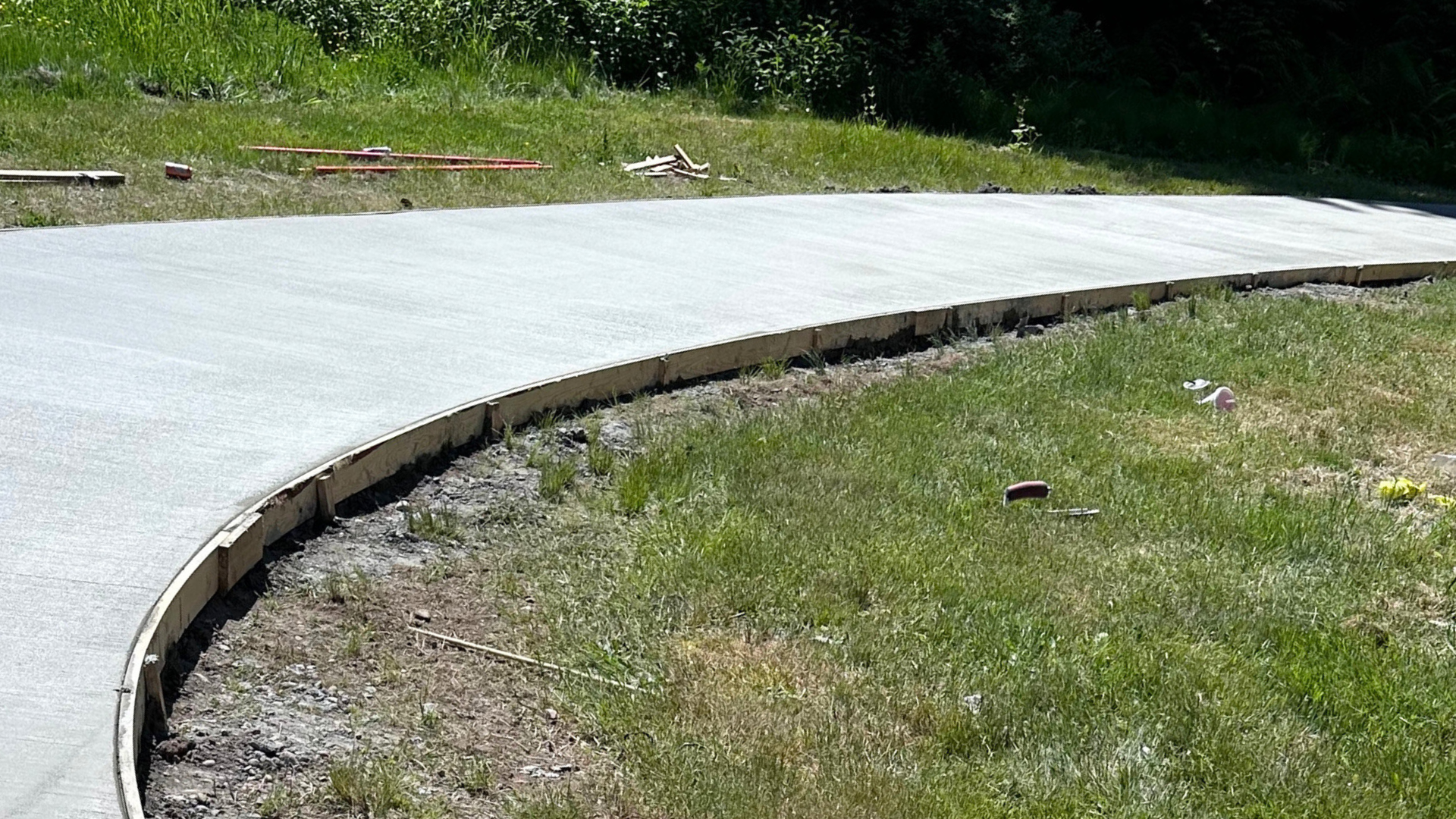
Curved concrete walkway under construction beside a grassy area with trees in the background
August 21, 2026
What does a concrete walkway cost in Bellingham? Compare broom vs stamped finishes, site prep over glacial till, slip resistance, and sidewalk permits.
Concrete truck in residential concrete project in Bellingham, WA
August 12, 2026
Do you need a permit for concrete work in Bellingham, WA? Learn when you do, when you don't, and how big you can build without one. Clear local guidance.
Concrete crew pouring a slab in cold damp winter conditions at a Whatcom County WA property.
July 24, 2026
Can you pour concrete in winter in WA? Learn the freezing and rain thresholds, cold-weather precautions, and whether a winter pour will last in Whatcom County.
Freshly poured concrete driveway curing in warm dry summer
weather at a Whatcom County WA home.
July 8, 2026
Wondering when to pour concrete in Whatcom County? Learn the best season, local watershed timing rules, and how to plan a driveway or patio that lasts.
Concrete patio installed in a residential backyard with a clean finish and simple outdoor seating ar
June 4, 2026
Learn concrete patio costs, finish options, design choices, and what affects pricing before planning your next outdoor project.
New concrete driveway installed at a residential home in a suburban neighborhood.
May 8, 2026
Learn how much concrete driveway replacement costs, what affects pricing, and when homeowners should repair or fully replace a driveway.
More Posts