Concrete vs Paver Patio in Bellingham WA: Which Is Better?
If you're weighing a concrete vs paver patio for your Bellingham WA home, you've probably found plenty of articles that go back and forth without ever actually telling you which one to choose. Both options look great in photos. Both have real fans. And the honest answer depends on a few factors specific to where you live.
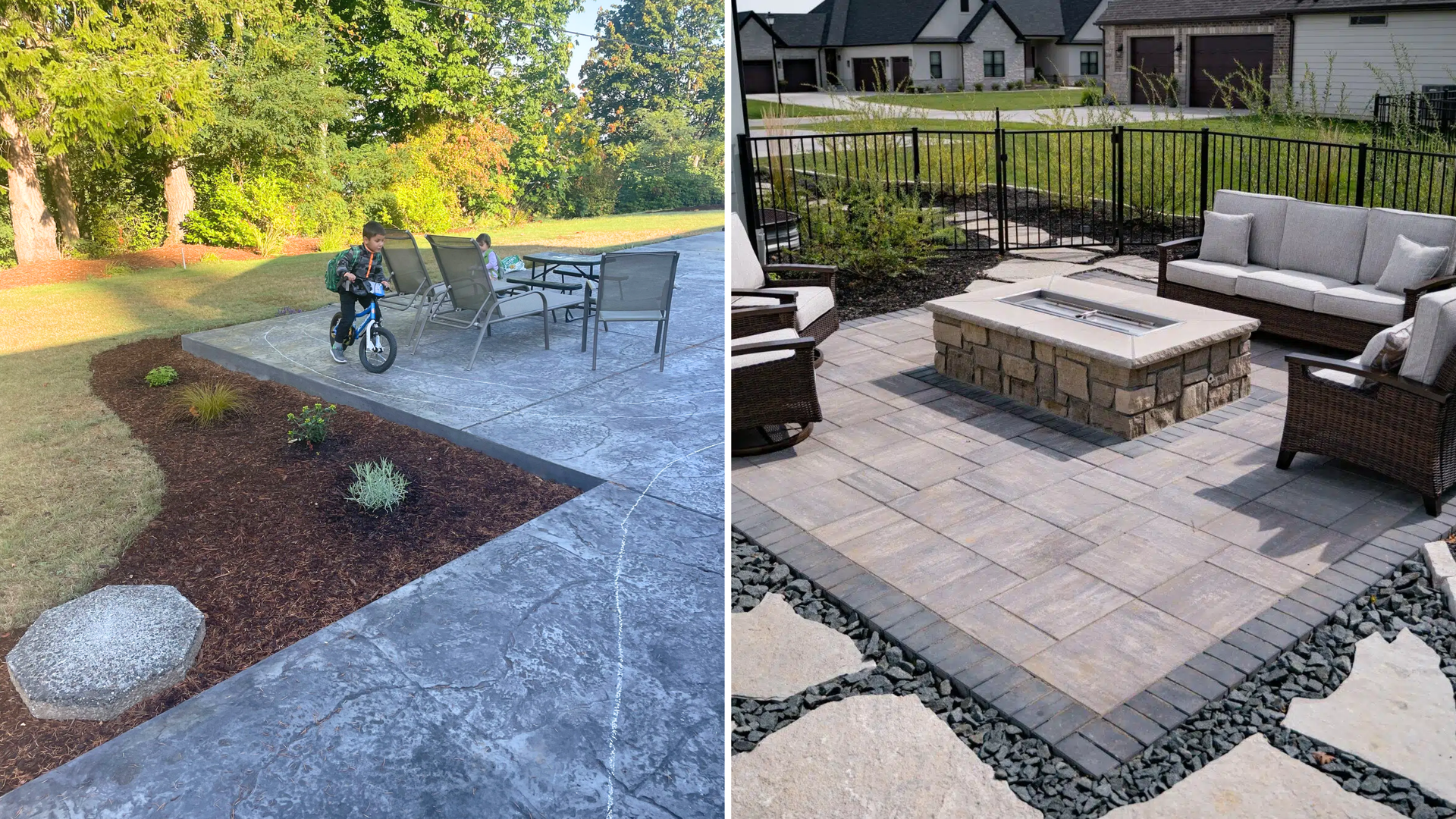
This post breaks down exactly that. We'll compare how concrete and pavers perform in the Bellingham area - accounting for our wet winters, the freeze-thaw cycles in Whatcom County, real installation costs, and long-term maintenance. By the end, you'll have a clear answer for your situation.
A Quick Look at Both Options
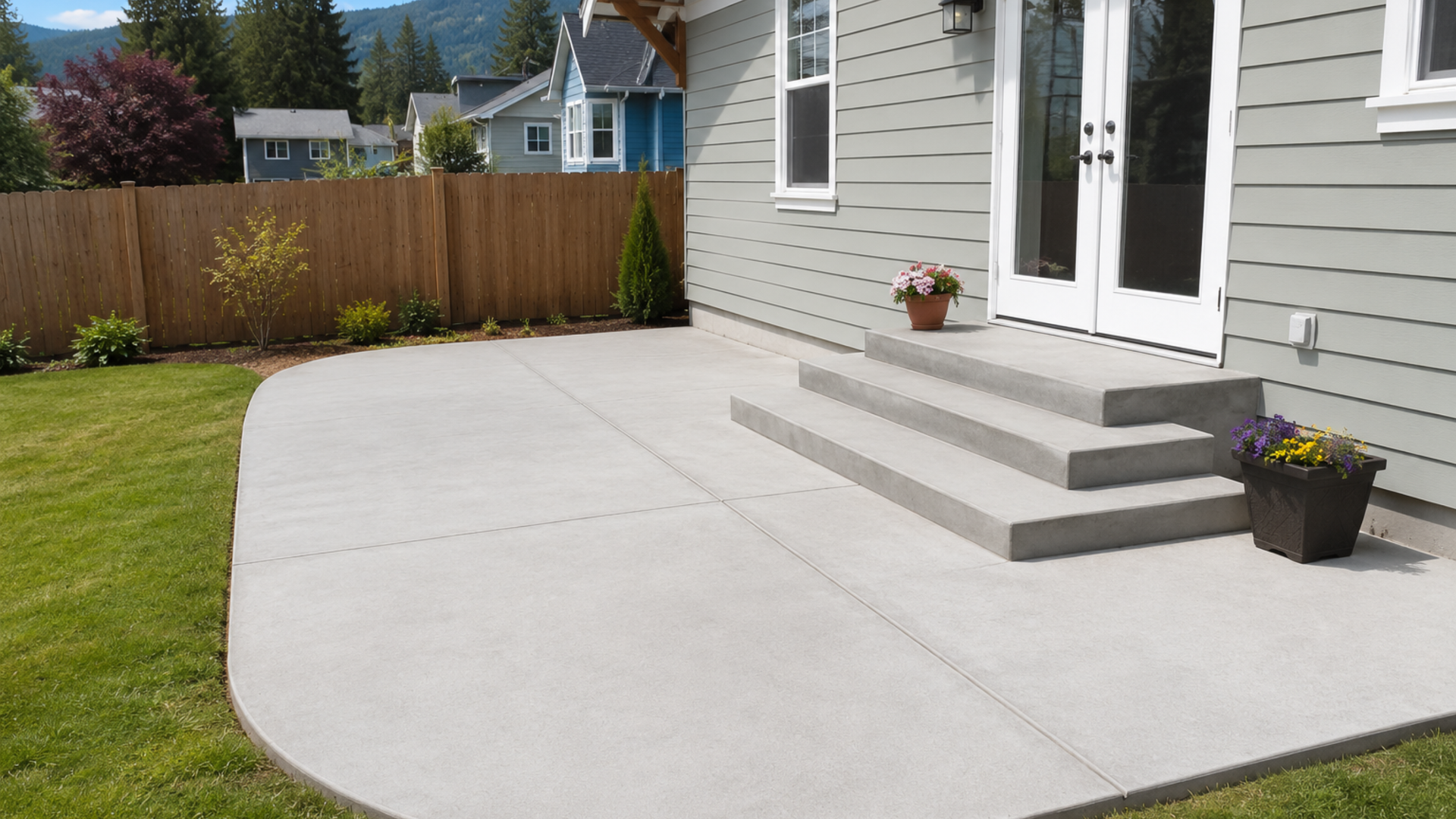
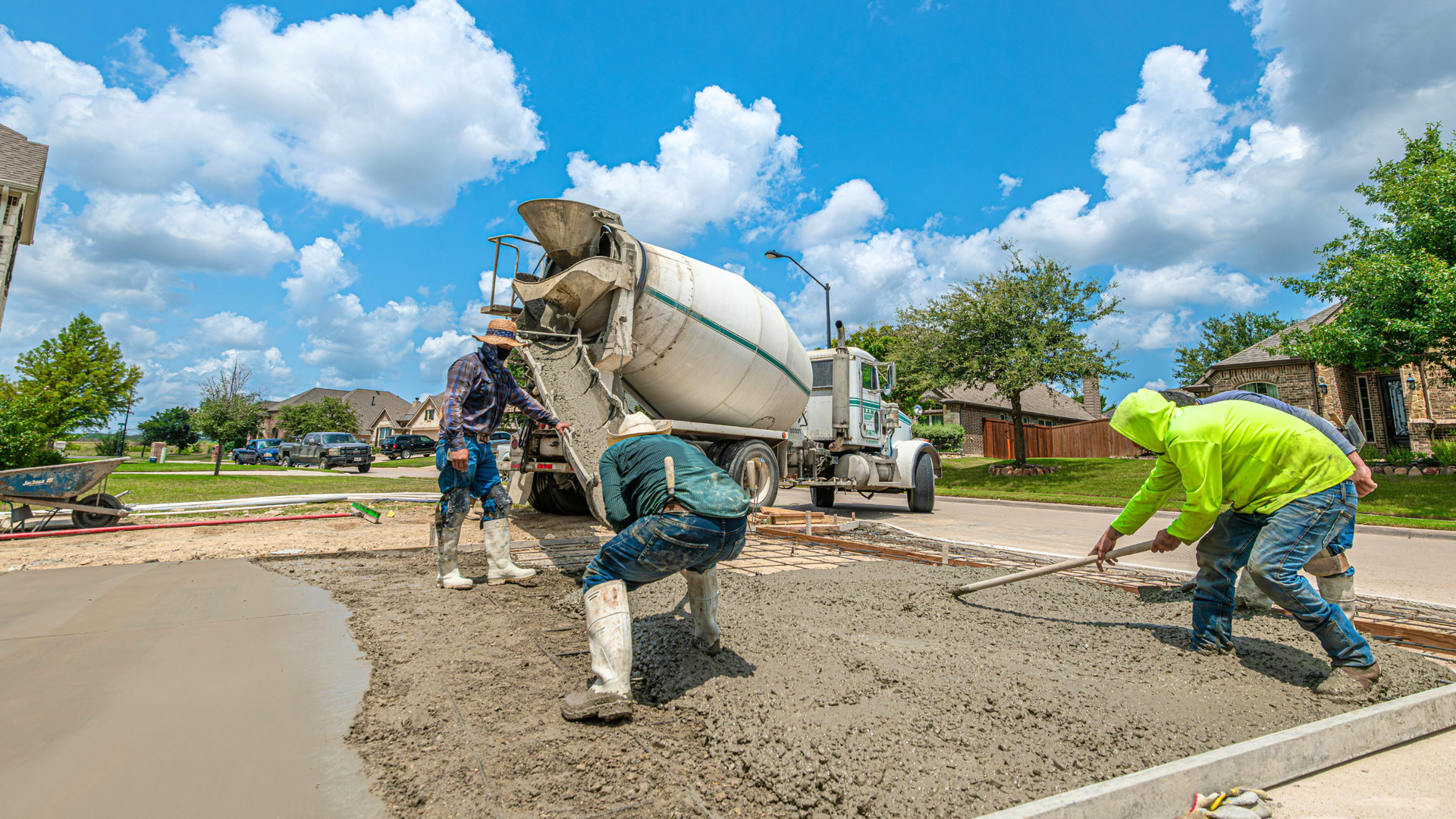
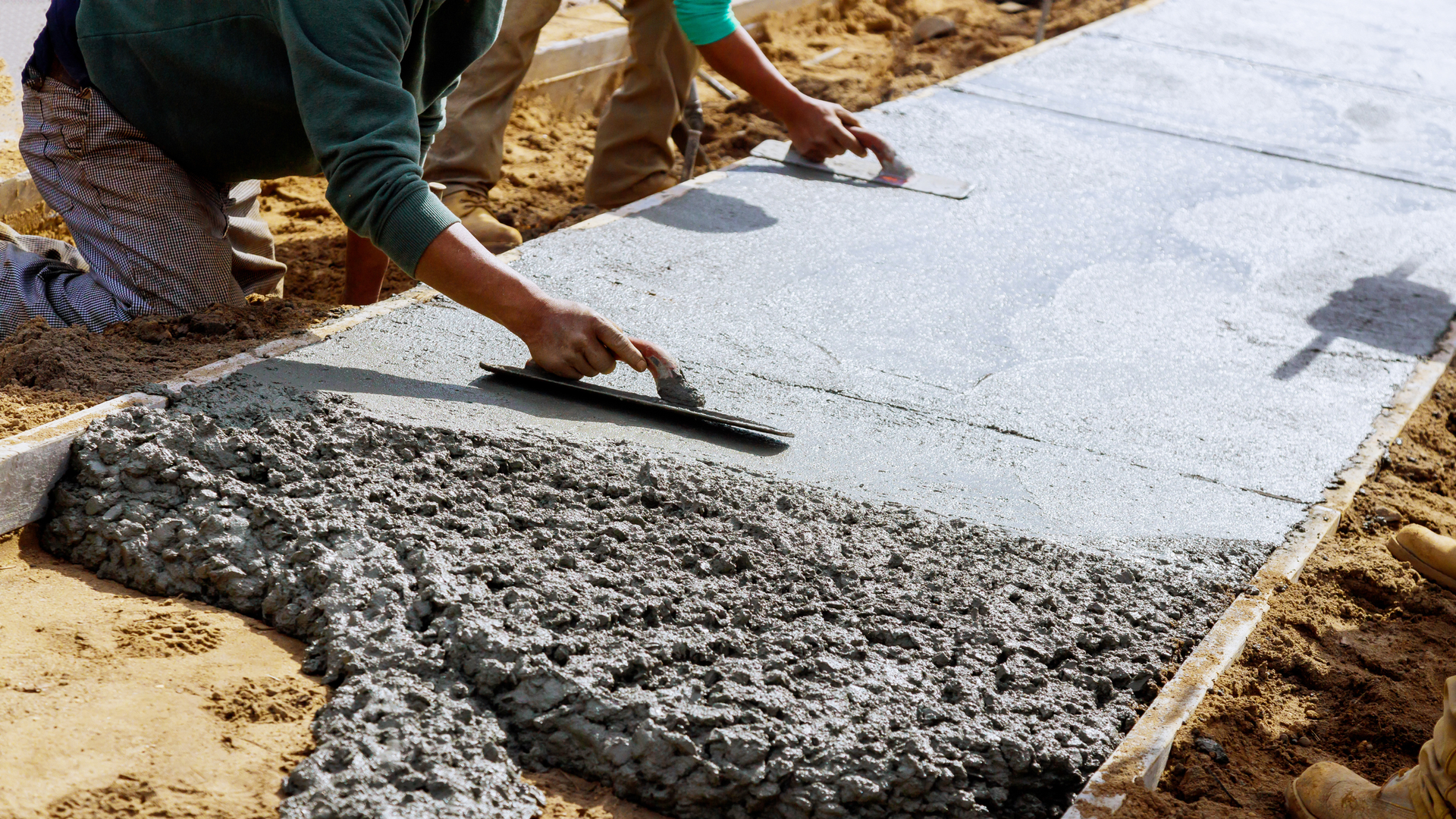
A poured concrete patio is concrete mixed and poured on-site, finished to your chosen texture, and left to cure as a single continuous surface. Finish options range from a simple broom finish to decorative stamped patterns, colored concrete, and exposed aggregate.
A paver patio is built from individual interlocking units - typically concrete pavers, brick, or natural stone - set over a compacted base of gravel and sand, with sand-filled joints between each unit.
Both are legitimate choices. What separates them is how they perform in this climate, what they cost, and how much ongoing work they require.
Upfront Cost: What You'll Typically Pay in Bellingham
Concrete is generally the more affordable option upfront. A standard broom-finish concrete patio runs lower per square foot than a paver installation of comparable size, primarily because pavers require more material handling and labor - each unit has to be individually set and leveled.
The gap narrows when you add decorative elements to concrete. Stamped concrete, colored concrete, and exposed aggregate all add cost over a basic pour. At the high end of decorative concrete, you're often in similar pricing territory to mid-range pavers.
The takeaway: if budget is your primary driver and you want a clean, durable surface, standard concrete wins on upfront cost. If you want a decorative finish, pricing from both options becomes more comparable - and it's worth exploring what stamped and colored concrete can offer before assuming pavers are the only way to achieve a high-end look.
Durability in the Pacific Northwest Climate
This is where the local context matters most - and where the comparison shifts most clearly in concrete's favor for Bellingham homeowners.
Moisture and Moss
Bellingham averages around 35 inches of rain per year, and our winters keep surfaces damp for months at a stretch. Paver patios have sand-filled joints running across the entire surface. Those joints trap organic debris, stay moist, and become a reliable home for moss, weeds, and algae. If your patio is in a shaded or north-facing area - very common in Bellingham yards - moss growth between pavers can become a persistent maintenance task. Concrete has no joints across the field (only control joints placed strategically), so there's far less surface area for organic growth to take hold.
Freeze-thaw Cycling
Whatcom County gets enough hard freezes that ground movement is a real factor. Water works into the sand base and joints of a paver patio, freezes, expands, and can shift individual units out of level over time. This is gradual but cumulative. A properly poured concrete slab with correct reinforcement and control joints handles freeze-thaw cycles more consistently as a unified surface.
Ground Movement and Soil Conditions
Bellingham-area soil varies considerably - some neighborhoods have soft, moisture-retaining soil that shifts seasonally. Individual paver units can shift and become uneven on these soils, creating trip hazards and a patio that starts to look patchy. A concrete slab distributes load across the whole surface rather than concentrating it on individual units.
Longevity
A well-installed concrete patio lasts
25 to 50 years with minimal upkeep. Pavers can match that lifespan, but getting there requires consistent joint maintenance and occasional releveling of shifted sections.
Maintenance Over Time
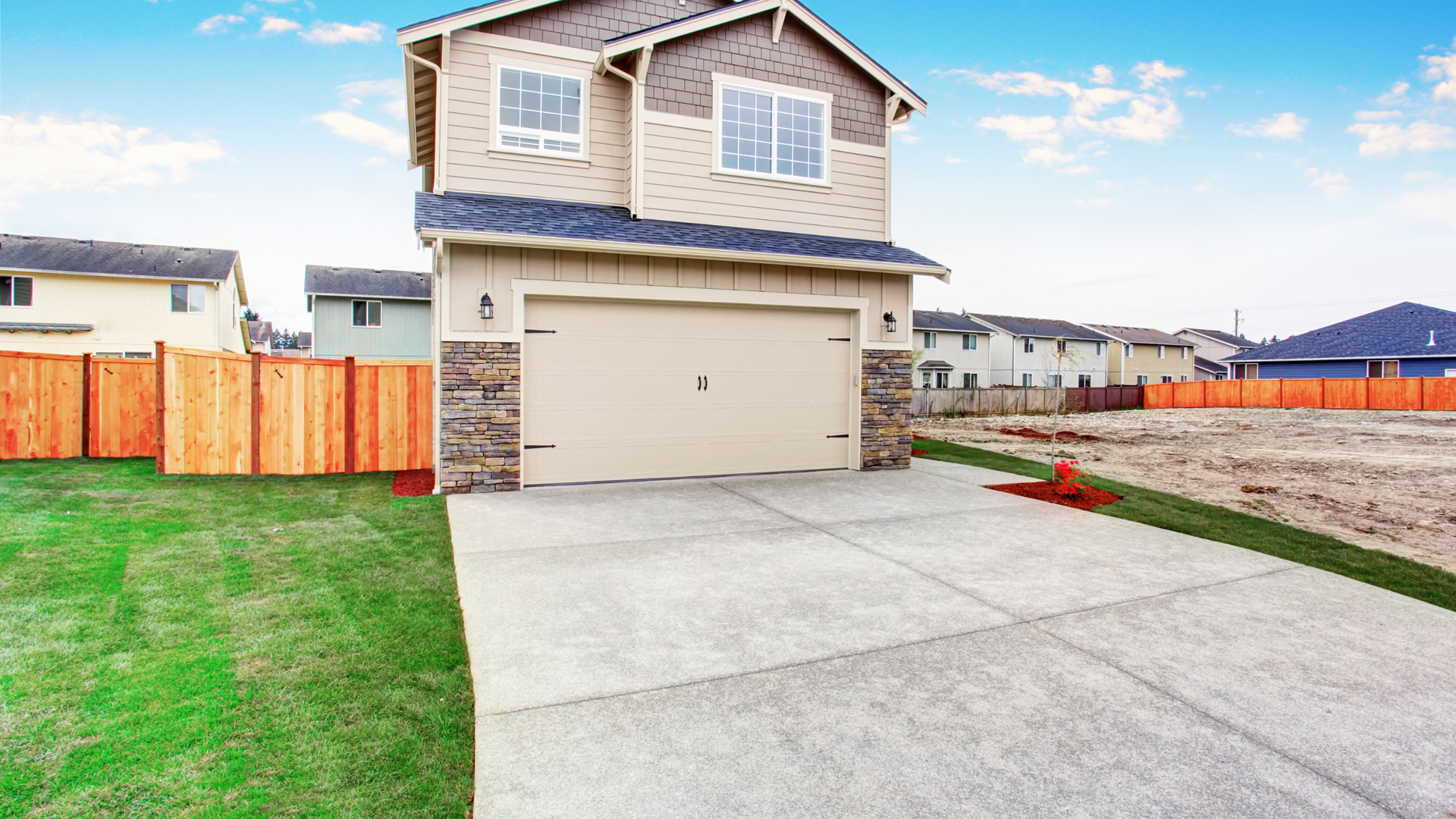
Concrete is genuinely low-maintenance. An occasional hose-down handles most cleaning. For decorative finishes - stamped or colored concrete - periodic resealing every few years helps protect the surface and keep colors vivid. Sealing is straightforward and inexpensive. The main vulnerability is surface cracking, addressed below.
Pavers require more ongoing attention, especially in this climate. The sand joints need re-sanding periodically as material washes or blows out over time - skip this and the joints widen, destabilizing the surface. Moss and weed treatment is a recurring task in wet climates; pressure washing helps, but it also accelerates joint erosion if done too aggressively. And if the base wasn't prepared correctly at installation, you'll eventually be releveling shifted sections.
For most Bellingham homeowners, the lower ongoing maintenance load of concrete is a meaningful quality-of-life advantage - particularly if you'd rather not spend weekends pulling weeds from between stones.
Appearance and Design Options
Pavers have a genuinely attractive, natural look. A well-laid paver patio with a quality stone or brick pattern has a high-end feel that some homeowners strongly prefer, and no honest comparison skips past that.
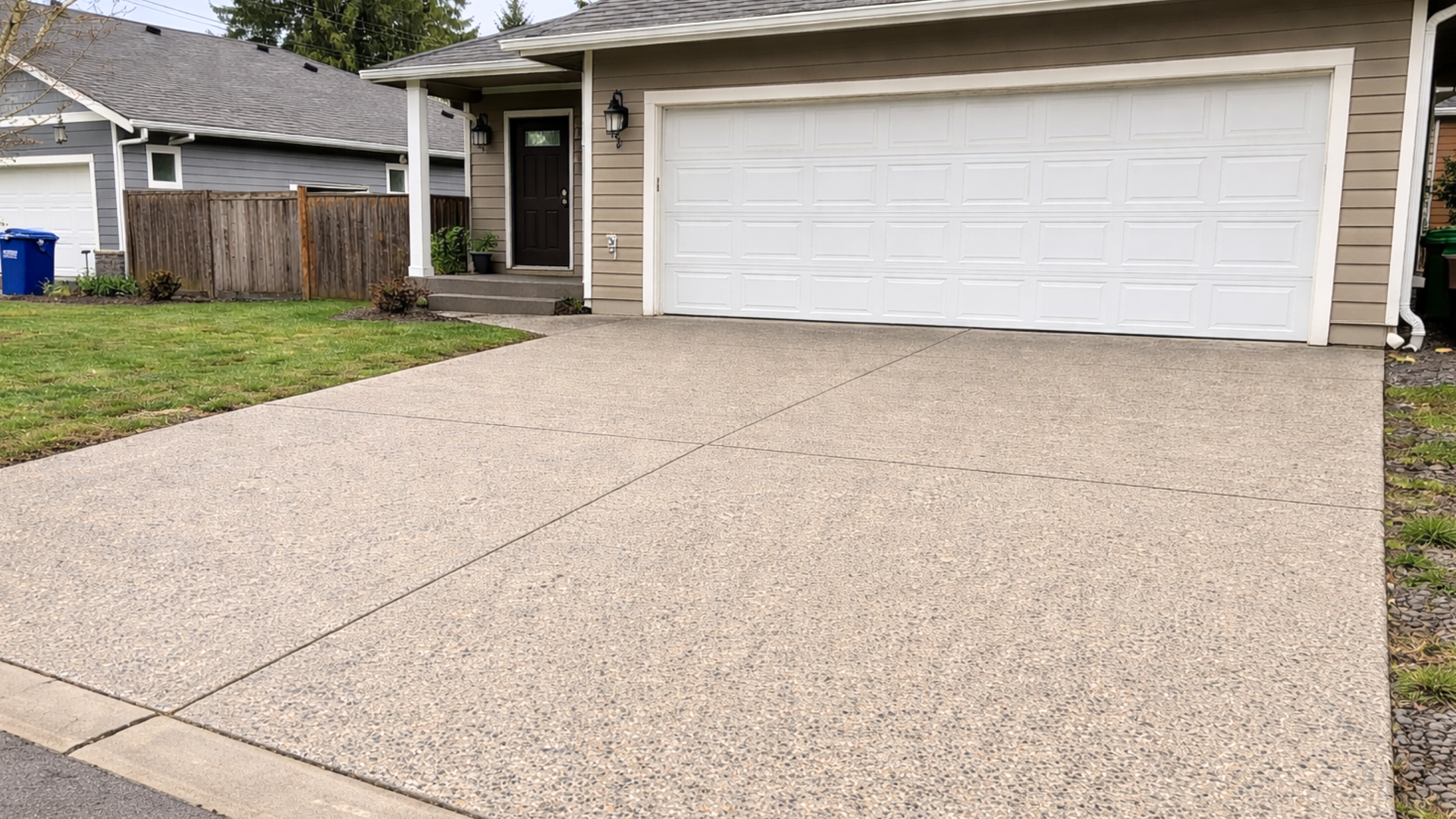
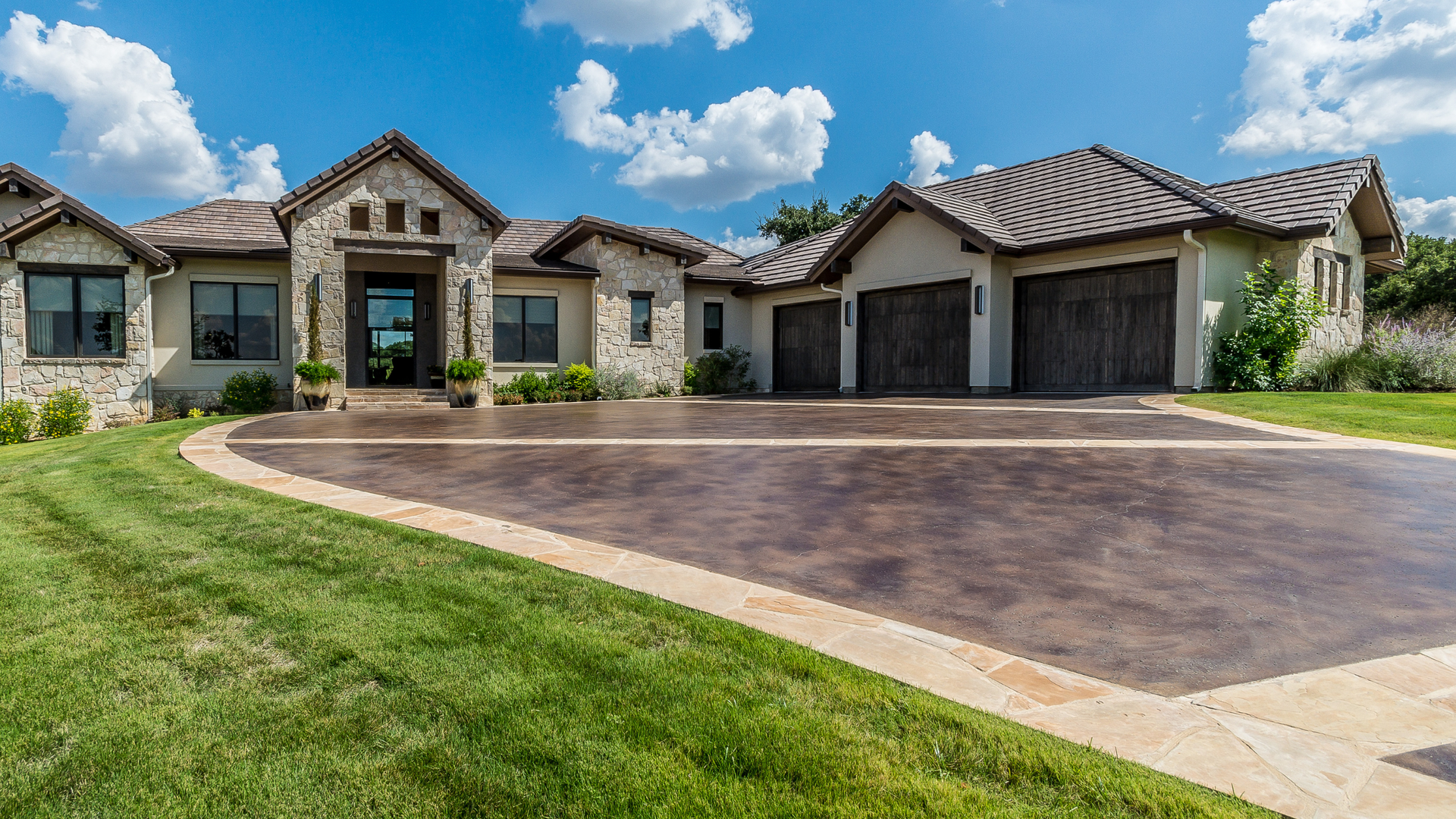
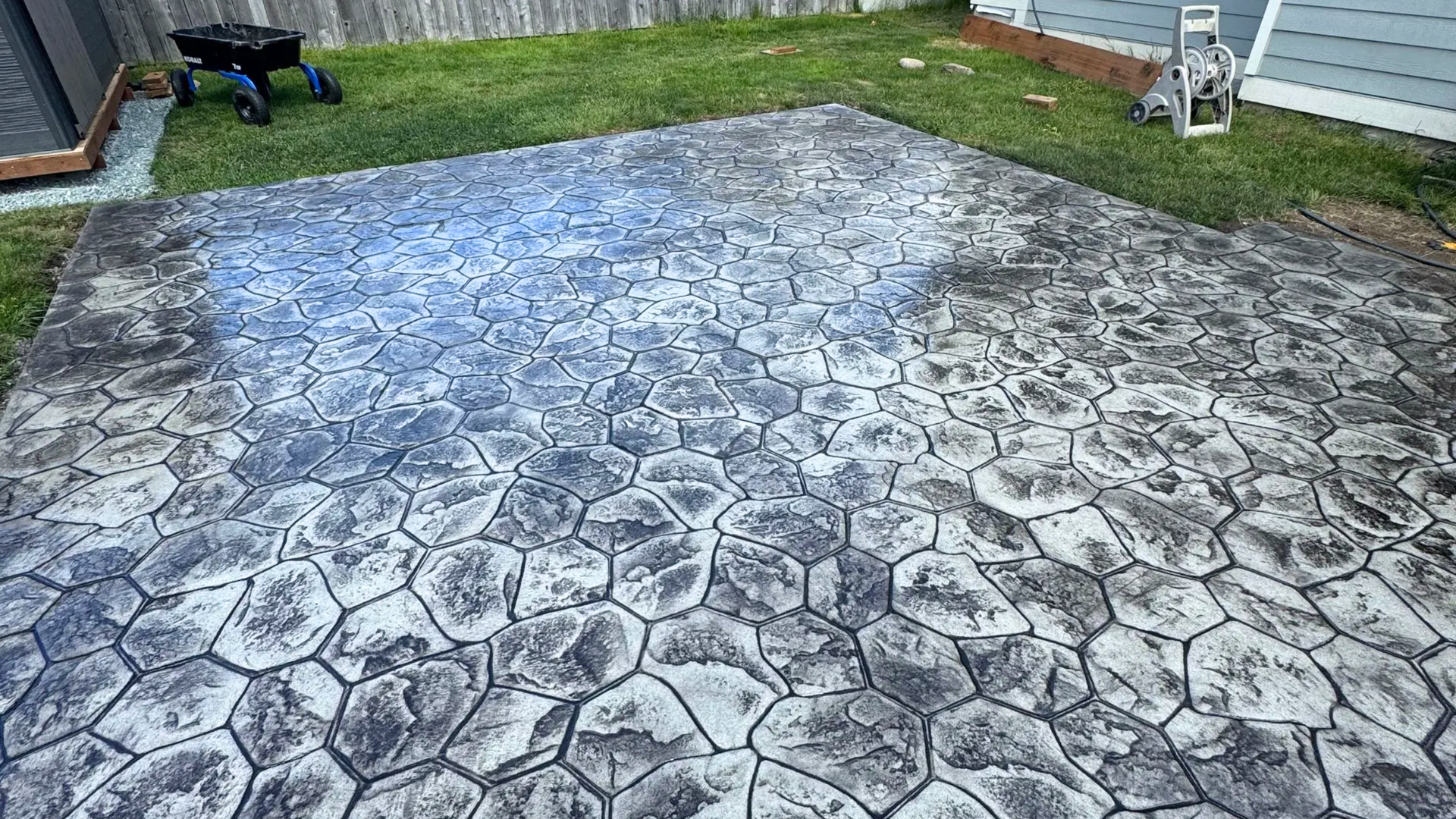
What's worth knowing is how much ground decorative concrete has made up. Stamped concrete can replicate the look of flagstone, brick, slate, and tile convincingly and at lower cost. Colored concrete adds warmth and visual interest to what would otherwise be a plain gray surface. Exposed aggregate introduces texture and depth. These aren't compromises - they're legitimate design choices that many homeowners prefer once they see finished examples in person.
If you're drawn to pavers primarily because you don't want a plain gray slab, it's worth exploring what concrete patio finishes look like before committing.
Repairability
Worth being upfront: if a single paver cracks, chips, or stains badly, you can pull that unit and replace it cleanly. The repair is invisible if you have matching material on hand.
Concrete cracks are repairable, but more visible - especially on decorative finishes where color and texture matching is imperfect. Most cracking is a result of improper installation: inadequate base preparation, missing or poorly placed control joints, insufficient reinforcement, or concrete poured too thin.
A properly installed concrete patio - correct base compaction, rebar or mesh reinforcement, control joints at appropriate intervals - significantly reduces cracking risk. The "concrete always cracks" concern is largely a story about shortcuts in installation, not the material itself. That said, it's a real consideration worth knowing before you decide.
Which Is Better for Bellingham Homeowners?
For most homeowners in Bellingham and the surrounding area, concrete is the better choice.
The reasoning comes down to three things specific to this region: lower ongoing maintenance in a wet, mossy environment; better resilience through seasonal freeze-thaw cycles; and lower upfront cost for comparable performance. Concrete also offers more design flexibility than many people expect, and it comes backed by a more straightforward installation and warranty picture when the work is done professionally.
Pavers make sense in specific situations. If individual unit replaceability matters - for example, a patio near a large tree with roots that may shift things over time - pavers offer easier section-by-section adjustment. If you have a strong aesthetic preference for natural stone or brick that decorative concrete doesn't satisfy, that's a valid reason to choose pavers. And if you genuinely enjoy outdoor maintenance and don't mind the joint upkeep, pavers are a beautiful long-term investment.
But for the homeowner who wants a durable, attractive outdoor space with minimal ongoing work, concrete is the practical choice for this region.
Questions to Ask Before You Decide
What's my realistic maintenance tolerance?
- If pulling moss, re-sanding joints, and periodic releveling sounds reasonable, pavers are viable. If it sounds like a reason to regret the patio, concrete is the better fit.
Is this area heavily shaded or low-drainage?
- If the patio location stays damp for long stretches, joint maintenance on pavers becomes a more significant ongoing burden.
Am I planning to sell in the next 5–10 years?
- Concrete patios are straightforward for home inspectors and buyers to assess. A shifting or unevenly settled paver patio can raise questions during a sale.
What's my real budget - upfront and over 10 years?
- Pavers typically cost more upfront and more in ongoing maintenance. Concrete costs less to install and less to maintain. That math compounds.
Your Next Step
Trying to figure out which option makes the most sense for your specific yard? Coast Salish Concrete offers free estimates and will give you a straight answer about what we'd recommend for your space. We install concrete patios throughout Bellingham, Ferndale, Lynden, Blaine, Fairhaven, and surrounding areas - and every installation is backed by our 3-year workmanship warranty. Call us at (360) 375-4054.
Looking for more on concrete patio options? See our concrete patio services page or explore stamped and colored concrete finishes to see what's possible.